You step back to admire your OBS Ford, and something looks off. The gap between the bed and cab runs wider on the driver’s side front and tighter on the passenger’s side rear. This uneven truck bed alignment is a common headache for ’92–’96 F-Series owners, and it affects more than just looks. Water sneaks past the seal, the tailgate sticks, and over time, paint gets chewed up.
The fix is usually straightforward. You can correct the misalignment using factory adjustment points without pulling the bed off the frame. This guide walks you through diagnosing the cause, checking the right components, and getting that gap even again.
Check Mounting Bolts and Bushings for Wear

Loose hardware or worn bushings are the most common reason for an uneven truck bed on older F-Series trucks. Before adjusting anything, rule out these simple culprits.
Inspect All Bed Mount Points
The bed sits on the frame through four mounts. Two are near the front, and two sit just ahead of the rear wheel wells. Get under the truck with a flashlight and check each one carefully.
Look for:
– Cracked, split, or flattened rubber bushings
– Rusted, missing, or loose bolts
– Bent mounting brackets
Replace any bushing that has lost its shape. OEM-style rubber bushings are cheap, readily available, and allow the slight flex needed for proper alignment.
Tighten Bed-to-Frame Hardware
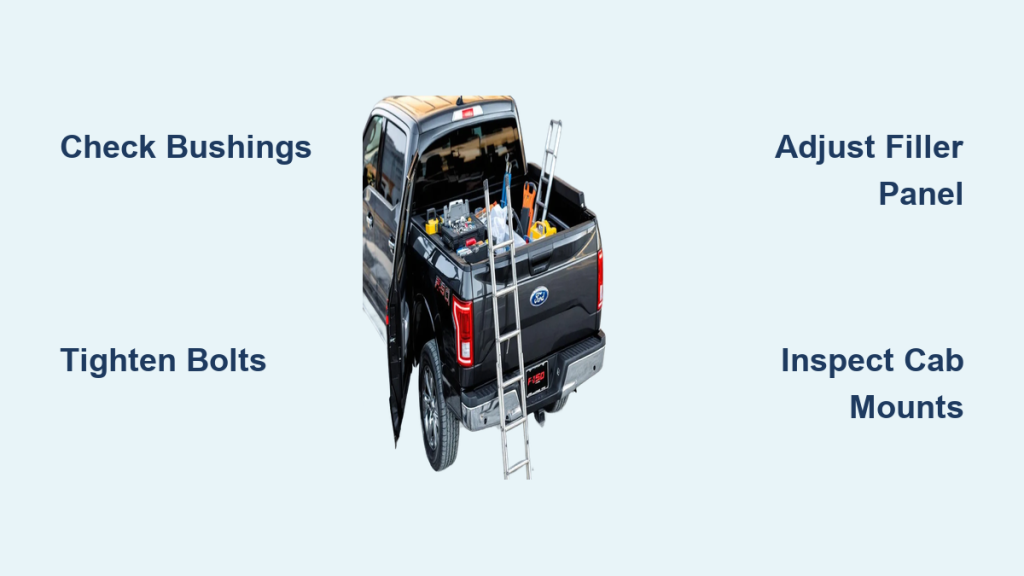
If the bushings look good, try snugging the bolts. Loosen all four bed-to-frame bolts just enough to free up movement. Support the bed with jack stands, then retighten in a crisscross pattern to 30–35 ft-lbs. This alone can resolve minor shifting caused by years of vibration.
Pro Tip: Hit the bolts with penetrating oil first. Rusted threads can snap under torque and turn a 30-minute job into an afternoon ordeal.
Support the Bed the Right Way
Trying to align a bed that is sagging or unevenly loaded is a waste of time. You need controlled support before making adjustments.
Position Jack Stands Correctly
Place two jack stands under the bed’s side rails, close to the rear wheels. Raise the bed just enough to take pressure off the mounts. Never lift from the tailgate or corners. The sheet metal will dent before the bed moves where you want it.
Test for Excessive Movement
With the bed supported, push and pull the front corners. If the bed shifts more than 1/4 inch, your bushings are shot and need replacement. Move on to alignment only after the mounts are solid.
Adjust the Bed-to-Cab Gap

Now for the actual alignment. The goal is a uniform gap of 1/4 to 3/8 inch between the cab and bed, with parallel lines from top to bottom.
Loosen the Front Filler Panel Bolts
The front of the bed connects to the cab through a filler panel, which is the vertical metal piece behind the cab. Two 10mm bolts hold it in place and control lateral movement.
Pop off the interior trim behind the seat to access these bolts. Loosen them but leave them engaged. On extended cab models, the rear seat may need to come out for clearance.
Shift the Bed Side to Side
With the front bolts and rear mounts slightly loose, gently push the bed left or right until the gap looks even. Check the top and bottom of the gap on both sides. The lines should be parallel, not slanted.
A feeler gauge or credit card works well for measuring the gap. Once the alignment looks right, hold the bed in place and snug the front bolts. Then fully torque the rear bed mounts.
Inspect the Cab Mounts
If the gap still refuses to cooperate, the problem might sit above the bed. Worn cab mounts let the entire cab shift on the frame, which throws the filler panel out of position.
Check Each Cab Corner
There are four cab mounts total. Inspect them for collapsed rubber, broken brackets, or visible sagging. Grab the cab corner and rock it. Any excessive play means the mounts have given up.
Replace Damaged Cab Mounts
Bad mounts must be replaced before bed alignment will hold. This job requires lifting the cab slightly with a jack and support beams, then swapping in new rubber or polyurethane mounts.
Warning: Never lift the cab by the body panels. Use the designated lift points or a cab jig to prevent cracking the sheet metal.
Look for Frame or Bed Damage

Sometimes the issue goes deeper than bushings. A bent frame rail or warped bed will fight every adjustment you make.
Examine the Frame Rails
Inspect the frame behind the cab. Look for kinks, twists, or evidence of past welds. Run a straight edge along the rails if you have one. A crooked frame will never let the bed sit right.
Check the Bed for Warping
Set a straight edge along the bed’s side rails. Any bowing or bending means the bed itself has been bent. Impact damage at the rear corners or stake pockets is a common giveaway. Light rust at the mount points can also create uneven seating, so clean and reinforce as needed.
Final Gap Check and Resealing
With everything torqued and aligned, do one last walkaround to confirm the fix.
Verify Consistent Clearance
Close the tailgate and look at the gap from every angle. It should run even from side to side and stay parallel from top to bottom. If one corner still looks tight, loosen and repeat the adjustment. Sometimes a second or third pass is needed to settle everything into place.
Reinstall Trim and Weatherstrip
Put the interior filler panel trim back in place. Check the bed-to-cab weatherstripping. A missing or hardened seal lets in water and road noise. A light coat of silicone on the seal helps it seat properly and last longer.
Frequently Asked Questions About Fixing an Uneven Truck Bed
What causes the bed to cab gap to become uneven on a ’92–’96 Ford F-Series?
Most cases come down to worn rubber bushings, loose mounting bolts, or a shifted cab. Over time, vibration and load stress let the bed drift out of position relative to the cab.
Can I realign the bed without removing it from the frame?
Yes. In most cases, loosening the front filler panel bolts and the rear bed mounts allows enough movement to shift the bed side to side. The bed stays on the frame during the entire process.
What torque should I use on the bed mounting bolts?
Bed-to-frame bolts should be tightened to 30–35 ft-lbs in a crisscross pattern. This ensures even pressure and prevents future shifting.
Do I need to replace the bushings if they look fine?
Not always. If the rubber is intact, not flattened, and shows no cracks, the bushings are usually serviceable. Replace them only if they show visible wear or let the bed move excessively.
How do I know if my cab mounts are the problem?
Rock the cab corners by hand. If you feel more than slight play, or if one corner sits lower than the others, the cab mounts are likely worn. A sagging cab pulls the filler panel out of line and makes bed adjustment impossible.
What if the gap still looks off after adjusting the mounts?
Persistent misalignment often points to frame or bed damage. Inspect the frame rails for bends and the bed rails for warping. Structural issues require professional straightening or panel replacement.
Key Takeaways for Restoring Your OBS Ford Bed Alignment
Fixing an uneven truck bed on a ’92–’96 F-Series almost always comes down to three things: checking the bushings, loosening the right bolts, and repositioning the bed with patience. Most cases do not require frame work or major disassembly.
Start with the simplest checks. Mount bolts and bushings are cheap and easy to inspect. Move to the cab mounts only if the bed fix does not hold. Frame and bed damage are rare but worth ruling out if nothing else works.
Once the gap looks right, make it last. Inspect your mounts once a year, especially if you haul heavy loads or drive rough roads. A few minutes of preventive checks will keep that clean, even line between the cab and bed looking sharp for years to come.