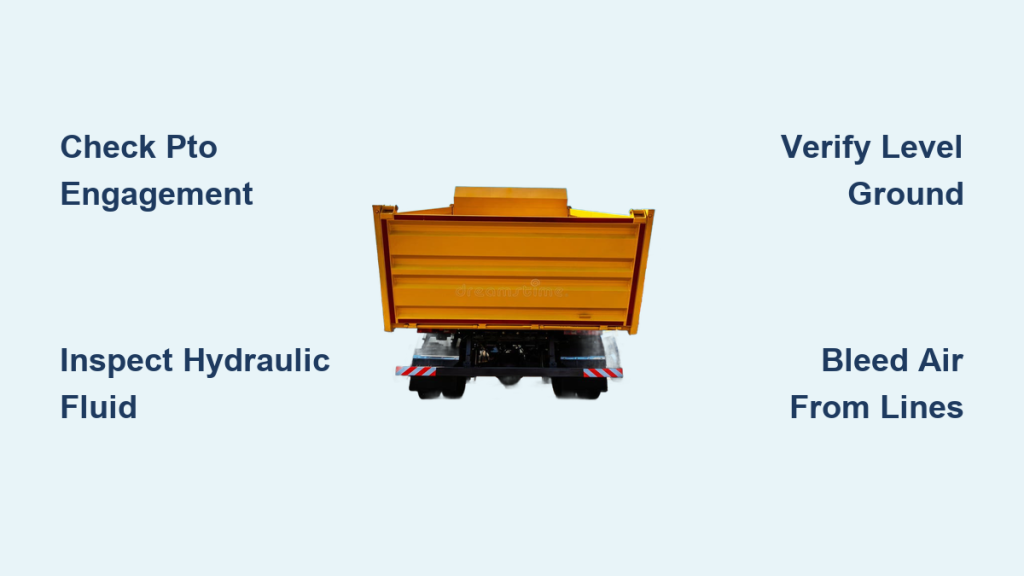
You’re standing behind a dump truck, load in the bed, destination ahead. Now you need to raise the bed to unload. Whether you’re new to operating a dump truck or need a clear refresher, knowing how to raise a dump truck bed safely and efficiently is essential. A malfunction or misuse can lead to equipment damage, safety hazards, or worksite delays. Most modern dump trucks use a hydraulic lifting system controlled from the cab, but the exact process varies by model, age, and type. These include end dumps, transfer dumps, or live-bottom trailers.
This guide walks you through the standard steps to raise a dump truck bed, including pre-lift checks, operating the lift mechanism, troubleshooting common issues, and critical safety practices. You’ll learn how to identify control types, respond to hydraulic problems, and avoid overextension risks. Whether you’re using a standard PTO (power take-off) hydraulic system or an electric-over-hydraulic setup, this step-by-step breakdown ensures you get the job done right every time.
Pre-Lift Safety Checks for Dump Truck Bed Operation

Before activating the lift system, a quick safety and inspection routine prevents accidents and mechanical strain.
Inspect the Bed and Hydraulic Components
Visually examine the dump bed for cracks, overloaded material, or obstructions. Check hydraulic cylinders for leaks, bent rods, or loose mounting brackets. Look under the chassis for pooled fluid. This could signal a failing seal. Ensure the tailgate is securely latched and the area behind the truck is clear of people, vehicles, or structures.
Confirm Vehicle Stability Before Raising
Park on level ground. Engage the parking brake firmly. Shift the transmission into neutral (or park for automatics). Turn on hazard lights if working near traffic. Never attempt to raise the bed on a slope. This risks tipping or uneven lifting.
Check Fluid and System Pressure
Locate the hydraulic fluid reservoir, usually near the PTO pump. Use the dipstick to verify fluid is at the proper level and clean. Dark or foamy fluid may indicate contamination or overheating. Listen for unusual pump noises when starting the engine. A whining sound may mean low fluid or air in the system.
Operating the Lift Control System
Once safety checks are complete, activate the lift mechanism using the correct in-cab controls.
Identify Your Dump Truck Control Type
Most dump trucks use one of two systems:
• Pneumatic (air) controls: Use push-button or toggle switches that activate air valves to engage the PTO and hydraulic pump.
• Mechanical levers: Older models may have a floor-mounted lever connected to the PTO and a separate valve control for lifting and lowering.
Look for labeled controls, typically marked “Lift,” “Lower,” or with up and down arrows. Some systems require you to engage the PTO first before lifting.
Engage the Power Take-Off (PTO)
Start the engine and let it idle. Flip the PTO activation switch or pull the PTO lever. Location varies by model. You should hear a mechanical engagement, a distinct clunk or change in engine tone. Ensure the PTO is fully engaged before proceeding.
Expert Note: Never engage the PTO at high RPMs. Do this at idle to prevent shock loading.
Activate the Bed Raise Function
With PTO running, use the lift control to raise the bed:
- Press and hold the “Lift” button or move the lever to the “Up” position.
- The hydraulic pump pressurizes fluid, extending the cylinder(s) to tilt the bed upward.
- Monitor the lift. Stop if you hear grinding, see jerky motion, or notice fluid spray.
Raise the bed only as high as needed to empty the load. Most beds max out between 45 and 60 degrees.
Common Raising Problems and Fixes

Even with proper operation, issues can prevent the bed from lifting. Here’s how to diagnose and respond.
Bed Won’t Raise at All
If the bed doesn’t move, check these points:
• PTO engagement: Ensure it’s fully engaged and the engine is running.
• Pump noise: Silence may mean a failed PTO clutch, broken driveshaft, or blown fuse.
• Hydraulic fluid level: Low or contaminated fluid prevents pressure buildup.
• Control switch: Use a multimeter to verify electrical continuity if the system is electric-over-hydraulic.
Slow or Jerky Lifting Motion
This often points to air in the hydraulic lines or low fluid.
• Shut down the system.
• Top off hydraulic fluid and bleed air if your model allows.
• Cycle the bed up and down several times with light load to purge air.
• If the issue persists, inspect for internal valve leaks or worn pump components.
Hydraulic Leak Detected During Lift
If fluid sprays or pools while raising:
• Stop immediately. Lower the bed if safe to do so.
• Locate the leak. Common points include cylinder seals, hose fittings, or valve manifolds.
• Do not continue operation. Leaks reduce lifting power and create slip hazards.
• Tag the truck out of service and schedule repair.
Lowering the Dump Truck Bed Safely
After dumping, lowering the bed properly protects the chassis and prevents damage.
Use Controlled Descent Methods
Never let the bed drop under its own weight. Use the “Lower” control to release hydraulic pressure gradually.
• Ensure the area behind and under the bed is clear.
• Release the control slowly. Some systems have an adjustable flow valve for descent speed.
• Let the bed settle fully before disengaging the PTO.
Avoid Free-Fall Damage to the Bed
Free-falling beds stress the tailgate, frame rails, and pivot points. Over time, this causes cracks and premature wear. If the bed drops too fast, inspect the hydraulic check valve or flow control assembly. These components regulate safe descent.
Maintenance for Reliable Dump Truck Lifting
Regular upkeep keeps the hydraulic system responsive and extends component life.
Schedule Fluid and Filter Changes
Change hydraulic fluid and filter every 1,000 hours or per manufacturer guidelines. Use the correct fluid type, often AW32 or AW46 anti-wear hydraulic oil. Contaminated fluid is a leading cause of pump failure.
Lubricate Pivot Points Monthly
Grease all bed hinge pins, lift cylinder mounts, and tailgate hinges. Use waterproof grease to resist washout. This reduces stress on the hydraulic system and prevents binding.
Inspect Cylinders and Hoses Quarterly
Look for scoring on cylinder rods, bulging hoses, or cracked fittings. Replace worn components before they fail. Rods should slide smoothly. Grit or rust means disassembly and cleaning may be needed.
Know Your Dump Truck System Limits

Every dump truck has lifting specifications you must respect.
Don’t Overload the Bed
Exceeding Gross Vehicle Weight Rating (GVWR) strains the hydraulic system and frame. Overloading can prevent the bed from raising at all, or cause sudden failure mid-lift. Always weigh loads and distribute material evenly.
Avoid Over-Cycling the Lift
Frequent raising and lowering without cooling periods overheats hydraulic fluid. Limit continuous cycles, especially in hot weather. If the system smells hot or performs poorly, shut down and let it cool for 20 to 30 minutes.
Never Work Under a Raised Bed
Even with the engine off, a raised bed is dangerous. Hydraulic pressure can fail unexpectedly. If inspection under the bed is needed, use proper support stands. Never rely on the cylinder alone.
Frequently Asked Questions About Raising a Dump Truck Bed
What causes a dump truck bed to not raise?
The most common causes are a PTO that isn’t fully engaged, low or contaminated hydraulic fluid, a failed PTO clutch, or a faulty control switch. Check these components in order, starting with the simplest fixes like fluid levels and PTO engagement.
How high should you raise a dump truck bed?
Raise the bed only as high as needed to empty the load, typically between 45 and 60 degrees. Going beyond the necessary angle wastes hydraulic pressure, increases tip-over risk, and causes unnecessary wear on the lift system.
Can you raise a dump truck bed on a slope?
No. Never attempt to raise a dump truck bed on a slope. Uneven ground shifts the load’s center of gravity, creating a serious tip-over hazard. Always park on level ground before engaging the lift.
How often should hydraulic fluid be changed?
Change hydraulic fluid and filters every 1,000 operating hours or according to manufacturer guidelines. Using the wrong fluid type or skipping changes leads to contamination, overheating, and eventual pump failure.
Why does my dump truck bed lift slowly?
Slow lifting usually indicates air in the hydraulic lines, low fluid levels, or a worn pump. Top off the fluid, bleed air from the system if possible, and cycle the bed several times. If the problem continues, inspect internal valves and pump components.
Key Takeaways for Raising a Dump Truck Bed Safely
Raising a dump truck bed comes down to three core principles: inspect before you lift, operate controls correctly, and maintain the hydraulic system. Always perform pre-lift safety checks, confirm PTO engagement at idle, and raise the bed only as far as needed. When problems arise, troubleshoot methodically by checking the PTO, fluid levels, and electrical systems in that order.
Your next step is simple: before your next load, spend five minutes walking through the pre-lift checklist on your specific truck. Knowing your control layout and identifying potential issues ahead of time will keep your operations safe, efficient, and trouble-free for years to come.