Hauling a riding mower across town or to a job site often means wrestling it up into a pickup bed. Between the bulky frame, the heavy engine, and the limited clearance, loading one feels riskier than it needs to be. A wrong move can damage the mower, scratch the truck, or worse, injure your back.
The right tools and a clear process make the job straightforward. This guide walks you through ramp selection, step-by-step loading, tie-down techniques, and common mistakes to avoid. Whether you’re a homeowner or a landscaping pro, you’ll finish this read knowing exactly how to load your mower with confidence.
Essential Safety Precautions
Before rolling a single wheel toward the truck, prepare the workspace and your gear. Skipping these basics is how most loading injuries happen.
Clear the Work Area
Park on level ground and sweep away gravel, water, or loose debris. Make sure you have room to line up the truck and walk the mower in a straight line. Even a slight slope can throw off balance on a ramp. Shut off the mower, pull the key, and set the parking brake before you begin.
Wear Proper Gear
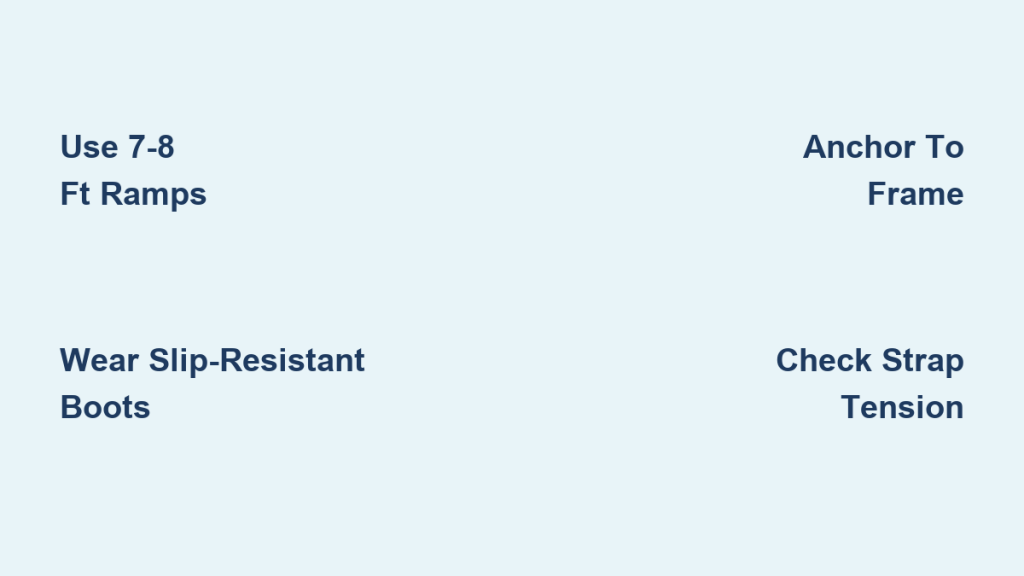
Slip-resistant boots are non-negotiable. Add work gloves for grip and safety glasses if you’re working near loose material. For mowers heavier than 500 lbs, recruit a helper or use mechanical assistance instead of going solo.
Choose the Right Loading Method

Most people load with ramps, but a few alternatives exist. Picking the right method upfront saves time and stress.
Use Heavy-Duty Loading Ramps
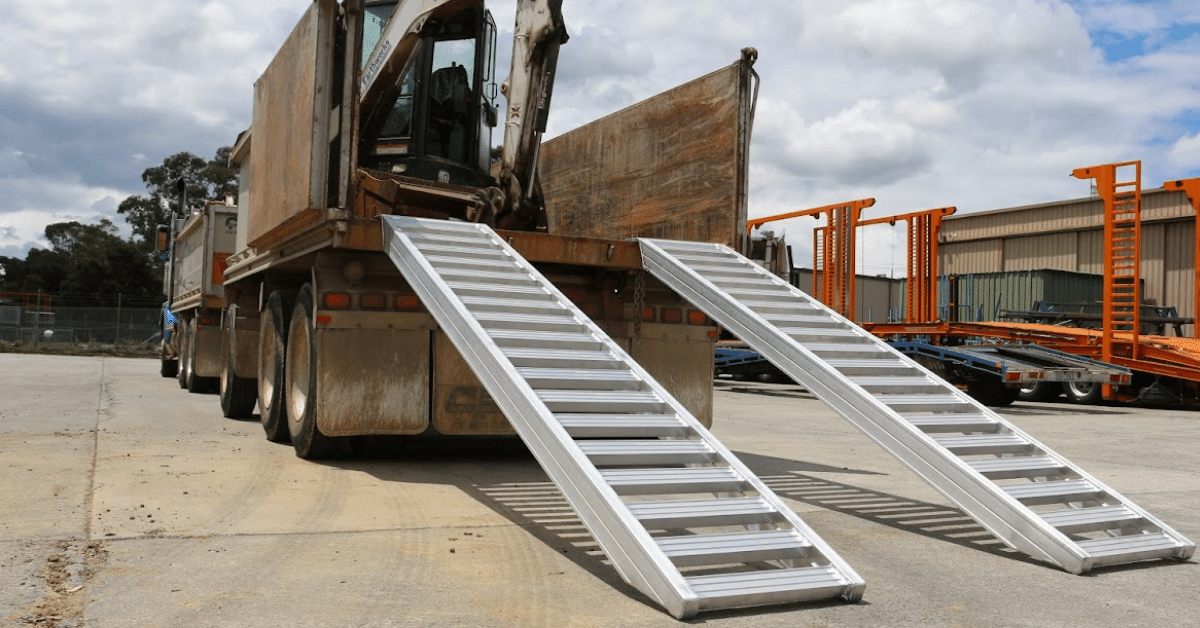
Pick ramps rated for at least 1,500 lbs, which doubles the typical mower weight for a safe margin. Aluminum ramps strike a good balance between strength and portability. Steel ramps are tougher but heavier to move around. Aim for ramps at least 7 to 8 feet long so the incline stays gentle. Short ramps create steep angles that risk bottoming out the mower deck or losing traction.
Consider a Trailer Jack or Lift
Hydraulic trailer jacks or vehicle-mounted lifts raise the mower straight up and drop it into the bed. They skip ramps entirely and cut down on physical effort. They cost more upfront, but they pay off if you haul mowers often.
Prepare the Truck and Mower
A little setup work on both ends keeps loading smooth and controlled.
Position the Truck Correctly
Back the truck as close to the loading zone as you can. Drop and secure the tailgate. Line the truck up so the path is straight, since turning on a ramp is dangerous. Chock the rear tires so the truck cannot roll.
Adjust Mower Settings
Shut off the blades and disengage the transmission so the mower does not lurch. Drop the deck to its lowest setting to reduce the overall height and shift the center of gravity forward. Check tire pressure too, since soft tires struggle for grip on inclines.
Load the Mower with Ramps
This is the moment where focus matters most. Move slowly and keep the mower aligned.
Set Up Ramps Safely
Place each ramp flush against the tailgate, with no gap or wobble. Use ramp anchors or bungee cords to pin the top ends in place. Press down lightly to test stability before driving any weight onto them.
Drive or Push the Mower Onto the Truck
For lighter mowers under 600 lbs, push the unit in neutral up the ramps. For heavier machines, start the engine and drive up at idle speed. Keep the mower pointed straight up the ramp. Never turn while on the incline. Have a spotter stand off to the side and signal when you are centered in the bed.
Pro Tip: A spotter watching the wheel alignment is worth more than any tool. Their eyes catch what you cannot see from the seat.
Secure the Mower in the Truck Bed

Loading is only half the battle. Without solid tie-downs, the mower can slide and damage the truck or itself.
Use Tie-Down Straps
Reach for ratchet straps rated for 1,000 lbs or more. Anchor them to the mower frame, never the axles, handlebars, or plastic panels. Hook the other ends to the bed’s built-in tie-down points. Crisscross the straps from front to back for the most stable hold.
Double-Check All Connections
Pull on each strap to confirm it is tight. Rock the mower slightly to test for movement. Recheck tension after the first few miles of driving, since vibration can loosen straps over time.
Alternative: Use a Utility Trailer
If a pickup bed feels like a tight squeeze, a utility trailer is a smart backup plan.
Benefits of a Trailer
Trailers sit lower than truck beds, which flattens the ramp angle. They also reduce strain on your truck’s suspension and give you more room to work. For commercial mowers or zero-turn units, a trailer often makes more sense than forcing the mower into a bed.
Loading a Trailer
The process mirrors truck-bed loading. Use the same ramps and follow the same safety steps. The lower deck height usually makes the incline easier to climb.
Avoid Common Mistakes
Small oversights cause most loading accidents. Steer clear of these common traps.
Don’t Rush the Process
Take your time lining up the ramps, tightening straps, and driving up. Rushing leads to misalignment, loose tie-downs, or loss of traction halfway up the ramp.
Never Exceed Ramp Weight Limits
Undersized ramps are a leading cause of mower damage and tip-overs. Confirm the weight rating before each use, and leave a comfortable margin.
Avoid Wet or Slippery Surfaces
Moisture on ramps or tires kills traction fast. Wipe down both surfaces before loading, and postpone the job if conditions are wet.
Maintenance After Transport
Once the mower is back on the ground, a quick inspection goes a long way.
Check for Damage
Look over the mower for loose bolts, shifted parts, or tire damage caused by loading stress. Catch small issues before they turn into breakdowns mid-mow.
Clean Ramps and Straps
Wipe off dirt and debris from the ramps and straps. Clean gear lasts longer and grips better the next time you haul.
Frequently Asked Questions About Loading a Riding Mower
What size ramps do I need to load a riding mower?
Ramps should be at least 7 to 8 feet long to create a gentle, safe incline. Anything shorter steepens the angle and increases the risk of bottoming out or losing traction.
Can one person load a riding mower into a truck bed?
Yes, if the mower weighs under 500 lbs and you use properly rated ramps. For heavier units, get a helper or use a mechanical lift to avoid injury.
Where should I attach tie-down straps on a riding mower?
Always anchor straps to the mower’s steel frame. Avoid axles, handlebars, and plastic components, which can crack or bend under tension.
Should I leave the mower in neutral when loading?
Yes. Disengaging the transmission and shutting off the blades keeps the mower from lurching during the load. Lower the deck as well to drop the center of gravity.
How tight should tie-down straps be on a riding mower?
Straps should be tight enough that the mower does not rock or shift when nudged. Tug each strap after fastening and recheck tension after driving a few miles.
Is it safer to use a trailer instead of a truck bed?
Trailers are often safer for larger or commercial mowers because they sit lower and reduce ramp angle. They also ease strain on your truck and make loading easier in tight spaces.
Key Takeaways for Loading a Riding Mower into a Truck Bed
The whole job comes down to three priorities: rated equipment, a level workspace, and slow movement. Use ramps rated for at least 1,500 lbs, park on flat ground, and drive up at idle speed without turning. Anchor the mower with heavy-duty ratchet straps crisscrossed over the frame, and recheck tension after the first few miles.
For your next haul, start by inspecting your ramps and straps before you load. Clean gear grips better and lasts longer, saving you money and headaches down the road.