
You’ve packed your truck bed full of luggage for a road trip, camping adventure, or move, but one bump in the road could send your gear flying. Unsecured cargo is more than just a mess; it’s dangerous. Loose items can shift, damage your truck, or even cause accidents on the highway. That’s why knowing how to secure luggage in truck bed properly is essential for safety and peace of mind.
Whether you’re hauling suitcases, duffel bags, or boxes, the open nature of a truck bed means nothing stays in place without proper restraints. Without a roof or walls, your luggage is exposed to wind, bumps, and sudden stops. The good news? With the right tools and techniques, you can keep everything stable and protected. This guide walks you through practical, proven methods to secure your luggage from basic tie-downs to advanced cargo systems so your load stays put mile after mile.
Choose the Right Tie-Down Straps
The most common and effective way to secure luggage in a truck bed is with high-quality tie-down straps. Not all straps are created equal, so selecting the right ones makes a big difference in safety and reliability.
Use Ratchet or S-Hook Straps
Ratchet straps provide the tightest hold and work well for heavy or bulky luggage. They let you crank down the tension, removing slack that could cause shifting. S-hook straps with cam buckles are easier to use and suit lighter loads. Look for straps rated at least 500 to 800 lbs working load limit to handle typical luggage weight.
Check Strap Length and Fit
Too short, and you can’t reach the truck’s anchor points. Too long, and excess webbing flaps in the wind or tangles. For most full-size truck beds, 6- to 10-foot straps work well. Measure your load and truck bed to choose the right size. Always inspect straps for fraying, rusted hardware, or weakened stitching before each use.
Attach to Built-In Tie-Down Points
Most modern trucks have built-in anchor points along the bed rails or in the corners. These are designed to handle heavy loads. Hook your straps securely into these points; never rely on tailgate handles or side mirrors. If your truck lacks anchors, consider installing bed rail tie-downs or using a truck bed organizer with integrated anchor slots.
Stack and Position Luggage Properly

How you place your luggage in the bed affects stability more than you might think. Poor stacking can lead to tipping, crushing, or uneven pressure on straps.
Load Heaviest Items First
Start by placing the heaviest bags, like suitcases or toolboxes, on the truck bed floor close to the cab. This lowers the center of gravity and reduces sway. Lighter, softer items like duffel bags or backpacks go on top or around the sides.
Center the Load Evenly
Avoid loading everything to one side or toward the tailgate. An unbalanced load can affect vehicle handling, especially when turning or braking. Keep weight centered side-to-side and front-to-back whenever possible. Never let luggage extend beyond the bed rails unless you’re using an approved extension system.
Prevent Shifting with Gap Fillers
Empty spaces invite movement. Use soft items like clothes, sleeping bags, or foam padding to fill gaps between bags. This creates a locked effect, reducing the chance of shifting during transit. For larger voids, consider a cargo net or inflatable travel pillow to take up space.
Use a Truck Bed Divider or Cargo Barrier

If you’re carrying a mix of luggage and other gear, or if you want extra protection from shifting loads, a bed divider adds a critical safety layer.
Install a Mesh or Metal Divider
A bed divider mounts between the truck bed rails and separates the cab area from the cargo. It keeps luggage from sliding forward into the rear window during sudden stops. Mesh dividers are lightweight and affordable; metal ones offer greater durability for heavy loads.
Protect Against Break-In Risk
While not directly related to securing luggage, a divider or cargo barrier also deters theft by hiding valuables from view. Pair it with a tonneau cover for full coverage and security.
Add a Tonneau Cover for Extra Protection
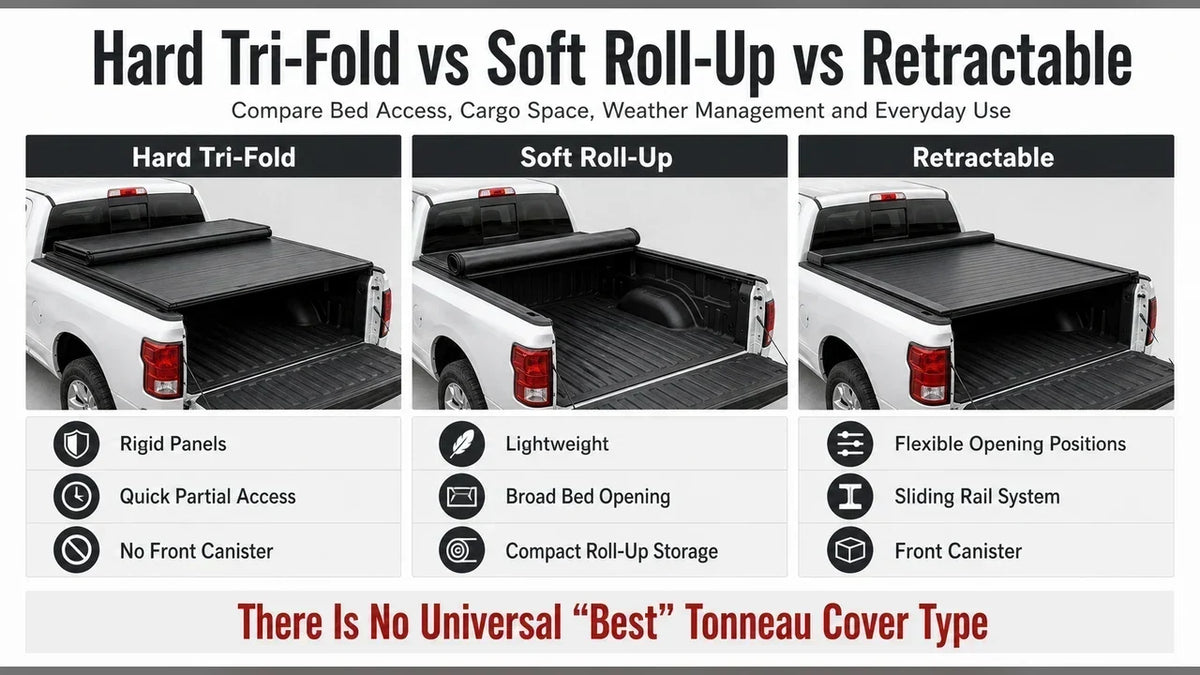
A tonneau cover does more than improve aerodynamics; it plays a key role in securing luggage, especially on long or high-speed trips.
Roll-Up, Retractable, or Hard Covers
Soft roll-up covers are affordable and easy to install, but hard retractable or folding covers offer better security and weather resistance. Choose one that locks in place to prevent wind from lifting it and exposing your load.
Prevent Wind and Weather Damage
Even tightly strapped luggage can be damaged by rain, dust, or debris kicked up on the road. A tonneau cover shields your items and reduces wind drag, which improves fuel efficiency. For maximum protection, use straps under the cover so luggage can’t shift even if the cover flaps.
Consider a Truck Bed Storage Box
For frequent haulers, a built-in storage box is a smart investment. These lockable containers mount in the bed and provide a secure, organized space for luggage and valuables.
Mount in Bed Corners or Sides
Most storage boxes fit in the wheel well areas or along the bed rails, freeing up floor space. They’re perfect for smaller items that are easy to lose, like chargers, tools, or documents, and help stabilize larger luggage around them.
Use for High-Value Items
Keep passports, electronics, or expensive gear in a lockable box instead of loose in the bed. This reduces theft risk and protects against weather. Some models even include tie-down points on top for strapping down additional bags.
Secure Luggage with a Cargo Net

For lighter loads or irregularly shaped items, a cargo net is a fast, flexible solution.
Stretch Over Top of Load
Cargo nets with elastic or adjustable straps stretch over your luggage and hook to bed rails or anchor points. They work best when used over a tightly packed load; don’t rely on them alone for heavy or tall stacks.
Choose Size and Strength Wisely
Pick a net that matches your truck bed dimensions, such as 5.5 ft, 6.5 ft, or 8 ft beds. Look for UV-resistant, heavy-duty nylon with reinforced corners. Avoid cheap nets that degrade quickly in sunlight or lose elasticity.
Avoid Common Securing Mistakes
Even with the right gear, simple errors can compromise your load’s safety. Watch out for these frequent missteps.
Don’t Over-Tighten Straps
Too much tension can damage luggage zippers, crush soft bags, or warp the truck bed rails. Crank straps snug, not extreme. If the bag is visibly deformed, you’ve gone too far.
Never Rely on the Tailgate Alone
Lowering the tailgate doesn’t secure anything. In fact, if your load shifts, it can force the tailgate open. Always use straps or barriers; never assume closed equals secure.
Check Load Midway Through Trip
After 20 to 30 miles, stop and inspect your setup. Straps can loosen due to vibration, and wind can shift unbalanced loads. Re-tighten as needed, especially on long hauls.
Frequently Asked Questions About Securing Luggage in a Truck Bed
What type of strap is best for securing luggage in a truck bed?
Ratchet straps are best for heavy or bulky luggage because they crank down tight. S-hook cam buckle straps work well for lighter loads. Choose straps rated at 500 lbs or higher.
Can I drive with luggage loose in the truck bed?
No. Loose luggage can shift, fly out, or cause accidents. Always strap down luggage using tie-down points, cargo nets, or dividers before driving.
How tight should tie-down straps be on luggage?
Tight enough to remove slack and prevent movement, but not so tight that they crush soft bags or damage zippers. Stop tightening once the load feels snug and immobile.
Do I need a tonneau cover to secure luggage?
A tonneau cover isn’t required, but it adds weather protection, theft deterrence, and extra load security. Straps alone can secure luggage; a cover enhances the setup.
How often should I check my straps during a trip?
Check straps every 20 to 30 miles, especially on long trips. Vibration and wind can loosen tension, so stop periodically to re-tighten and inspect your load.
What’s the safest way to stack luggage in a truck bed?
Place the heaviest items on the floor near the cab, center the load evenly, and fill gaps with soft items. This lowers the center of gravity and minimizes shifting.
Key Takeaways for Securing Luggage in Your Truck Bed
Securing luggage in a truck bed comes down to three essentials: the right hardware, smart loading, and routine checks. Start with quality tie-down straps rated for your load weight, and always attach them to built-in anchor points. Stack heavy items low and centered, then fill gaps to prevent movement.
For added safety, layer your defenses with cargo nets, bed dividers, or a tonneau cover. These tools not only secure your load but also protect against weather and theft. Finally, never skip the midway check; straps loosen over time, and a quick inspection can prevent costly or dangerous mishaps.
Ready to hit the road? Take 10 minutes before your next trip to set up your straps, balance your load, and add a cover if you have one. A little prep now saves you from chasing down a flying suitcase at 60 mph later.