
Hauling a snowblower doesn’t require heroics or a gym membership. Whether you’re moving a 26-inch Toro or a heavy-duty 28-inch Ariens Professional, the right method turns a back-breaking chore into a 10-minute job. The secret lies in using your machine’s own self-propelled drive, securing proper ramps, and tying everything down before you hit the road.
Below, you’ll learn how to load a two-stage snowblower using ramps, back it down safely, and explore a hitch-mounted alternative for frequent transport. Every step is built around real user experience and proven mechanical practice.
Use Self-Propelled Drive to Load
The fastest, safest way to get a snowblower into a truck bed is to let the machine do the climbing. Most two-stage snowblowers come equipped with a wheel drive system that powers the wheels independently. This eliminates the need to muscle the machine up a ramp manually.
Drive Up Ramps in First Gear
Before you start, set your snowblower to the slowest forward gear. This crawl speed gives you maximum control on an incline. As one experienced operator puts it, “Put it in 1st — yes, it’s a crawl, but it won’t get away from you.” Higher gears create unnecessary risk and reduce your reaction time if the machine veers.
Engage only the wheel drive control during loading. Keep the auger control completely off to prevent damage and reduce strain on the engine. One user clarifies the setup simply: “One control engages the wheel drive and the other engages the auger. You only need to engage the wheel drive.”
Load Auger-First for Better Stability
Always drive the snowblower auger-first up the ramps. The heavier front end leads the way, which improves traction and balance. The rear handles stay lower and easier to control as the machine ascends.
If your model has a selectable drive mode, engage both wheels before climbing. Some snowblowers default to one-wheel drive, which can cause the machine to veer sideways or surge forward unexpectedly. One user with firsthand experience advises: “If yours has this option, I strongly suggest you engage both wheels.”
Reduce Ramp Angle with Smart Parking
A steep ramp makes loading harder on both you and the machine. A small adjustment to your parking position can dramatically reduce the incline.
Park on a Hill or Ditch
If your driveway has a slope or a drainage ditch nearby, position your truck so the rear end is lower than the front. This lowers the effective height the snowblower must climb. One user shared a simple success story: “I did that with my snowblower and a lower truck — worked like a charm.” This trick works especially well for taller pickups or heavier two-stage units.
Secure Ramps Before Loading

Unsecured ramps are a serious hazard. They can slide out mid-climb, sending the snowblower (and possibly you) crashing to the ground.
Use Ratchet Straps or Chains
Before stepping onto the ramps, strap them to the truck bed using either ratchet straps or chains. Choose one method only and keep it tight. A user warns: “Ever see someone pull a 4-wheeler on without straps and the ramps kick out? Just look it up.”
Anchor your straps or chains to bed tie-down points or the tailgate hinges. Test stability by pushing down hard on each ramp. Any movement means the ramps aren’t safe to use.
Two-Person Lift for Lighter Models
If ramps aren’t available, a manual lift works for smaller snowblowers like the 26-inch Toro, which is light enough for two people to handle.
Coordinate the Lift Safely
One person grabs the front handle near the auger housing. The second person lifts from the rear handles. Lift together in one smooth motion to avoid twisting or dropping the machine. This method is best suited for flat, dry ground and lighter units. Avoid solo manual lifting for heavier models like the 28-inch Ariens Professional.
Prevent Forward Roll After Loading
Once the snowblower sits in the bed, an unsecured machine becomes a projectile the moment you brake hard.
Avoid Costly Rear Window Damage
An unsecured snowblower can slide forward and shatter the rear cab window or dent the bulkhead. One user shared an expensive lesson learned the hard way: “I did that with a 4-wheeler and busted the rear window. Live and learn! Expensive lesson as my dad would say. LOL.” Don’t rely on gravity or wheel resistance alone, even for short trips.
Secure with Two Ratchet Straps

Proper tie-downs are essential for safe transport.
Anchor to the Bulkhead and Tailgate
Use at least two ratchet straps:
– One strap from the bulkhead (front wall of the truck bed) to the front of the snowblower
– One strap from the tailgate or bed anchors to the rear handles
Tighten both straps firmly. Push the snowblower side-to-side and front-to-back. If it shifts at all, tighten further. Avoid bungee cords or rope, which stretch and fail under pressure.
Unload with Controlled Descent
Unloading is often easier than loading when you use the machine’s drive system as a brake.
Back Down Handle-First
Position the ramps and stand between them behind the machine. Slowly back the snowblower down the ramps, handle-first, while engaging the wheel drive control. This creates resistance and keeps the descent slow and controlled. Keep the auger off, and watch your footing.
Try a Hitch-Mounted Carrier
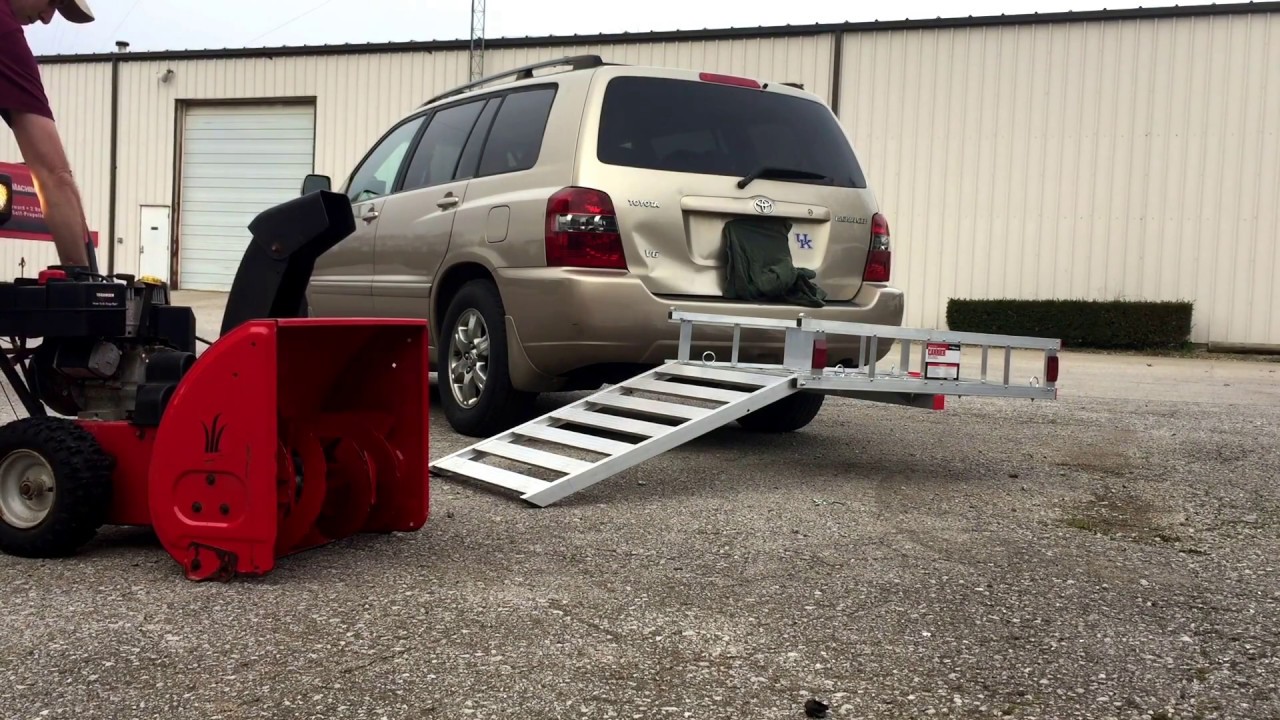
For those who haul snowblowers often, a hitch-mounted carrier offers a lower-effort alternative to bed loading.
Use a Mobility Scooter Carrier
These aluminum carriers slide into your truck’s rear hitch receiver and include a built-in drop-down ramp. Because the loading surface sits much lower than a truck bed, the climb is far easier. One user reports: “My brother picked up one of those aluminum wheelchair/mobility scooter carriers… making it pretty easy to load since you don’t have to ramp it up very far.”
Check Width Compatibility
The main limitation is snowblower width. Wide tracks or oversized tires may not fit standard carriers. Workarounds include angling the machine slightly or modifying the carrier rails. Always test fit before purchase and strap the machine down once loaded.
Common Mistakes to Avoid
Even seasoned users slip up. Avoid these preventable errors.
Engaging the Auger During Loading
The auger should stay off while loading. Activating it wastes power, increases engine strain, and risks damage if debris is caught. Only the wheel drive control should be engaged.
Using Loose or Unsecured Ramps
Ramps that aren’t strapped down can kick out mid-climb, causing falls and damage. Always secure them, and double-check before loading.
Skipping Tie-Downs
Assuming the snowblower will stay put is a gamble. Braking and turns can shift an unsecured load fast. Always use two ratchet straps, front and rear.
Frequently Asked Questions About Loading a Snowblower in a Truck Bed
Can one person load a snowblower into a truck bed?
Yes, solo loading is possible using ramps and the snowblower’s self-propelled drive. Set the machine in first gear, engage both wheels if available, and drive it up auger-first. No lifting required.
What gear should I use to drive a snowblower up ramps?
Always use the slowest forward gear. This crawl speed gives you maximum control and prevents the machine from surging forward unexpectedly.
Should I engage the auger while loading a snowblower?
No. Keep the auger off during loading and unloading. Only the wheel drive control should be engaged to reduce engine strain and avoid damage.
How do I keep ramps from sliding out when loading?
Secure the ramps to the truck bed using ratchet straps or chains. Use one method only, not both, and keep them tight before loading.
How many tie-down straps do I need for a snowblower in a truck bed?
Use at least two ratchet straps. One anchors from the front wall (bulkhead) to the snowblower, and one anchors from the tailgate to the rear handles.
Can I use a hitch-mounted carrier instead of my truck bed?
Yes, hitch-mounted wheelchair or mobility scooter carriers work well for snowblowers. They offer a lower loading height, but check width compatibility for wider models.
Key Takeaways for Loading Your Snowblower Safely
Loading a snowblower into a truck bed is straightforward when you follow the right process. Use your machine’s self-propelled drive in first gear, secure the ramps with ratchet straps or chains, and tie down the snowblower with two ratchet straps anchored to the bulkhead and tailgate. For frequent transport or solo operators, a hitch-mounted carrier can save time and effort.
Ready to load up? Park smart, strap tight, and let your snowblower do the heavy lifting.