A leaking truck bed cover can turn a simple rainstorm into a soaked-cargo nightmare. Whether you drive a Ford, Chevy, Toyota, or Ram, water intrusion leads to rust, mildew, and ruined gear. Most leaks come from worn seals, loose hardware, or degraded fabric, not the cover itself. Learning how to waterproof a truck bed cover the right way protects your investment and keeps your truck bed dry in any weather.
This guide covers practical steps to seal, treat, and maintain both hard and soft covers. You’ll learn how to spot weak points, apply the right products, and build a maintenance routine that prevents future leaks. From budget-friendly fixes to long-term upgrades, these tips work across tonneau, roll-up, tri-fold, and retractable cover styles.
Spot the Weak Points Before They Leak

Waterproofing starts with knowing where water gets in. Most leaks happen at seams, seals, or mounting points rather than through the cover material itself.
Examine Seams and Stitching Closely
Lift your cover and inspect every stitched seam, especially on vinyl or fabric models. Sun damage and road vibration loosen threads over time, creating tiny gaps water can wick through. Look for fraying, discoloration, or swelling in the padding. If the underside feels damp after rain, trace the moisture upward to find the entry point.
- White salt residue means water has been evaporating there
- Dark spots suggest mold or mildew buildup
- Soft or spongy fabric indicates water absorption
Check Rubber Seals Around the Edges
Hard covers rely on rubber gaskets along the bed rails to block water. Over time, UV rays and cold weather make rubber brittle. Press along each edge with the cover closed. Any spot that feels loose, cracked, or misaligned is a likely leak source.
Test Mounting Hardware for Tightness
Loose clamps, bolts, or tension rods reduce the compression that keeps seals tight. Grab a hex key or socket wrench and check every fastener. Tighten evenly across all points. Uneven pressure warps the frame and creates new gaps.
Pro Tip: Recheck hardware after your first few drives. New covers often settle and need a second tightening.
Clean the Cover Before Treating It
Dirt and old residue block waterproofing products from bonding. A clean surface is essential for long-lasting results.
Wash With Gentle Soap and Water
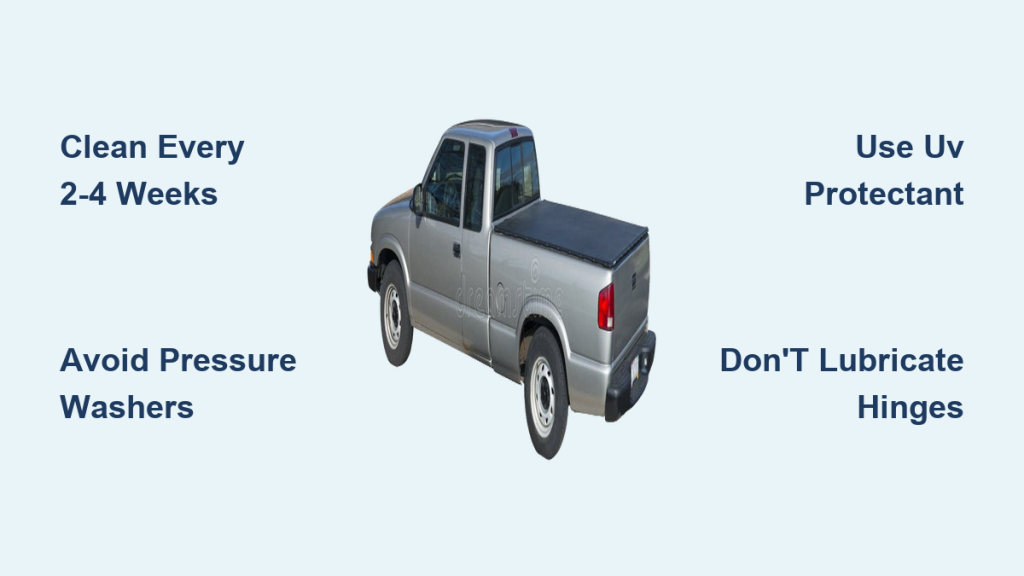
Mix mild dish soap with warm water and use a soft microfiber cloth or brush. Scrub the seams, edges, and underside corners where grime collects. Rinse thoroughly and let the cover dry for at least three hours in direct sunlight.
Skip pressure washers. High-pressure spray forces water under seals and can strip fabric coatings.
Strip Old Sealants and Tape
If previous repairs left silicone or tape residue, remove it now. Use a plastic scraper for loose pieces. For stubborn spots, dab a cloth with isopropyl alcohol and rub gently. Avoid metal tools, which scratch or puncture surfaces.
Seal Every Seam and Joint
Even factory seams weaken over time. Adding a flexible sealer creates a second line of defense against moisture.
Apply a Marine-Grade Seam Sealer
Products like 3M Marine Adhesive Sealant 5200 or Gorilla Waterproof Patch & Seal stay flexible through temperature swings. Cut the nozzle for a thin bead, apply along exposed stitching, and smooth with a gloved finger. Let it cure for 24 hours before driving in rain.
Avoid slathering on thick layers. Excess sealer cracks and traps dirt.
Add Butyl Tape Under Hard Cover Frames
Butyl tape fills micro-gaps between the cover frame and bed rails. Clean the surface first, then press the tape firmly along the underside edge. Trim excess with a utility knife for a clean finish.
Restore Rubber Seals to Like-New Condition

Brittle seals are the top cause of leaks. Restoring them is cheaper than replacing the entire gasket.
Condition With UV-Blocking Protectant
Use a rubber conditioner like 303 Rubber Seal Protectant or Permatex Rubber Care. Wipe seals with a damp cloth, apply a thin coat, and buff dry. Reapply every three months for ongoing protection.
Stay away from petroleum-based products. They break down synthetic rubber and cause faster cracking.
Swap Out Seals That Are Too Far Gone
If a seal is split, deeply cracked, or missing chunks, replace it. Most manufacturers sell OEM replacements by model number. Aftermarket options also work for popular trucks like the F-150, Silverado, Tacoma, and Ram 1500. Installation usually means peeling out the old strip and pressing the new one into place.
Spray Fabric With a Hydrophobic Treatment
Soft covers benefit from a water-repellent spray that makes rain bead up and roll off.
Pick the Right Spray for Outdoor Fabric
Look for products made for marine or automotive use:
- 303 Fabric & Textile Guard
- Nikwax TX.Direct Spray-On
- Scotchgard Outdoor Water Shield
Skip heavy silicone sprays. They stiffen fabric and reduce flexibility over time.
Apply Evenly and Reapply on Schedule
Hang or unfold the cover fully. Hold the can six to eight inches away and spray in smooth passes. Focus on seams and the top surface where rain hits hardest. Let it dry for five hours, then add a second coat for extra protection. Reapply every six months or after washing the cover.
Expert Note: Test on a hidden corner first. Some sprays darken fabric slightly.
Add Foam Weatherstripping for Extra Coverage
For older covers or those with stubborn gaps, foam tape adds a low-cost buffer.
Install Foam Tape Along Front or Side Rails
Adhesive-backed foam (1/4 inch thick) fills tiny gaps between the cover and bed rail. Cut to length, press into place, and close the cover to compress the foam. Replace once a year if it gets compressed or peels off.
This works best on tri-fold and flip-style covers. Retractable models need a different approach.
Adjust Tension and Alignment for a Tight Seal

Even great materials fail if the cover sits loose or crooked.
Tune Roll-Up Covers Properly
Adjust the tension rods so the cover pulls snugly across the bed. Too loose lets water pool. Too tight stresses the hinges and stitching. Make small adjustments and test the seal by trying to slide a piece of paper under the edge.
Align Retractable and Hard Covers Carefully
Check that sliding mechanisms move smoothly and the front latch clicks fully into place. Debris in the tracks causes misalignment. Blow out dust with compressed air and lubricate moving parts with silicone spray. Skip oil-based lubricants, which attract dirt.
Build a Seasonal Maintenance Routine
Waterproofing lasts longer when you stay ahead of wear.
Rinse After Salt or Dust Exposure
Road salt and grit eat through seals fast. After winter drives or off-road trips, rinse the cover and seals with clean water.
Manage Snow and Standing Water Carefully
Heavy snow adds weight that strains seams. Brush it off gently with a soft broom. Never use sharp tools to chip ice. If possible, prop soft covers slightly open during storage to prevent water pooling.
Follow a Four-Season Checklist
- Spring: Inspect seals, reapply fabric spray
- Summer: Condition rubber, check UV damage
- Fall: Test tension, reseal any worn seams
- Winter: Clear snow promptly, rinse off salt monthly
Frequently Asked Questions About Waterproofing a Truck Bed Cover
What is the best waterproofing spray for a truck bed cover?
Products like 303 Fabric & Textile Guard and Nikwax TX.Direct work well for soft covers. They repel water without stiffening the fabric. For hard covers, focus on seal conditioners instead of fabric sprays.
How often should I reapply waterproofing treatments?
Reapply fabric spray every six months or after heavy washing. Condition rubber seals every three months. Inspect seams and hardware at least twice a year.
Can I waterproof a truck bed cover without removing it?
Yes. Most cleaning, sealing, and spraying steps work with the cover installed or propped open. Only full removal is needed for deep cleaning or replacing large sections of fabric.
Why does my truck bed cover still leak after sealing it?
Common causes include misaligned panels, compressed foam seals, or hidden gaps near the tailgate. Check the rear edge and corners first. Tailgate gaps are a frequent culprit that sealing the cover alone won’t fix.
Is silicone spray safe for rubber seals on a truck bed cover?
Use silicone-based conditioner sprays designed for rubber. Avoid pure silicone lubricant, which can dry out certain rubber compounds over time. Always check the product label for rubber-safe approval.
Will waterproofing void my cover warranty?
Most manufacturers allow routine maintenance. Avoid abrasive cleaners, power tools, or unapproved chemicals. Check your warranty terms before using third-party sealants on a new cover.
Key Takeaways for a Dry Truck Bed
A watertight truck bed cover comes from regular care, not just one-time fixes. Inspect seals, clean surfaces, and reapply treatments on a schedule. Use marine-grade sealers on seams, condition rubber gaskets, and spray soft fabrics every season. Tighten hardware and adjust tension so the cover sits flush against the bed rails.
Start by inspecting your cover this weekend. Find the weak points, clean thoroughly, and seal any gaps you spot. With consistent maintenance, your truck bed cover will keep moisture out for years and protect everything you haul.