Strapping two kayaks into a pickup truck sounds simple until you’re halfway down the highway watching one shift in the mirror. Improperly loaded kayaks can scratch hulls, fly off the bed, or throw off your steering. Worse, they create serious road hazards for other drivers. The right setup makes all the difference between a stressful drive and a smooth trip to the water.
This guide covers practical ways to carry two kayaks in a truck bed using bed racks, roof crossbars, hitch carriers, and smart loading techniques. You’ll learn how to balance weight, prevent damage, and stay within legal overhang limits — no matter your truck size or kayak type.
Choose the Right Transport Method

Your truck size, kayak dimensions, and available accessories determine the best hauling approach. Some setups sit above the bed rails; others extend beyond the tailgate or roof entirely.
Use a Truck Bed Rack System
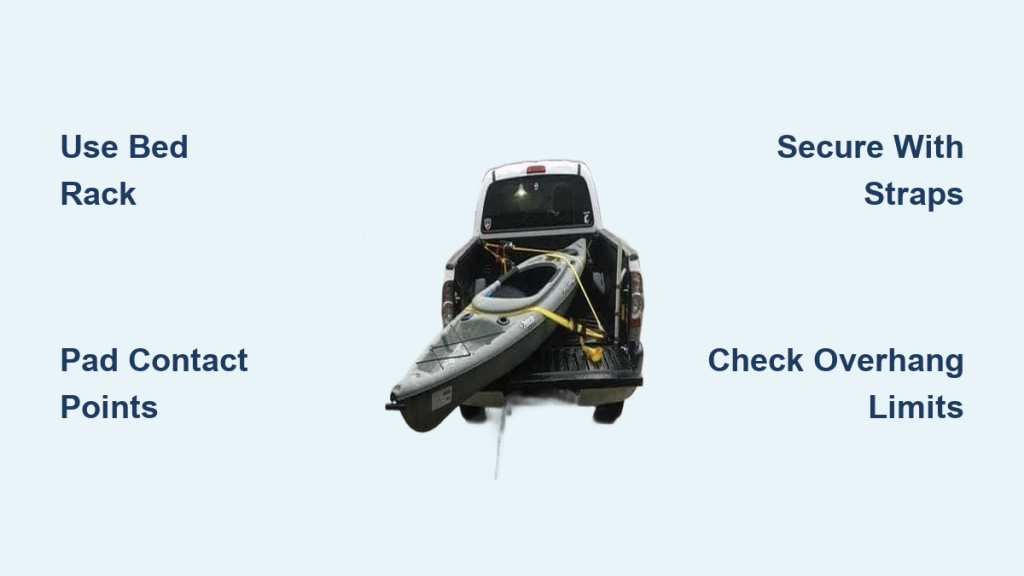
A bed rack mounts directly over the truck bed walls, creating crossbars or a flat platform for kayaks. This method keeps the tailgate functional and avoids the need to lift kayaks overhead.
- Fits most full-size and midsize trucks
- Holds kayaks above bed rails for full cargo space below
- Easier loading than roof racks for heavier models
Choose adjustable crossbars that accommodate different kayak widths. Position one crossbar near the cab and another over the rear axle to distribute weight evenly across the suspension.
Install Roof Crossbars with J-Cradles
If your truck has a camper shell, tonneau cover, or topper limiting bed space, roof crossbars with J-cradles work well. The kayaks sit on their sides, angled for better aerodynamics.
- Requires a roof rack system rated for kayak weight
- Best for trucks with shells, caps, or limited bed access
- Frees the bed entirely for paddles, coolers, and gear
Mount J-cradles so kayak cockpits face forward, reducing wind drag. Padded straps at both bow and stern prevent rocking and shifting during transit.
Extend Bed Capacity with a Hitch-Mount Carrier

A hitch-mounted carrier attaches to a 2-inch receiver and extends behind the truck. This frees up the entire bed or roof for other cargo while carrying kayaks vertically or horizontally.
- Mounts to a standard 2-inch receiver hitch
- Carries one or two kayaks depending on the model
- Ideal when bed and roof space are both occupied
Add an extension flag and rear lights for visibility when kayaks extend beyond the bumper. This method keeps loading low and simple.
Load Kayaks Safely and Securely
Proper loading protects both your kayaks and your truck. Balance, padding, and strap placement are the three pillars of a secure setup.
Position Kayaks with Weight Forward
Center the combined kayak weight over the rear axle to maintain steering control and even tire wear. The front kayak’s bow should sit just behind the cab, with the second kayak extending toward the tailgate.
- Short bed trucks (5.5 feet or less): Overhang is expected — check local laws
- Standard bed trucks (6.5 feet): Usually fit both kayaks fully inside
- Long bed trucks (8 feet): Plenty of room with space to spare
If kayaks extend past the tailgate, most states allow up to 4 feet of overhang without a flag, though requirements vary. Always confirm local regulations before travel.
Pad Contact Points to Prevent Damage
Hull-to-metal contact causes scratches, dents, and stress cracks over time. Foam blocks, pool noodles, or rubber strips create a buffer wherever the kayak touches the rack or truck.
- Line bed rails with pool noodles cut to size
- Wrap exposed metal edges with foam tubing
- Place towels or blankets under hulls resting on roof racks
Never let fiberglass or plastic hulls sit directly on metal, even briefly. Micro-scratches add up after repeated trips.
Use Proper Tie-Down Technique
Ratchet straps and cam buckle straps hold kayaks far better than bungee cords, which stretch and loosen with vibration. Four anchor points per kayak is the minimum for safe transport.
- Place padded crossbars or foam blocks across the bed at front and rear
- Load the first kayak into position with the cockpit facing forward
- Add the second kayak beside or slightly staggered behind the first
- Run straps over both kayaks at four points: bow, mid-front, mid-rear, and stern
- Tighten until the kayaks don’t shift, but avoid deforming the hull
Stop and re-check straps every 50 miles, especially after sustained highway speeds.
Prevent Common Transport Mistakes
Small oversights cause big problems on the road. Avoiding these frequent errors keeps your gear and other drivers safe.
Don’t Overhang Without a Flag
Once a kayak extends more than 4 feet past the tailgate, most states require a red flag during daylight hours or a red light at night.
- Use a collapsible flag with a magnetic base for easy mounting
- Attach a battery-powered light to the hitch or rear bumper
- Verify your state’s specific overhang and marking requirements
Skipping this step risks fines and makes your load nearly invisible to tailing drivers.
Avoid Uneven Weight Distribution
Loading both kayaks toward the cab or the tailgate unbalances the truck, affecting steering response and braking distance. Side-to-side imbalance causes sway on curves.
- Distribute weight evenly front to back and side to side
- Place the heavier kayak (if models differ) in the lower position
- Rock the truck gently before driving to test stability
A balanced load improves fuel efficiency and reduces tire wear.
Never Skip the Test Drive
After strapping down the kayaks, take a 5–10 minute drive at low speed before hitting the highway. This catches loose straps, misalignment, or clearance issues early.
- Listen for flapping, rattling, or sudden shifts
- Pull over and re-tighten if anything feels off
- Confirm no parts drag on the ground at full suspension compression
This short step prevents roadside emergencies and mid-trip corrections.
Maximize Space in Short Bed Trucks

Short bed trucks (5.5 feet or less) make two-kayak transport trickier, but the right accessories solve most clearance problems.
Use a Kayak Stack System
Stacking one kayak upside down over the other doubles your carrying capacity in a short bed. Padded crossbars create the vertical clearance needed.
- Bottom kayak: Right-side up for structural support
- Top kayak: Upside down to nest into the hull’s cockpit curve
- Add foam blocks between hulls to prevent scratching
Only stack if your rack provides 8–10 inches of vertical space between kayaks. Cramped stacking deforms hulls and creates wind drag.
Install a Bed Extender

A folding bed extender adds 2–3 feet of usable length, supporting the stern of the second kayak without relying solely on the tailgate.
- Reduces rear overhang risk in short beds
- Simplifies loading by creating a longer flat surface
- Folds flat against the tailgate when not in use
Lock the extender securely before driving and ensure it doesn’t interfere with steering or turning radius.
Angle Kayaks for Clearance
Angling kayaks slightly inward from bow to stern creates extra side clearance for mirrors and cab corners. This is especially helpful in tight beds where width is limited.
- Keep bows slightly wider than sterns
- Add mirror extensions if kayaks crowd the cab
- Confirm full clearance before pulling out of the driveway
This minor adjustment prevents mirror strikes on curves and turns.
Maintain Kayak and Truck Protection
Consistent habits preserve both your kayaks and your truck over years of use.
Clean and Inspect Before Every Trip
Dirt, sand, and road salt wear down straps and rack components faster than mileage alone. A quick pre-trip check catches problems before they strand you.
- Wipe down kayaks and remove trapped debris
- Inspect straps for fraying, UV damage, or worn buckles
- Lubricate rack moving parts monthly to prevent rust
A 5-minute routine prevents mid-trip failures and extends gear life.
Invest in a Truck Bed Liner
A spray-on or drop-in bed liner adds a protective layer between the kayaks and the truck bed metal. Even with padding, vibrations cause micro-scratches over time.
- Shields metal from abrasion and dents
- Adds grip to reduce sliding on smooth surfaces
- Easier to clean than bare metal after muddy trips
This upgrade pays for itself in avoided bodywork and resale value.
Store Gear Inside the Bed
Use the space beneath or around the kayaks for paddles, life jackets, and dry bags. Smart storage keeps essentials accessible without cluttering the cab.
- Secure loose items with cargo nets to prevent shifting
- Avoid stacking heavy gear on the tailgate, which adds overhang weight
- Keep storage low and centered to maintain a balanced load
A well-organized bed makes loading and unloading faster at the launch site.
Frequently Asked Questions About Transporting Two Kayaks in a Truck Bed
Can you fit two kayaks in a short bed truck?
Yes, with a bed rack, stack system, or bed extender. Short beds (5.5 feet) require some overhang, but most states allow up to 4 feet without a flag. Stacking upside-down kayaks is the most space-efficient option.
What’s the best rack for carrying two kayaks in a truck bed?
Adjustable bed racks with padded crossbars offer the best balance of capacity, loading height, and bed access. Look for systems rated for at least 150 pounds total weight and compatible with your truck’s bed width.
How do you prevent kayaks from scratching the truck bed?
Line the bed rails and contact points with foam padding, pool noodles, or rubber strips. A bed liner adds extra protection against vibrations and micro-scratches during long drives.
Do I need a flag if my kayaks hang over the tailgate?
If the overhang exceeds 4 feet, most states require a red flag during the day and a red light at night. Check your local DMV regulations, as requirements vary by state and road type.
Is it legal to strap kayaks to a truck roof without crossbars?
No. Kayaks must be secured to rated crossbars or roof rack systems. Strapping directly to the roof, cab, or tonneau cover is unsafe and may violate road safety laws.
How tight should kayak straps be?
Tight enough that the kayaks don’t shift when rocked by hand, but not so tight that the hull deforms. Over-tightening cracks plastic and fiberglass over time. Check tension every 50 miles.
Final Thoughts on Transporting Two Kayaks in a Truck Bed
Transporting two kayaks in a truck bed comes down to three essentials: proper padding, balanced loading, and secure strapping. Whether you choose a bed rack, roof crossbars, or a hitch carrier, match the method to your truck size and kayak weight. Always pad contact points, balance the load over the rear axle, and re-tighten straps after the first 50 miles.
Before your next trip, measure your overhang, check local flag laws, and take a short test drive around the block. These small habits prevent damage, fines, and roadside surprises. With the right setup, two kayaks fit comfortably in almost any truck — and the water is waiting.