Halfway down the highway, you hear a sound no paddler wants to hear: a soft thud, then scraping. Your kayak is sliding around in the truck bed. A loose kayak can damage your vehicle, fly into traffic, or cost you a ruined boat before you ever reach the water. Learning how to tie a kayak in a truck bed properly protects your gear, your truck, and everyone sharing the road with you.
This guide walks you through gear selection, loading position, strap patterns, and safety checks that work for full-size pickups and compact trucks alike. You will learn the X-pattern technique, where to place padding, and how to secure overhangs legally and safely. By the final section, you will be able to load your kayak with confidence on your next trip.
Essential Gear for Kayak Tie-Down

The right equipment makes the difference between a secure load and a shifting disaster. Gathering your supplies before loading saves time and prevents mid-trip fixes.
Choose the Right Tie-Down Straps
Pick ratchet straps or cam buckle straps between 15 and 20 feet long with at least a 600-pound break strength. Avoid bungee cords at all costs. Bungees stretch, loosen with vibration, and can snap unexpectedly. Ratchet straps provide firm tension and let you tighten the load evenly with minimal effort.
Use Foam Padding or Pool Noodles
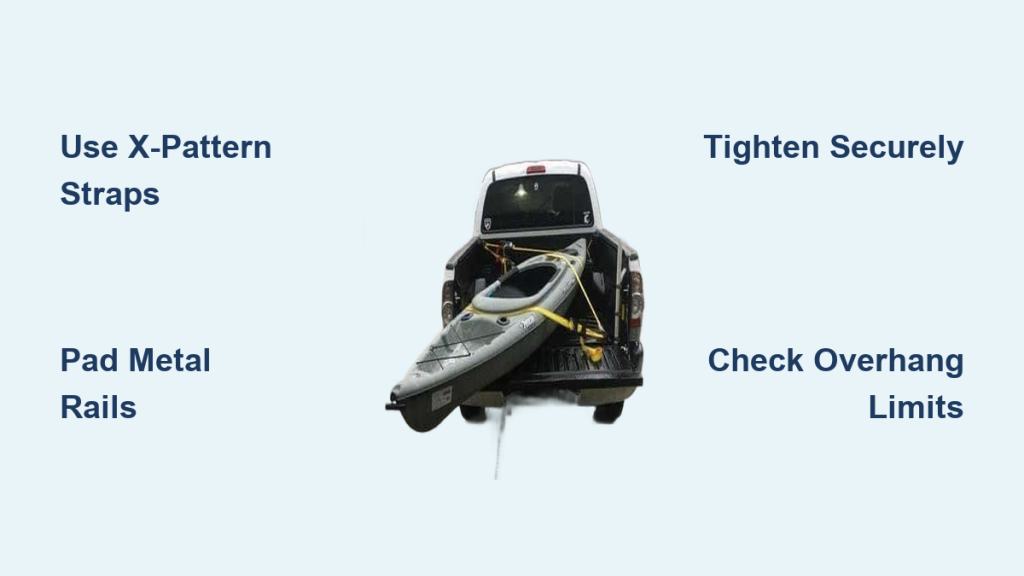
Protect your hull by placing foam padding or slit pool noodles over the bed rails where the kayak rests. Friction against metal can wear through a hull in minutes, especially on longer drives. A sliced pool noodle creates a soft, low-cost barrier that absorbs road vibration.
Confirm Truck Bed Anchor Points
Most modern trucks include built-in tie-down anchors in the bed corners. Inspect them for rust, cracks, or stripped threads before trusting them with your load. Trucks without factory anchors can use clamp-on rail systems with D-rings, which attach without drilling and support serious weight.
Position the Kayak Correctly in the Bed

Placement affects balance, visibility, and how securely the straps hold. A poorly centered kayak wobbles at speed and stresses your suspension.
Center the Kayak Over the Axle
Place the kayak so its midpoint sits directly above the rear axle. This spreads the weight evenly across the truck frame and improves handling. Avoid letting more than 2 to 3 feet of the kayak extend past the tailgate to keep the load manageable.
Align Hull with Truck Symmetry
Keep the kayak parallel to the truck bed walls. A crooked kayak catches crosswind, increases drag, and shifts during turns. When transporting two kayaks, stack them hull-to-hull with foam between them to prevent scratches and dents.
Check Tailgate Clearance
Make sure the tailgate either closes fully or is removed and tied down. A flapping tailgate stresses hinges and rattles straps loose. Check your local regulations for overhang limits before loading a kayak longer than your bed.
Step-by-Step: Tie the Kayak Securely
With the kayak centered and padded, you are ready to fasten it down using a proven strap pattern.
Cross Straps Over the Kayak
Run one strap from the front driver-side bed corner, up and over the kayak, down to the rear passenger-side anchor. Then run a second strap from the front passenger-side corner to the rear driver-side anchor. This X-pattern locks the kayak in place and prevents sideways rocking.
Pro Tip: Fully tighten the first diagonal before securing the second. Starting with one strap removes slack and keeps tension even across both lines.
Add Front and Rear Tie-Downs
Attach a strap from the bow handle to a front bed anchor. Repeat with the stern and a rear anchor. These direct tie-downs stop the kayak from sliding forward during braking or backward on inclines.
Use Bow and Stern Lines for Extra Security
For long highway drives, run ropes from the kayak’s bow and stern to the truck’s bumper or trailer hitch. These backup lines keep the kayak in place even if a bed strap loosens or fails mid-trip.
Avoid Common Kayak Tie-Down Mistakes
Even experienced paddlers make errors that put their kayak and safety at risk. Knowing what to skip saves you from costly damage.
Do Not Over-Tighten Straps
Too much tension can warp a plastic hull or crack a fiberglass deck. Straps should feel snug, not crushing. If you notice the kayak deforming under pressure, loosen the strap slightly.
Never Skip Padding
Bare metal rails will scratch, gouge, or dent any kayak hull. Always cushion contact points with foam, towels, or pool noodles. Composite kayaks are especially vulnerable and demand extra padding.
Replace Worn or UV-Damaged Straps
Inspect every strap before each trip. Look for fraying, cracked buckles, or faded nylon. Sun exposure weakens synthetic fibers over time. A strap that looks old is a strap you should replace before trusting it with your boat.
Secure an Overhanging Kayak Safely

Sometimes your kayak is simply longer than your truck bed. Extra precautions keep you legal and safe on the road.
Limit Overhang to 3 Feet
Most states allow up to 4 feet of rear overhang, but staying under 3 feet reduces wind drag and side-to-side sway. Always verify local laws before loading a long kayak.
Mark the Overhang with a Flag
Attach a bright red or orange oversize load flag (18 by 18 inches) to the kayak’s end. This alerts other drivers and satisfies traffic requirements in most regions.
Support the Overhanging End
If possible, use a hitch-mounted kayak cradle or ask someone to support the overhanging tip during loading. Driving with a fully unsupported end increases hull stress and may crack the kayak over bumps.
Quick Safety Check Before Driving
Spend one minute verifying everything before you pull out of the driveway.
Test Strap Tension
Push the kayak side to side and front to back by hand. Any movement means the straps need tightening. Recheck tension after the first few miles because straps settle and loosen once vibration starts.
Confirm Clear Visibility
Make sure the kayak does not block your rearview mirror or backup camera. Reposition the load slightly forward if visibility is compromised.
Inspect for Loose Ends
Tuck excess strap tails out of the way. Flapping straps fray quickly and can catch in wheels or spinning axles.
Alternative Methods Without Built-In Anchors
If your truck lacks factory anchor points, you still have safe options for tying down your kayak.
Use Bed Liner Holes if Present
Some spray-in bed liners leave small access holes over factory anchors. Probe gently around the corners to locate them. Use J-hooks or S-hooks to clip straps into these hidden mounting points.
Install Portable Tie-Down Rails
Clamp-on bed rails with D-rings attach to the lip of your truck bed without drilling. They support hundreds of pounds and work well for renters or anyone avoiding permanent modifications.
Anchor to Sturdy Wheel Well Components
Loop straps around solid metal parts of the wheel well structure. Avoid plastic fender liners or trim pieces that can crack under tension. Test the hold by pulling firmly before driving away.
Final Tips for Long-Distance Hauling
Long trips demand extra attention to your load. A few habits keep your kayak safe from the driveway to the launch.
Stop and Recheck Every 2 Hours
Vibration and temperature swings cause straps to loosen over time. Pull over at rest stops and re-tighten each strap by a few clicks to maintain even pressure.
Cover the Kayak on the Highway
A kayak cover or fitted tarp cuts wind resistance and shields the hull from road debris. Secure the cover with short bungee straps so it never flaps loose at speed.
Avoid High Speeds in Windy Conditions
Strong crosswinds can lift or shift an improperly secured kayak. Keep your speed below 65 mph when gusts pick up, especially with a light plastic boat.
Frequently Asked Questions About Tying a Kayak in a Truck Bed
What Type of Strap Works Best for Securing a Kayak?
Ratchet straps and cam buckle straps with at least a 600-pound break strength offer the most secure hold. Avoid bungee cords because they stretch and loosen with road vibration.
How Tight Should the Straps Be on a Kayak?
Straps should feel snug without compressing or deforming the hull. A strap that crushes the plastic is too tight and can damage your kayak over time.
Can I Transport a Kayak Without Tie-Down Anchors?
Yes. You can use clamp-on bed rails with D-rings, wheel well anchor points, or hitch-mounted cradles. These options work well when factory anchors are missing or damaged.
How Much Kayak Overhang Is Legal?
Most states allow up to 4 feet of rear overhang, but requirements vary. Check your local traffic laws and flag any overhang that exceeds the legal limit.
Should I Use Bow and Stern Lines for Short Trips?
Bow and stern lines add security on long highway drives, but short local trips usually work fine with cross straps and direct tie-downs alone.
Key Takeaways for Securing Your Kayak in a Truck Bed
Use the X-pattern cross strap method to lock your kayak in place and stop sideways movement. Always pad the contact points between hull and metal to prevent scratches and dents. Tighten straps firmly but never to the point of warping the kayak, and recheck tension every couple of hours on long drives. Before your next outing, gather your ratchet straps, foam padding, and anchor points so you are ready to load up and hit the water with total peace of mind.