Hauling a replacement engine home is one of the most satisfying moments in any project car build. But the moment that heavy block leaves your hoist, the real question kicks in: how to get an engine into a truck bed without turning it into a 600 lb missile? One hard stop at highway speed and that motor becomes a battering ram heading straight for your back window.
The good news is that experienced mechanics have hauled engines for decades using simple, field-proven methods. You don’t need a professional trailer or a custom rig. You just need the right base, smart positioning, and proper tie-downs. This guide walks you through the safest, most practical approach so your engine arrives home right where it started: intact.
Set an Old Tire as the Engine Base
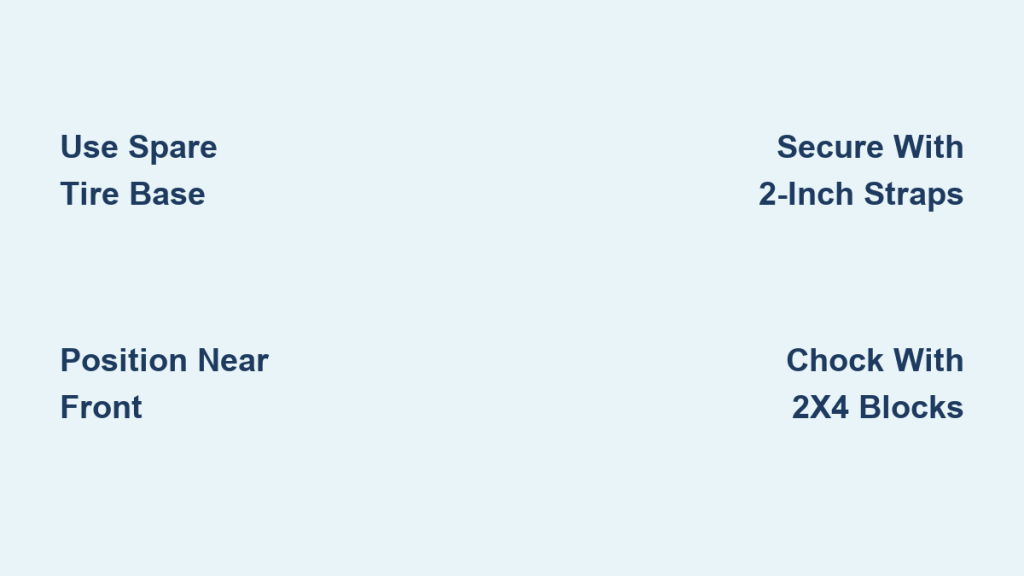
The single most popular and reliable base for an engine in a truck bed is a spare tire. Use a 15″ or 16″ passenger car or light truck tire depending on engine size. V6 and small block V8s sit perfectly on a standard car tire, while bigger blocks may need a truck tire for a wider footprint.
Place the engine directly on the tire with the crankshaft facing forward. The curved sidewall naturally cradles the oil pan and keeps the block upright. This also lowers the center of gravity and dramatically reduces the chance of tipping.
Skip the Pallet
A pallet might sound like extra protection, but most experienced haulers say it’s more trouble than it’s worth. Pallets raise the engine higher, increase tipping risk, and can actually slide around more than the tire alone.
If you’re worried about scratching the bed, skip the pallet and lay down a furniture blanket wrapped in a tarp. The flexible material grips better and absorbs any oil or coolant drips.
Load the Engine Near the Front of the Bed

Where you place the engine in the bed is one of the most important decisions you’ll make. Always position the engine as close to the front of the bed as possible, ideally pushed right up against the front wall or cab divider.
A heavy engine sitting mid-bed has room to build momentum during a sudden stop. A 600 lb block traveling forward at highway speed can generate over 20,000 lbs of force. That’s more than enough to punch through the cab if it’s not restrained properly.
Avoid the Center at All Costs
Mid-bed placement is the worst spot for safety. It gives the engine the longest possible travel distance during hard braking, which puts massive stress on your straps and dramatically increases the risk of failure.
If your home hoist can’t reach all the way to the front of the bed, there’s a simple workaround. Load it where your hoist can reach, then use a strap-assisted slide to move it forward once it’s in the bed.
Strap It Down with Heavy-Duty Ratchet Straps
Once the engine is on the tire and pushed forward, it’s time to lock it in place. Use at least four ratchet straps in an X-pattern, crossing them over the intake manifold or cylinder heads for the strongest anchor points.
Anchor the straps to all four corners of the truck bed whenever possible. This creates a triangulated hold that resists movement in every direction.
Use 2-Inch or Wider Straps Only
Standard 1-inch ratchet straps are dangerous for this job. They’re typically rated for only a few hundred pounds and can snap under the dynamic forces of a sudden stop. One experienced hauler compared them to dental floss trying to restrain a 600 lb chunk of iron.
Opt for 2-inch straps with a working load limit of 5,000 lbs or more. For heavier engines like big-block Chevys or Subaru motors with transmissions, 4-inch winch straps offer maximum peace of mind.
Add Rearward-Facing Tension
Front straps alone won’t cut it. Always add at least one strap pulling toward the rear of the truck. This is the direction that matters most during emergency braking.
A great method is running a strap over the tailgate and down to the tow hitch. This anchors the engine directly against the force of forward momentum and prevents it from ever becoming a projectile.
Chock the Engine with 2×4 Blocks

Even with a tire and quality straps, engines can wobble or lean during transport. Bringing along a few short pieces of 2×4 gives you the ability to chock the engine and keep it perfectly upright.
Slide a 2×4 block under the oil pan where it doesn’t fully contact the tire. This fills the gap, prevents rocking, and gives you a flatter, more stable base. You can also wedge 2x4s along the sides for lateral support.
Build a Quick Cradle for Frequent Hauls
If you transport engines regularly, consider building a simple 2×4 cradle custom-fit to your engine’s dimensions. One user reported driving 3.5 hours with a scrapyard-built cradle and the engine never budged.
A basic rectangular frame with cross supports cradles the engine fore, aft, and side-to-side. It reduces stress on your straps and makes loading and unloading far easier.
Protect the Bed Before You Load
Engines leak. It’s not a question of if but when. Before you place anything in the truck bed, lay down a protective layer to catch drips and prevent scratches.
A furniture blanket wrapped inside a tarp works perfectly. It cushions the engine, absorbs any oil or coolant, and protects the bed from damage. Bring along some rags or absorbent pads for cleanup when you arrive.
Use the Tote Lid Slide Trick for Unloading
Getting the engine out of the bed is often harder than loading it. If you’ve pushed it against the front wall, dragging it back to the tailgate can wreck your back and scratch the bed.
A simple trick solves this. Place the tire on top of a flat plastic tote lid before loading. The slick surface lets the whole setup slide easily. Hook one end of a ratchet strap to the tire and the other to a fixed point like a tree or post, then slowly drive forward. The engine glides right to the tailgate with no heavy lifting required.
Watch Out for These Common Mistakes
Even seasoned DIYers make errors that can turn a simple haul into a disaster. Here’s what to avoid.
❌ Skipping the Straps Altogether
Never assume an engine is too heavy to slide. One user watched a big-block Chevy roll out of an unstrapped truck bed and land in the middle of a highway. A slight turn, bump, or brake tap is all it takes to get it moving.
❌ Using Worn or Underrated Straps
Inspect every strap before use. Frayed webbing, cracked ratchet mechanisms, or rusted hooks are all signs to retire that strap. If there’s any doubt, replace it.
❌ Ignoring Fluid Leaks
Engines that have been sitting often seep oil or coolant once moved. Always place a tarp or absorbent layer underneath. A small spill kit in the cab is a smart backup.
Frequently Asked Questions About Engine Transport
What size tire should I use as an engine base?
A 15″ or 16″ tire from a passenger car or light truck works well for most V6 and V8 engines. Bigger blocks may benefit from a wider truck tire for a more stable footprint.
Are 1-inch ratchet straps strong enough for an engine?
No. 1-inch straps are typically rated for only a few hundred pounds and can fail under the dynamic forces of a sudden stop. Always use 2-inch or wider straps with a 5,000 lb working load limit or higher.
Where should I place the engine in the truck bed?
Always position the engine as close to the front of the bed as possible, ideally against the cab divider. Mid-bed placement allows too much travel distance during emergency braking.
Do I really need a pallet under the engine?
Most experienced haulers say no. A pallet adds height and instability without improving security. A tire alone provides better grip and a lower center of gravity.
How do I unload the engine without hurting my back?
Place the tire on a flat plastic tote lid before loading. Once home, hook a strap to the tire and a fixed point, then slowly drive forward. The engine slides to the tailgate with no heavy lifting.
Key Takeaways for Hauling an Engine in a Truck Bed
Transporting an engine doesn’t require expensive equipment, but it does demand respect for the physics involved. Use a tire as your base, position the engine against the front wall of the bed, and secure it with heavy-duty 2-inch or wider ratchet straps in an X-pattern. Always add rearward-facing tension to resist forward surge during emergency braking.
Bring along 2×4 blocks for chocking, protect the bed with a blanket and tarp, and plan your unloading strategy before you ever leave the house. Take an hour to gather the right supplies now, and you’ll save yourself from a back-breaking struggle or a roadside disaster later.