
You’re hauling lumber to a job site or loading up a new ATV in your truck bed, and you need to know: how far can something stick out of a truck bed without breaking the law? This is one of the most common questions among DIYers, contractors, and weekend haulers. The answer depends on where you drive, how much your cargo extends, and which direction it protrudes.
Most U.S. states allow up to 4 feet of rear overhang without a permit. Front overhangs are typically capped at 3 feet, and side extensions beyond 4 inches require visible warning markers. These rules exist to prevent accidents, protect other drivers, and keep roads safe for everyone.
In this guide, you’ll learn the exact legal limits for rear, front, and side overhangs, when you need flags or permits, and how to stay compliant whether you’re driving across town or across state lines.
Rear Overhang Rules You Need to Know

California: 4 Feet Without a Permit
California permits cargo to extend 4 feet beyond the rear of your truck without special paperwork. However, this changes if your rig is an STAA vehicle (a truck built to federal interstate commerce standards). Once your total vehicle-plus-load length exceeds 75 feet, the cargo must stay within the vehicle’s dimensions.
Some materials get special treatment:
– Poles, pipes, and timbers can extend up to 80 feet total when moving between storage and job sites
– This falls under CVC Section 35414 and applies to single-unit structural components
If your load sticks out 4 feet or more, California requires you to display warning markers:
– A solid red or fluorescent orange flag, 18 inches square, during daylight hours
– Two flags if the load is wider than 2 feet
– Two red lights at night, visible from 500 feet, in addition to standard taillights
Pro Tip: Measure from the taillamps, not the bumper or tailgate. That’s the legal starting point under CVC Section 24604.
Texas: 4 Feet Standard, 7 Feet for Vehicles
Texas Transportation Code 621.206 sets the general rear overhang limit at 4 feet. But there’s a key exception for auto haulers:
– Trailers carrying motor vehicles may extend up to 7 feet beyond the rear
– The vehicle must be designed for rear loading
– It must comply with federal motor carrier safety regulations
– This exception does not apply to timber, electric poles, or pipes
For any overhang in Texas, follow federal cargo securement rules. Use 18-inch red flags during the day and red lights at night to stay safe and avoid citations.
General Industry Standard: 3 to 4 Feet
Across most U.S. states, here’s what drivers can expect:
– 3 feet of rear overhang is widely accepted and rarely flagged
– 4 feet is the common legal maximum without a permit
– Over 4 feet typically requires warning flags, lights, and possibly an oversize load permit
If your load is under 4 feet, you’re likely fine in most states. Just add flags once you hit the 4-foot mark.
Front Overhang Limits Across States
California: 3 Feet, With Exceptions
Under CVC Section 35406(a), cargo can extend 3 feet beyond the front bumper or front tires, whichever sticks out farthest. But if you’re hauling other vehicles, that limit increases to 4 feet.
Several special exemptions apply in California:
– Crane booms or water well equipment: Can extend up to two-thirds of the wheelbase if the boom is secured, the driver has clear vision, and no part hangs lower than 7 feet from the road
– Camera or driving teaching vehicles: Up to 5 feet with authorization from the CHP and DMV
– Log loaders built before 1988: Exempt if equipped with mirrors, a lead vehicle, and working radio communication
Texas: 3 Feet, No Exceptions
Texas law is simple. No load may extend more than 3 feet beyond the front of the vehicle. There are no exceptions for vehicle hauling or equipment transport.
Warning: Front overhangs reduce visibility and increase collision risk. Always check that your mirrors and sightlines stay clear before driving.
Side Overhang: 4 Inches Triggers Flags
California Flag Requirements
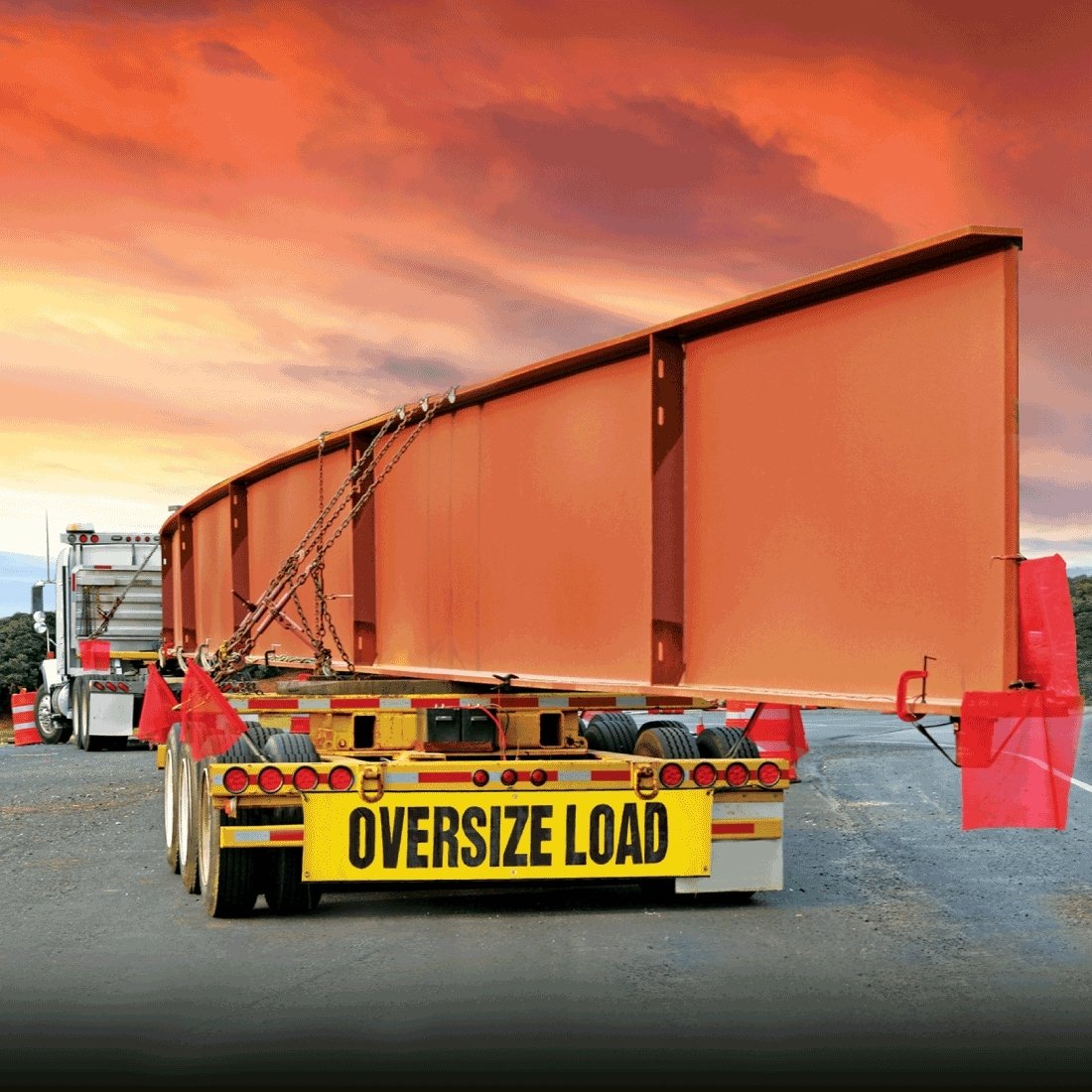
If your load protrudes more than 4 inches from the side of your vehicle, CVC Section 25104(b) requires warning flags:
– One 18-inch red or orange flag if the projection is 2 feet wide or less
– Two flags if the projection exceeds 2 feet
– Flags must mark the maximum width of the overhang
This rule applies to both sides of the vehicle and is especially important for low-light conditions or narrow roads.
Pro Tip: Overwidth cargo like drywall sheets or steel beams often exceeds 4 inches. Always flag both sides, even if the overhang seems minor.
Trailer and Container Overhang Rules
Front of Trailer: No Fixed Limit in California
Cargo can extend off the front of a trailer in California with no specific length cap, provided it doesn’t interfere with safe operation. The load must not:
– Restrict turning movements
– Damage air lines or connections
– Shift during transport
Empty Containers: 5 Feet of Overhang Allowed
For intermodal shipping containers, the rules differ based on whether the container is loaded:
– Loaded containers: Cannot overhang the front or rear when not on a container chassis
– Empty containers: May overhang up to 5 feet on either the front or rear of the trailer
These rules fall under CCR Title 13 and federal CFR 49 Part 393.126.
When You Need an Oversize Load Permit
Most states require a special permit when your load exceeds standard limits. You’ll likely need a permit if:
– Rear overhang exceeds 4 feet
– Front overhang exceeds 3 feet
– Side overhang exceeds 4 inches (in some states)
– Total vehicle-and-load length exceeds 75 feet in California or 65 feet in many other states
Permits are issued by your state Department of Transportation and may require:
– Approved travel routes
– Restricted travel during off-peak hours
– Pilot or escort vehicles for very long loads
Tip: Use your state’s DOT route planning tools to check bridge clearances and road restrictions before you hit the road.
Required Safety Markings for Overhangs
Daytime Flags: 18 Inches Minimum
Any overhang reaching 4 feet at the rear or 4 inches at the side needs high-visibility warning flags:
– Color: Red or fluorescent orange
– Size: At least 18 inches square
– Placement: At the extreme end of the load
– Quantity: One flag for narrow loads (2 feet or less), two flags for wider loads
Pro Tip: Choose mesh flags to reduce wind drag and prevent constant flapping while driving.
Nighttime Lights: Red and Visible
Between sunset and sunrise, flags aren’t enough. You must add:
– Two red lights at the end of the load
– Lights rated at 6 candlepower or less
– Visibility from at least 500 feet
– Standard taillights must remain in use as well
Warning: Reflectors alone don’t meet legal requirements. You need actual red lights after dark.
Special Exemptions Worth Knowing
18-Inch Extensions for Auto Haulers
Under CVC Sections 35402(b) and (c), auto transporters get extra flexibility:
– Extensions up to 18 inches on each end don’t count toward overall vehicle length
– Applies when vehicles are loaded on the transporter
Drawbar and Fifth Wheel Extensions
A sliding fifth wheel or drawbar can extend a combination by up to 2 feet 6 inches if:
– Travel speed stays at 35 mph or less
– You avoid freeways (on-ramps and off-ramps are okay)
– The pivot point is more than 2 feet behind the rear axle, or the pivot-to-rear-axle distance is 34 feet or less
This exemption does not apply to STAA vehicles.
3-Foot Pusher Extensions for Gravel Haulers
For dump trucks hauling sand, gravel, or earth:
– A 3-foot rear extension used to push a trailer is allowed
– The extension cannot carry any load
– It counts toward vehicle length but not combination length
– This exemption is prohibited on STAA vehicles
Real-World Enforcement Tips
Rules Vary by State
- California: Strict enforcement on flags, lights, and STAA compliance
- Texas: Focuses on rear overhang and vehicle-hauling exceptions
- Tennessee: Uses a kingpin-to-rear measurement of 50 feet as the permit threshold. A 53-foot flatbed with a 30-inch kingpin may already exceed the limit, and enforcement often targets lowboys and RGNs (Removable Gooseneck trailers)
Suppliers May Refuse Overhang Loads
Even when your overhang is legal, some suppliers won’t load cargo that extends beyond the bed due to liability concerns. Always:
– Confirm load dimensions before pickup
– Bring extra flags and lights
– Plan your securement strategy in advance
Common Mistakes to Avoid
Measuring from the Wrong Point
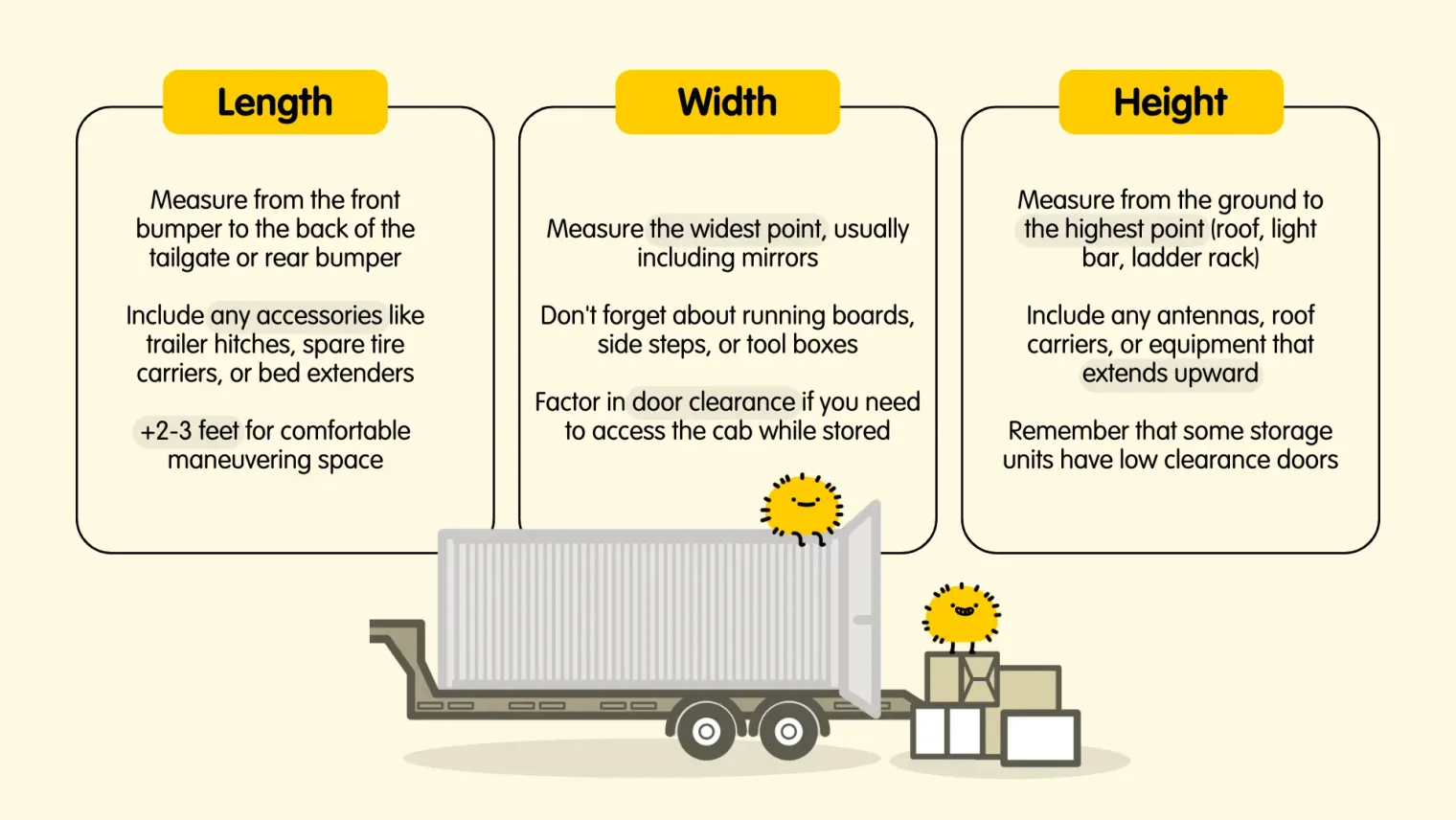
Many drivers measure from the bumper or tailgate. The correct starting points are:
– Rear: The taillamps
– Front: The front bumper or front tires, whichever extends farthest
Forgetting Nighttime Lights
Flags are only for daylight. After dark, you need red lights visible from 500 feet.
Ignoring Side Projections
A drywall sheet sticking out 6 inches from the side still requires a flag in California. Don’t overlook side overhangs just because they seem small.
Assuming “Everyone Does It” Means Legal
Other drivers may roll with unmarked overhangs, but that doesn’t make it safe or lawful. Get the flags, lights, and permits you need.
Quick Reference: Legal Overhang Limits
| Direction | California | Texas | Most Other States |
|---|---|---|---|
| Rear | 4 feet (up to 80 ft for poles/pipes) | 4 feet (7 ft for vehicles) | 4 feet max without permit |
| Front | 3 feet (4 ft for vehicles) | 3 feet | 3 feet max |
| Side | Flags required beyond 4 inches | Varies | Flags required beyond 4 inches |
| Daytime Flags | 18-inch red/orange for 4+ ft rear or 4+ in side | Follow federal guidelines | Required at 4+ ft rear or 4+ in side |
| Nighttime Lights | 2 red lights, 500 ft visibility | Required for night overhangs | Required after dark |
Frequently Asked Questions About Truck Bed Overhang
How far can something stick out of a truck bed without a flag?
In most states, you can drive without flags if your cargo extends less than 4 feet from the rear and less than 4 inches from the sides. Once you hit those thresholds, you need 18-inch red or fluorescent orange flags during daylight hours.
Do I need a permit for 4 feet of rear overhang?
In most states, no. Four feet of rear overhang is the standard legal limit without a special permit. However, you must still display warning flags during the day and red lights at night once you reach 4 feet.
What is the legal overhang for a truck bed in California?
California allows 4 feet of rear overhang, 3 feet of front overhang (4 feet for vehicle loads), and flags once side overhang exceeds 4 inches. Loads of poles, pipes, or timbers can extend up to 80 feet total under specific conditions.
How far can a load stick out of a truck without flags at night?
At night, flags are not sufficient. If your load extends 4 feet or more from the rear, you must use two red lights visible from 500 feet, in addition to your standard taillights.
Does the 4-foot rule apply to all 50 states?
No. While 4 feet is the most common rear overhang limit, some states allow less, and enforcement varies. Tennessee, for example, uses a 50-foot kingpin-to-rear measurement that can make even standard trailers over-length. Always check the specific rules for each state you plan to drive through.
Key Takeaways for Legal and Safe Truck Bed Hauling
Understanding how far something can stick out of a truck bed comes down to three core limits: 4 feet at the rear, 3 feet at the front, and 4 inches at the sides. Stay within those measurements and you can drive without a permit in most states. Cross those thresholds and you need warning flags, lights, and possibly an oversize load permit.
Before your next haul, take these steps:
1. Measure your load carefully from the correct reference points (taillamps for rear, bumper or tires for front)
2. Stock up on 18-inch red or orange flags and red nighttime lights
3. Check your state’s specific rules if you’re crossing borders or hauling unusual cargo
4. Secure your load with proper straps, chains, or tie-downs to prevent shifting
The goal isn’t just avoiding a ticket. It’s getting your cargo to its destination safely while protecting every other driver on the road. When in doubt, contact your state DOT or a certified commercial vehicle inspector for guidance. Laws change, and a quick check today can prevent fines, delays, or accidents tomorrow.