You need a bed cover, camper shell, or replacement liner, but you don’t know your Chevy truck’s exact bed length. Maybe the truck isn’t nearby, or you’re buying parts sight unseen. The VIN holds the answer. That 17-digit code unlocks factory build data, including the exact bed your truck rolled off the assembly line with. This guide shows you how to find your Chevy truck bed size using the VIN, what codes to look for, and how to verify the result when the decoder leaves gaps.
Where to Find Your Chevy VIN
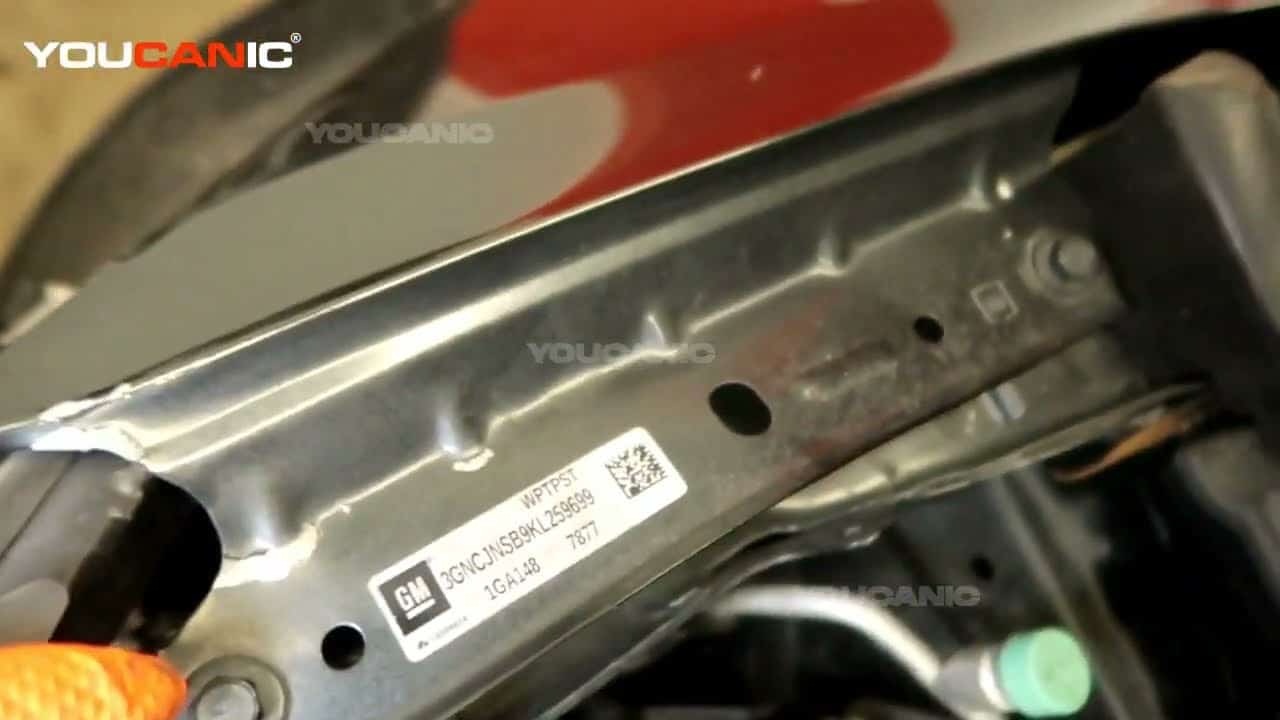
Start by locating the VIN. Chevrolet places it in the same standard locations used across the industry.
Common VIN Locations on Chevy Trucks
- Lower-left corner of the windshield (driver’s side, visible from outside)
- Driver’s side door jamb sticker (the SPID label)
- Glove compartment or under the hood on older models
- Vehicle registration, insurance card, or title paperwork
Tips for Reading the VIN Correctly
The VIN is 17 characters long and contains both letters and numbers. Avoid misreading common lookalikes:
– The letter “I” is not the number “1”
– The letter “O” is not the number “0”
– The letter “Q” rarely appears and can resemble “0”
Write the VIN down carefully or photograph it. One wrong digit throws off the entire decode.
Use a Free VIN Decoder Tool
Once you have the VIN, run it through a decoder. Free tools pull data from manufacturer and government databases.
Trusted Free VIN Decoders
- NHTSA VIN Decoder (vpic.nhtsa.dot.gov/decoder)
- Carfax free VIN check
- AutoZone VIN lookup
- TrimTool or other third-party decoders
These platforms translate the VIN into a vehicle profile that includes model year, cab style, engine, trim, and production plant.
What to Look For in the Decode Results
Focus on the fields that point to bed length:
– Model designation (Silverado 1500, 2500HD, Colorado)
– Cab type (Regular, Double, Crew)
– Trim level (WT, LT, LTZ, Z71)
– Body style and box type (if listed)
The decode itself rarely prints “6.5 ft bed” outright, but it gives you the configuration details needed to match against Chevy’s known bed options.
Match VIN Results to Chevy’s Standard Bed Lengths

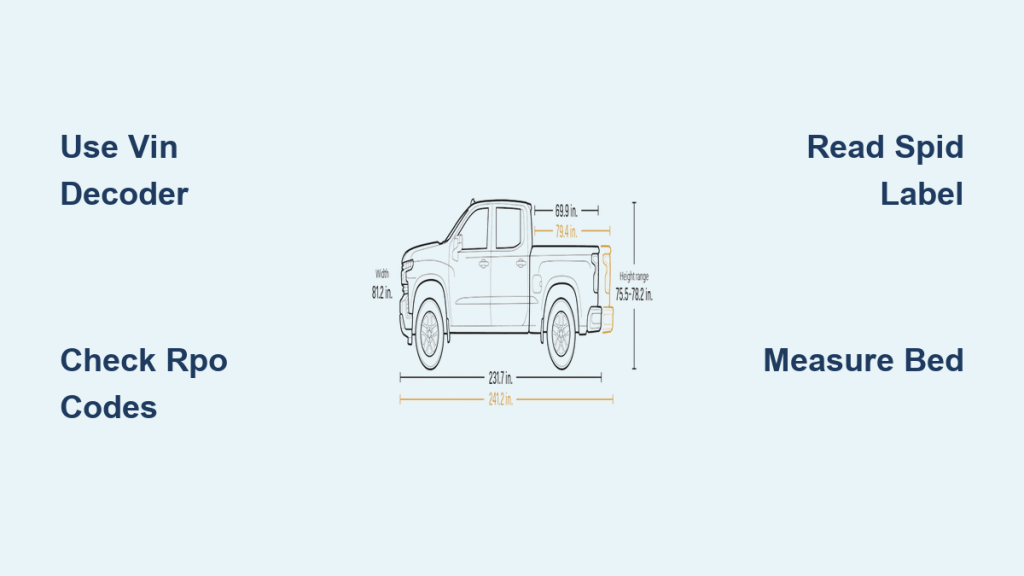
Chevrolet offers three main bed sizes on full-size trucks. The right one depends on cab style and model year.
Chevy Silverado 1500 Bed Lengths
- 5 ft 9 in (short bed) – standard on Crew Cab
- 6 ft 6 in (standard bed) – standard on Double Cab
- 8 ft (long bed) – mostly Regular Cab work trucks
Chevy Silverado HD Bed Lengths
- 6 ft 6 in – standard on Crew Cab
- 8 ft – standard on Regular Cab and some Double Cab trims
Chevy Colorado Bed Lengths
- 5 ft 2 in – standard on Extended Cab
- 6 ft 2 in – standard on Crew Cab
Cross-reference your decoded cab type with the table above. A Crew Cab Silverado 1500 almost always carries the 5’9″ bed, while a Regular Cab HD usually has the 8-foot box.
Look for RPO Codes to Confirm Bed Size

RPO (Regular Production Option) codes are the most precise way to confirm bed size from the VIN. These are factory build codes that list every installed component.
Common Chevy Bed RPO Codes
- E63 – 5 ft 9 in short box (light duty)
- E20 – 5 ft 9 in short box
- UF2 – 6 ft 6 in standard box
- UF3 – 8 ft long box
These codes appear on the SPID label (driver’s door jamb), on GM’s TIS2Web system, and sometimes within VIN decoder reports.
Where RPO Codes Show Up
- Door jamb SPID sticker
- Dealer build sheet (TIS2Web)
- Premium VIN reports from Carfax or similar services
If your decoder shows an RPO code for a box, that is your definitive bed size. Free tools sometimes omit these, so check the door label or call a dealer if needed.
Verify With the Door Jamb Sticker
The Service Parts Identification (SPID) label is one of the most reliable resources after the VIN itself.
How to Read the SPID Label
- Open the driver’s side door.
- Look for a sticker on the door jamb or edge.
- Scan the list of three-letter codes.
Locate the box code (E63, UF2, UF3, or similar). Match it to the bed length chart above. The SPID label also lists paint codes, axle ratio, and trim details that confirm you have the right vehicle.
Call a Chevy Dealer for a Build Sheet
When free tools fall short, a dealer can pull the full GM build record in minutes.
What to Ask the Dealer
- “Can you pull the build sheet for this VIN?”
- “What box length was installed at the factory?”
- “Can you give me the RPO codes for the bed?”
Most service advisors will do this at no charge. Have your VIN ready when you call.
Measure the Bed to Confirm
If you have access to the truck, a quick measurement removes all doubt.
How to Measure Correctly
- Place a tape measure at the inside front wall of the bed, just behind the cab.
- Extend it to the inside edge of the closed tailgate.
- Read the length in inches.
Do not measure over the bed rails, since that adds extra length and gives an inaccurate reading.
Matching Your Measurement
- 69 inches = 5 ft 9 in (short bed)
- 78 inches = 6 ft 6 in (standard bed)
- 96 inches = 8 ft (long bed)
If the number falls between these standards, the bed may have been replaced or modified.
Why Bed Size Accuracy Matters

A wrong bed size leads to wasted money and poor-fitting accessories.
Truck Bed Covers and Tonneaus
Soft, hard, and folding covers are model-specific. A 5’9″ cover will not seal on a 6’6″ bed.
Bed Liners and Mats
Spray-in and drop-in liners are molded to factory dimensions. A mismatch leaves gaps or overhang.
Slide-In Campers and Toppers
These require precision fit. A mismatch creates leaks, wind noise, and instability.
Using the VIN to confirm bed size avoids returns, modifications, and safety issues.
Common Mistakes to Avoid
Assuming All Crew Cabs Have the Same Bed
Crew Cab trucks sometimes come with the 6’6″ bed, especially on work trims or older model years. Always verify.
Trusting Online Listings Without Verification
Used truck ads frequently misstate bed size. Run the VIN yourself before buying parts.
Ignoring Model Year Changes
Chevy updated bed dimensions in 2019 and again in 2024. A 2018 and a 2023 Silverado Crew Cab do not share the same bed length.
Skipping the Physical Measurement
Even with a clean VIN decode, measure the bed if you can. Aftermarket swaps and accident repairs happen.
Frequently Asked Questions About Finding Chevy Bed Size by VIN
Does the Chevy VIN directly show bed size?
No. The VIN does not contain a specific digit for bed length. It encodes model, cab, engine, and trim, which you then match to known factory bed configurations.
What is the most accurate way to find bed size from the VIN?
Run the VIN through a free decoder, then check for RPO codes (E63, UF2, UF3). If absent, call a Chevy dealer and ask for the build sheet using your VIN.
Can I find bed size for free using just the VIN?
Yes. The NHTSA VIN decoder and the door jamb SPID sticker both give you the data you need at no cost.
Are bed sizes different between Chevy Silverado 1500 and HD models?
Yes. Silverado HD trucks (2500HD, 3500HD) typically offer 6’6″ or 8 ft beds, while the 1500 adds the 5’9″ short bed option for Crew Cabs.
What if my VIN decoder does not show cab or trim info?
Switch to a different decoder or contact a Chevy dealer. TIS2Web and dealer build sheets always include cab configuration and RPO codes.
Should I measure the bed even after decoding the VIN?
Yes. A physical measurement confirms the decode and catches aftermarket bed swaps or replacement beds that change the original specs.
Final Thoughts on Finding Chevy Bed Size by VIN
The VIN is your fastest path to a confirmed Chevy bed size. Start with a free NHTSA decode, identify the cab and trim, match against Chevy’s standard bed options, and look for RPO codes. If anything feels unclear, check the door jamb sticker or call a dealer with your VIN in hand. Confirm with a physical tape measure whenever possible.
Save your VIN, the decode results, and a photo of the SPID label. That record pays off every time you buy covers, liners, or campers. With these steps, you’ll know your exact bed size without guessing — and you’ll order the right parts on the first try.