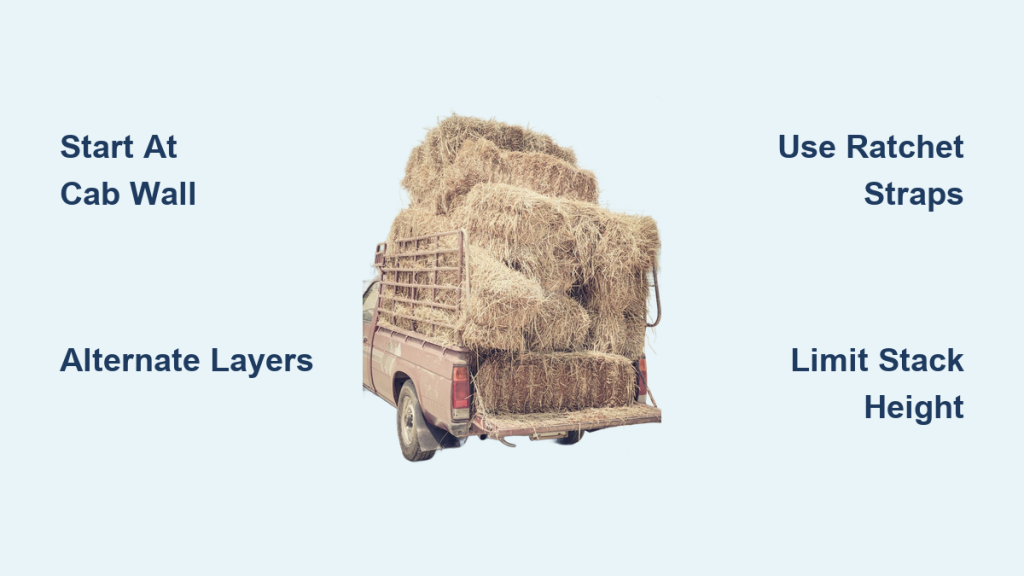
You have a short bed truck and a load of hay to haul, whether for livestock, landscaping, or seasonal displays. With limited truck bed space, stacking hay efficiently and safely can feel like a puzzle. The good news? With the right technique, you can maximize space, keep bales secure, and avoid roadside spills. This guide shows you how to stack hay in a short bed truck like a pro using smart arrangement, proper tie-downs, and simple tricks to prevent shifting and damage.
Whether you are hauling small square bales or larger compressed ones, improper stacking leads to instability, wind scatter, or even accidents. A well-stacked load not only fits more hay but also reduces drag, improves fuel efficiency, and keeps your cargo intact. You will learn how to orient bales for maximum density, use truck bed features to your advantage, and secure everything without guesswork. Let us get your hay stacked right, safely and securely.
Choose the Right Bale Type for Short Bed Hauling
Before stacking, know what kind of hay bales you are working with. The type affects how much you can carry and how they should be arranged.
Square Bales vs Round Bales
Square bales are ideal for short bed trucks because they are easier to stack tightly and fit into confined spaces. Most are 14 to 18 inches wide, 18 to 24 inches long, and about 36 inches high when compressed, making them modular and stable.
Round bales are bulky, often 4 to 6 feet in diameter, and nearly impossible to safely transport in a short bed without a trailer. Avoid them unless you have a flatbed extension or specialized rack. Stick with square bales for better control and stacking efficiency.
Standard vs Mini Bales
Standard square bales weigh 40 to 60 lbs each, which is manageable for lifting into a truck bed. Mini bales are lighter (15 to 25 lbs) and smaller, making them easier to stack high or in odd shapes. If you are stacking alone or have height limits, mini bales offer flexibility and reduce strain.
Prepare Your Truck Bed for a Stable Load
A clean, organized bed sets the foundation for a stable hay load. Skip this step and debris or slick surfaces can cause shifting during transit.
Clear and Clean the Bed
Remove all tools, tarps, or leftover cargo from the bed. Sweep out dirt, ice, or oil spots that could make bales slide. A clean surface ensures maximum friction between the truck bed and the bottom bales.
Use a Bed Liner or Non-Slip Mat
Rubber bed liners or non-slip mats prevent bales from sliding during acceleration or braking. If you do not have one, place a heavy-duty rubber mat or even a piece of outdoor carpet at the base. This simple addition keeps the first layer locked in place.
Load Hay from the Cab Forward
Always start stacking from the back of the cab and move toward the tailgate. This centers the weight and improves balance while driving.
Begin with the Bottom Layer
Place the first row of bales flat against the truck cab wall. Stand bales on their narrow end (14 to 18 inch side down) to increase height and reduce footprint. This orientation allows more bales per layer and creates a solid back wall.
For a typical 5.5-foot short bed, you can fit 3 to 4 bales across the width when standing them vertically. Pack them tightly side by side with no gaps between bales.
Stagger Upper Layers for Stability
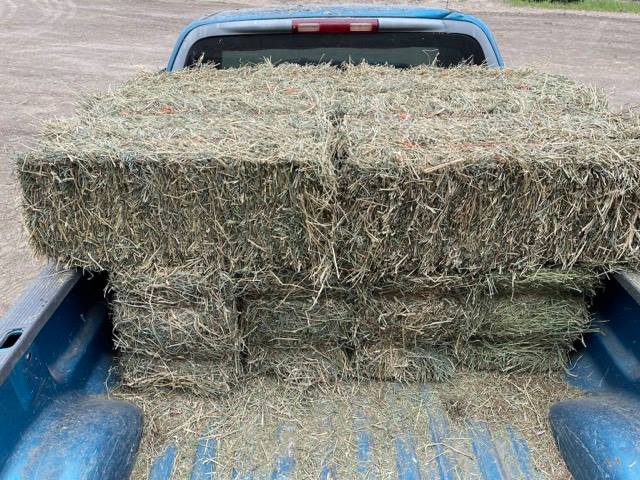
Stack the second layer horizontally (flat) to lock in the vertical bales below. This interlocking pattern, similar to brickwork, adds stability and prevents shifting.
For the third layer, return to vertical bales. Continue alternating until you reach a safe height. Never stack higher than 4 to 5 feet above the bed rails unless using an enclosed rack.
Maximize Space with Angled Stacking Techniques
When every inch counts, use diagonal arrangements to fit more bales in your short bed.
Diagonal Row Technique
After the first full layer, rotate bales 45 degrees and fit them into corners. This diamond pattern fills triangular gaps at the bed edges, especially near the wheel wells.
Secure these angled bales with bungee cords or straps to prevent rolling. Only use this method if the rest of the stack is tightly packed, because loose corner bales can unravel the whole load.
Utilize Wheel Well Space
Most short bed trucks have wheel wells that reduce usable width. Instead of leaving dead space, place smaller bales or split hay bundles into these areas. Tuck them tightly against larger bales to avoid movement during transit.
Secure the Load with Proper Tie-Downs
Stacking is only half the job. If your hay is not tied down, it becomes a road hazard.
Use Heavy-Duty Ratchet Straps
Apply at least two ratchet straps over the top of the stack: one just behind the cab and one near the tailgate. Crisscross straps in an X-pattern for even pressure and better hold.
Ensure straps are rated for 500+ lbs each. Position them over the densest parts of bales to prevent cutting into soft hay.
Add Side and End Protection
For tall stacks, install side rails or use tall hay racks. If unavailable, place wooden planks along the sides and strap them in place to act as temporary walls.
At the tailgate, keep it upright and latched. For extra security, drape a heavy-duty tarp over the back and strap it down to prevent rear bales from falling out during sudden stops.
Protect Hay from Wind and Weather Damage
Exposed hay can blow apart or get soaked, ruining your load before you reach your destination.
Cover with a Waterproof Tarp
Use a 12 x 15 foot waterproof tarp to cover the entire stack. Drape it snugly and tuck the edges under the sides of the bed before strapping.
Avoid plastic sheeting because it tears easily. Invest in a reinforced poly tarp with grommets every 2 feet for secure anchoring.
Seal Gaps Without Smothering the Load
Do not wrap the load airtight, since trapped moisture causes mold. Instead, allow slight ventilation by leaving small gaps at the top or sides, especially if hauling for more than an hour.
If rain is expected, tilt the tarp like a roof, angling it from front to back so water runs off rather than pooling.
Know Your Truck Weight and Height Limits
Overloading risks damage to your vehicle and creates safety hazards on the road.
Check Your Truck Payload Capacity
Most short bed trucks can carry 1,500 to 2,000 lbs in the bed. A standard hay bale weighs 50 lbs, so 30 bales equal 1,500 lbs. Always weigh your load or calculate total bale weight before driving.
Exceeding payload capacity stresses suspension, reduces braking efficiency, and increases rollover risk.
Limit Stack Height to 6 Feet
Even with straps, avoid stacking hay more than 6 feet above the bed floor. High loads catch wind, making your truck unstable at highway speeds.
If you need to haul more, make multiple trips or rent a trailer. It is safer and often faster than dealing with a blown-over load on the roadside.
Unload in Reverse Order for Safety
Efficient unloading prevents injury and saves time at your destination.
Remove Top Layers First
Take off straps and tarp before unloading. Start from the top and work down, removing horizontal layers before vertical ones.
Have a partner assist if stacking is high, because dropping bales from over 5 feet can cause back strain or injury.
Restack on Site Properly
Once delivered, restack hay on wooden pallets or a raised surface to prevent ground moisture absorption. Cover with a tarp if storing outdoors, but allow airflow to prevent mold growth.
Frequently Asked Questions About Stacking Hay in a Short Bed Truck
How many square bales fit in a short bed truck?
A typical 5.5-foot short bed can hold roughly 25 to 35 standard square bales when properly stacked with alternating vertical and horizontal layers. The exact number depends on bale size, stack height, and whether you use angled techniques.
Can you haul round bales in a short bed truck?
No, round bales are not practical for short bed trucks due to their size (4 to 6 feet in diameter). They require a flatbed trailer or specialized equipment. Stick with square bales for safe short bed transport.
What is the best way to keep hay from sliding in a truck bed?
Use a rubber bed liner or non-slip mat as a base, stack bales tightly with no gaps, alternate vertical and horizontal layers, and secure the load with ratchet straps in an X-pattern over the top.
Should I cover hay when transporting it in a truck?
Yes, use a reinforced waterproof tarp to protect hay from wind scatter and rain. Leave small ventilation gaps to prevent moisture buildup and mold, and angle the tarp so water runs off rather than pooling.
How high can you safely stack hay in a short bed truck?
Limit stack height to 6 feet above the bed floor to maintain stability and reduce wind resistance. High loads are more likely to shift or topple, especially at highway speeds or during sudden braking.
Key Takeaways for Stacking Hay in a Short Bed Truck
Stacking hay in a short bed truck comes down to smart arrangement, proper balance, and secure tie-downs. Start your stack at the cab wall using vertical bales, then alternate with horizontal layers to create a stable interlocking pattern. Use diagonal bales to fill gaps near the wheel wells, and always secure your load with heavy-duty ratchet straps crisscrossed over the top.
Respect your truck payload capacity and never stack higher than 6 feet above the bed. Cover the load with a tarp to protect against wind and weather while leaving small gaps for airflow.
Your next step: Before your next hay haul, measure your truck bed, calculate your bale weight, and gather ratchet straps and a tarp. A few minutes of preparation will save you from roadside spills, damaged hay, and unnecessary stress on your truck.