You just loaded your truck bed with gear and need quick access. Folding your tonneau cover correctly ensures easy loading, protects your cargo, and extends the life of your cover. Whether you own a soft folding, hard tri-fold, or rigid panel model, knowing how to fold a tonneau cover the right way makes all the difference. This guide walks you through every step based on cover type, highlights common mistakes, and shares pro tips from real users.
Release the Side Latches First
Before folding any tonneau cover, start by unlocking the side rails. This is the most critical first step across all models.
Unlock Both Sides Near Tailgate
Locate the side latches mounted along the truck bed rails. They are usually near the tailgate end. Pull or flip each latch to disengage the cover from the rail channels. On tri-fold and hard folding covers, these latches lock the entire assembly in place.
When properly released, the cover will lift slightly along the edges.
Do Not Force It If Stuck
If a latch resists, check for debris or ice buildup in cold weather. Apply silicone lubricant to sticky mechanisms. Try wiggling the cover gently while pulling the latch.
Forcing the cover without releasing both sides can bend hinges or damage locking pins.
Open the Center Latch on Tri-Fold Models
For tri-fold and hard folding covers, the center latch must be released after the side locks.
Pull the Middle Handle Upward
The center latch is typically located at the midpoint between panels. Grasp the handle and pull straight up or outward, depending on model design. This unlocks the hinge connection between the rear and middle sections.
Some models require lifting the rear panel slightly before the center latch releases, especially after rain or snow when seals stick.
Listen for the Release Click
A distinct click means the latch is disengaged. If no sound occurs, recheck side latches. Many center mechanisms will not release unless side locks are fully open.
Fold in Three Stages: Rear to Front
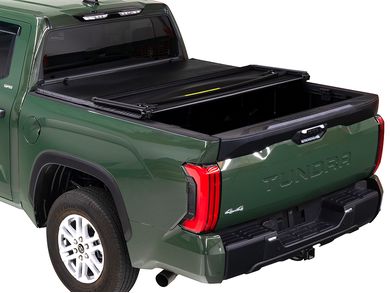
Once unlatched, fold the cover in sequence to avoid stress on hinges and seals.
Fold the Rear Panel Forward
Lift the rear section and fold it forward over the middle panel. Use both hands to keep movement even and prevent twisting.
Ensure panel edges do not drag on the truck bed, which could scratch paint or damage padding.
Fold the Middle Section Over Front
Next, lift and fold the middle section over the front panel. At this point, all three sections should stack toward the cab.
Hard folding covers are heavier. Use your legs, not your back, to lift. Most weigh 30 to 50 pounds but are balanced for one-person operation.
Leave the Front Panel in Place
The front section remains fixed in the rail channel. Never attempt to remove it during regular folding.
Secure the Folded Cover
A loose tonneau can shift while driving. Always lock it down after folding.
Use Built-In Straps or Hooks
Most tri-fold and hard folding models include elastic straps with hooks. Attach them to cab-mounted anchors or bed tie-down points.
Tighten until snug, but do not overstretch elastic. This reduces lifespan.
Insert Prop Rods If Equipped
Some hard covers come with prop rods that hold the folded assembly upright. Slide each rod into its mount to prevent accidental collapse during loading.
Always remove prop rods before closing the cover. Forgetting leads to bent rods or hinge damage.
Handle Soft Folding Covers Differently
Soft fold models operate differently than rigid tri-folds. They have no side latches, just a pull-down release.
Pull Down on the Tailgate Edge
Grasp the bottom edge of the cover near the tailgate and pull straight down. The locking mechanism releases with moderate force.
Soft vinyl stiffens in low temperatures. Warm your hands and apply steady pressure. Do not yank.
Fold or Slide Aside
Once released, you can either fold back in sections toward the cab or slide laterally along tracks. The latter is common on Gator and Xceed models.
One Ford Maverick owner reported switching between Gator and Xceed covers in under 5 minutes due to simple clamp-release design.
Remove Completely When Needed
Full removal is not required for most tasks, but it is useful for large hauls or seasonal storage.
Loosen Mounting Clamps
Locate 4 to 6 rail-mounted clamps along the bed sides. Use a wrench or thumbscrews to loosen each one.
Lift Straight Off the Rails
Gently raise the cover upward. Do not tilt or twist. Set it down on a clean, flat surface padded with towels.
Keep indoors to prevent UV degradation or warping from temperature swings.
Close and Re-Latch Properly

Reinstalling matters just as much as folding. Improper latching compromises security and weather protection.
Align the Front Edge First
Position the front panel into the rail channel. Make sure it sits flush across the full width.
Push Down Until It Clicks
Apply firm, even pressure along the front edge. You should hear two distinct clicks.
The first click is initial latch engagement. The second click is full lock.
The dual-click confirms the cover is sealed and secured. No second click? Reopen and realign.
Re-Engage Center and Side Latches
After front locks, reconnect the center latch for tri-folds and both side latches. Test by gently lifting the center and rear edges. No movement means it is secure.
Maintain Seals and Tracks
Longevity depends on regular care, especially in harsh climates.
Clean Sealing Lips Monthly
Wipe down rubber gaskets with mild soap and water. Avoid petroleum-based cleaners that degrade rubber.
Look for cracks, flattening, or tears. Replace if compression is uneven.
Clear Debris from Tracks
Leaves, sand, or ice in rail channels cause misalignment. Use a soft brush or damp cloth to clean monthly.
Spray tracks with dry silicone lubricant twice a year for smooth operation.
Avoid Common Folding Mistakes
Even experienced users make errors that shorten cover life.
Skipping the double-click check is a common error. Assuming the cover is latched without hearing both clicks risks accidental opening on the highway.
Folding too fast causes panels to slam together, damaging hinges and seals over time.
Leaving prop rods in during closure is the number one cause of bent rods and broken hinge mounts. Always remove before unfolding.
Using one hand on heavy covers leads to uneven stress and potential injury. Hard folding models require two-handed control.
Choose the Right Cover for Your Needs

Not all tonneau covers fold the same. Pick based on your usage patterns.
Best for Daily Access: Soft Folding
Soft folding covers are lightweight with no latches, just a pull-down release. They are ideal for frequent loading.
Best for Security: Hard Tri-Fold
Hard tri-fold covers feature rigid panels that resist tampering. They offer stronger seals and higher theft resistance.
Best for Full Protection: Full-Wrap
Full-wrap covers provide near-total waterproofing. Some are motorized. They do not fold and require full retraction or removal.
Soft covers start at $200. Hard folding models range from $400 to $900. Most owners find tri-folds offer the best balance of cost, durability, and ease.
Troubleshoot Stiff Operation
If your cover feels harder to fold than usual, diagnose these common issues.
Is It Cold Outside
Vinyl and seals stiffen in winter. Warm the area with a heat gun on low setting or wait for midday sun.
Are the Latches Dirty
Dirt and salt buildup clog mechanisms. Remove grime with a toothbrush and re-lubricate with silicone spray.
Is the Cover Misaligned
If one side lifts higher than the other, check track alignment. Inspect for bent hinges. Re-level mounting clamps.
One shoulder-injury patient found using both hands and leaning into the pull reduced strain significantly.
Frequently Asked Questions About Folding a Tonneau Cover
How do I fold a tri-fold tonneau cover
Start by releasing both side latches near the tailgate. Then release the center latch. Fold the rear panel forward over the middle section, then fold the middle section over the front. Secure with built-in straps or prop rods.
Can I fold my tonneau cover with one hand
Soft folding covers are light enough for one-hand operation. Hard folding covers are heavier and require two hands for safe, even control. Using one hand risks uneven stress and potential injury.
Why will my center latch not release
Most center latches will not release unless both side latches are fully disengaged. Recheck that both sides are unlocked. Deb buildup or cold weather can also cause stiffness. Clean and lubricate if needed.
How do I know if my cover is properly latched
When closing, listen for two distinct clicks. The first click is initial engagement. The second click confirms full lock. Test by gently lifting the center and rear edges. No movement means it is secure.
Can I leave my tonneau cover folded while driving
Yes, but you must secure it properly. Use the built-in elastic straps or hooks to anchor the folded cover to cab-mounted points. Tighten until snug but do not overstretch.
How often should I maintain my tonneau cover seals
Clean sealing lips monthly with mild soap and water. Inspect quarterly for cracks, tears, or compression wear. Apply dry silicone lubricant to tracks twice a year.
Key Takeaways for Folding Your Tonneau Cover
Knowing how to fold a tonneau cover correctly saves time, prevents damage, and keeps your truck bed protected. Whether you have a soft fold, hard tri-fold, or rigid panel model, follow the sequence: release latches, fold rear to front, secure in place, and re-latch with double-click confirmation.
Regular maintenance extends cover life significantly. Clean seals monthly, clear debris from tracks, and inspect latches and straps quarterly. Replace worn parts before they fail.
With proper technique and routine care, your tonneau cover will last for years, ready whenever you need to haul, load, or switch gear.