Moving a refrigerator ranks among the toughest relocation challenges. If you’re searching for how to load a fridge into a truck bed without injury or damage, you’ve come to the right place. These appliances are heavy, awkward, and surprisingly fragile — one wrong move can crack a panel, strain your back, or destroy the compressor. Skipping preparation turns a manageable task into a costly disaster. Fortunately, the right tools and a proven sequence make the job safe and straightforward.
This guide covers every detail: prepping your fridge, picking the right vehicle, gathering equipment, and mastering the loading technique. Whether you own a compact top-freezer or a full-size side-by-side, these methods work for any model.
Prepare the Refrigerator for Transport
Getting the fridge ready before you lift prevents problems during the move.
Empty and Defrost the Interior
Remove all food, shelves, drawers, and removable bins. This cuts weight and stops items from shifting inside. If your unit has a freezer, defrost it 12 to 24 hours ahead to melt ice buildup. Wipe down the interior with towels until completely dry.
Secure Doors and Loose Parts
Pack shelves and drawers in a padded box. Tape the doors shut using strong packing tape across the seals only — never on the interior. This keeps doors from swinging open mid-transit.
Clean and Inspect the Exterior
Wipe down the outside with a damp cloth. Check hinges, rollers, and corners for cracks or looseness. Fix any weak spots before moving to avoid structural failure under stress.
Match the Fridge to Your Vehicle
Not every truck handles every refrigerator size.
Measure Truck Bed and Fridge
Measure your truck bed length (standard ranges are 5 to 8 feet) and compare to fridge dimensions. Most units stand 65 to 70 inches tall and 28 to 36 inches wide. Try a diagonal measurement — many fridges fit at an angle even when they seem too tall upright.
Confirm Height Clearance
Check that your tailgate-down position gives enough vertical room. If the fridge exceeds bed wall height, load at an angle or use ramps. Measure from ground to bed rails to prevent scraping the cab.
Rent a Larger Truck When Needed
If your pickup is too small, rent a cargo van or box truck. Rear doors and built-in ramps make loading simpler and safer.
Gather the Right Moving Tools

Proper equipment protects both you and the appliance.
Must-Have Equipment
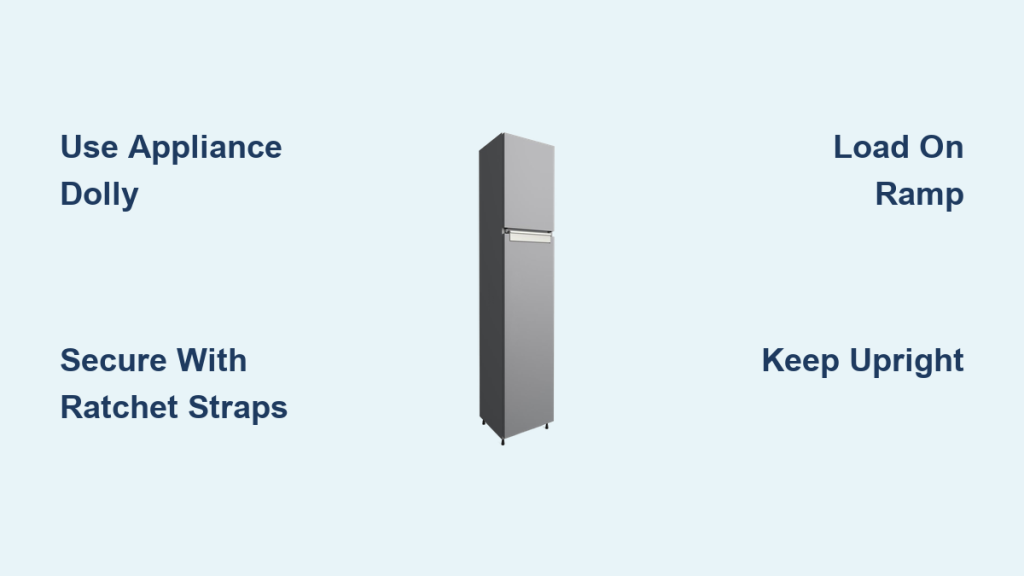
- Appliance dolly with adjustable straps and side braces
- Moving straps to reduce back strain
- Furniture sliders for floor movement
- Aluminum or wood ramps for truck access
- Moving blankets to wrap the fridge
- Ratchet tie-down straps to secure the load
Wear Proper Safety Gear
Use work gloves and non-slip footwear. Add a back brace if you have prior back issues. Always recruit at least one helper — never attempt this solo.
Wrap and Protect the Fridge
Shield the surface from dents, scratches, and moisture.
Use Moving Blankets
Cover the entire unit with moving blankets. Secure them with tape or stretch wrap without touching the finish directly. Pay extra attention to corners and door handles.
Add Corner Guards
Attach cardboard or foam corner protectors to all edges. These absorb impact during tight maneuvers.
Skip Bare Plastic Wrap
Stretch wrap alone traps moisture against the surface. Only use it over a clean, dry exterior and remove it right after delivery.
Load with a Dolly and Ramp System
This is the safest method for loading any refrigerator.
Set Up the Ramp
Position the ramp from ground to truck bed, making sure both ends sit flush. Add non-slip mats under the base for grip. Test stability before placing weight on it.
Secure the Fridge to the Dolly
Tilt the fridge backward slightly and slide the dolly frame beneath the base. Lock it in place with the dolly’s straps. Keep the door side facing up — only lay a fridge flat as a last resort.
Walk Up the Ramp Slowly
One person guides the dolly from below while another stabilizes the top. Walk backward up the ramp with steady, even pressure. Push through your legs, keeping your back straight.
Avoid Manual Lifting
Never try to muscle the fridge onto the truck bed. This causes drops, spinal injuries, and compressor damage. Mechanical aids are non-negotiable.
Load Without a Ramp
When ramps aren’t available, use these backup methods.
Build a Makeshift Ramp
Park close to the house. Lay sturdy planks across the tailgate onto a step or curb. Verify weight capacity before rolling the fridge across.
Use a Two-Person Lift
Stand on either side of the fridge. Squat low, grip the base and frame (not the handles), and lift together on a three-count. Drive upward with your legs in small, controlled steps.
Slide the Fridge Onto the Bed
Once lifted, slide it onto the truck bed over a moving blanket to reduce friction. Stop immediately if the load shifts or feels unstable.
Secure the Fridge in the Truck Bed

A sliding fridge is a serious safety hazard.
Keep It Upright and Centered
Position the fridge upright in the middle of the bed, well away from the tailgate. Avoid leaning it against cab walls without bracing.
Strap It Down Tight
Attach ratchet straps from the truck’s anchor points to the fridge. Use at least two straps — one near the top, one at the base. Tighten until there’s no wiggle room.
Pad All Contact Points
Place moving blankets between the fridge and truck walls. This prevents scratches when the truck hits bumps.
Drive with the Fridge in Mind
Your driving habits affect whether the fridge arrives intact.
Drive Smoothly
Avoid hard braking, sharp turns, and rough roads. Keep speeds steady, especially on uneven pavement.
Check Straps on Stops
After 10 to 15 miles, inspect the fridge position and retighten straps if needed. Watch for any signs of shifting.
Only Lay It Flat If Necessary
Most modern fridges tolerate brief horizontal placement. If you must, lay it on the side opposite the compressor. Let it stand upright for at least 4 hours before plugging in.
Unload the Fridge Safely
The move isn’t complete until the fridge sits in its final spot.
Reverse the Ramp and Dolly Setup
Park near the entry point. Reinstall the ramp securely. Use the same dolly method in reverse.
Control the Descent
Walk backward down the ramp while a helper steadies the top. Keep constant tension on the dolly to prevent runaway momentum.
Place and Settle the Fridge
Slide the unit into position using furniture sliders. Strip off all tape, blankets, and packaging. Let it rest several hours before turning it on.
Avoid These Common Moving Mistakes
Sidestep errors that cause injuries and appliance damage.
Skipping the Dolly
Attempting a manual carry is the top cause of moving injuries. Always use a dolly.
Overloading the Truck
Don’t pile heavy items near the fridge. This raises tipping risk and complicates unloading.
Forgetting to Level the Fridge
After placement, adjust the front legs to level the unit. This ensures doors seal properly and the compressor runs efficiently.
Powering On Too Early
Wait at least 4 hours after transport before plugging in. This lets refrigerant settle and protects the compressor.
Frequently Asked Questions About Loading a Fridge into a Truck Bed
Can I lay a fridge on its side during transport?
Most manufacturers recommend keeping fridges upright. If laying it flat is unavoidable, place it on the side opposite the compressor and let it stand upright for at least 4 hours before plugging it in.
How many people does it take to load a fridge?
You need a minimum of two people, even with a dolly. One guides the dolly while the other stabilizes the top. For larger side-by-side models, three helpers make the job safer.
What if my truck bed is too short for the fridge?
Try loading the fridge diagonally — measure corner to corner. If it still won’t fit, rent a cargo van or box truck with rear access and built-in ramps.
Do I really need a ramp to load a fridge?
Ramps are the safest option and highly recommended. Without one, you risk dropping the fridge, damaging the truck bed, or suffering serious back injuries.
How long should I wait to plug in the fridge after moving it?
Wait at least 4 hours after the fridge is upright in its final position. This gives refrigerant and oils time to settle back into the compressor.
Can I use regular straps to secure the fridge?
Use heavy-duty ratchet straps rated for the fridge’s weight. Standard ropes or bungee cords can snap under load and fail to prevent shifting.
Key Takeaways for Loading a Fridge into a Truck Bed
Loading a fridge into a truck bed comes down to three essentials: preparation, equipment, and technique. Defrost and empty the unit 12 to 24 hours before the move. Invest in an appliance dolly, ramps, moving blankets, and ratchet straps — these tools prevent injuries and protect your appliance. Keep the fridge upright whenever possible and strap it down with at least two heavy-duty tie-downs.
Your next step is simple: gather your equipment, recruit a helper, and follow this guide from prep to final placement. With the right approach, your fridge will arrive safely and be ready to cool your kitchen in its new home.