You’ve arrived at your destination, ready to grab gear from your truck bed, but you freeze at the tonneau cover. Is it locked? Did the latch stick? How do you open it without breaking the hinges or seals? You are not alone. Opening a tonneau cover becomes simple once you understand your specific model type and the correct release technique. This guide covers hard folding, tri-fold, soft folding, and removable designs used on popular trucks like the Ford F-150, Toyota Tacoma, and Ford Maverick.
By the end of this article, you will know exactly how to safely unlatch, fold, and secure your cover, plus when and how to remove it completely for cleaning or storage. We will walk through each step with clear instructions, user-tested tips, and maintenance advice to keep your cover working smoothly for years.
Identify Your Tonneau Cover Type
Before attempting to open any tonneau cover, you must confirm which type you have. The opening method varies significantly between designs.
Hard Folding vs. Soft Folding Covers
Hard folding covers feature rigid aluminum or composite panels connected by durable hinges. Tri-fold models are a subset with three equal panels that fold forward in a “Z” pattern. Soft folding covers combine flexible vinyl with an internal rigid frame, offering a lighter alternative. Both fold forward but differ in weight, stiffness, and release mechanisms.
Roll-Up and Full-Wrap Variants
Roll-up covers require lifting the front edge and rolling the material backward without any folding. Full-wrap fiberglass models tilt upward on gas struts or slide rearward and never fold. This guide focuses on folding and removable designs, which are the most common types requiring manual operation.
Unlock and Release the Front Latch
Most folding tonneau covers lock at the front edge near the truck cab. Releasing this latch is the first step to opening your cover.
Pull Down on the Handle
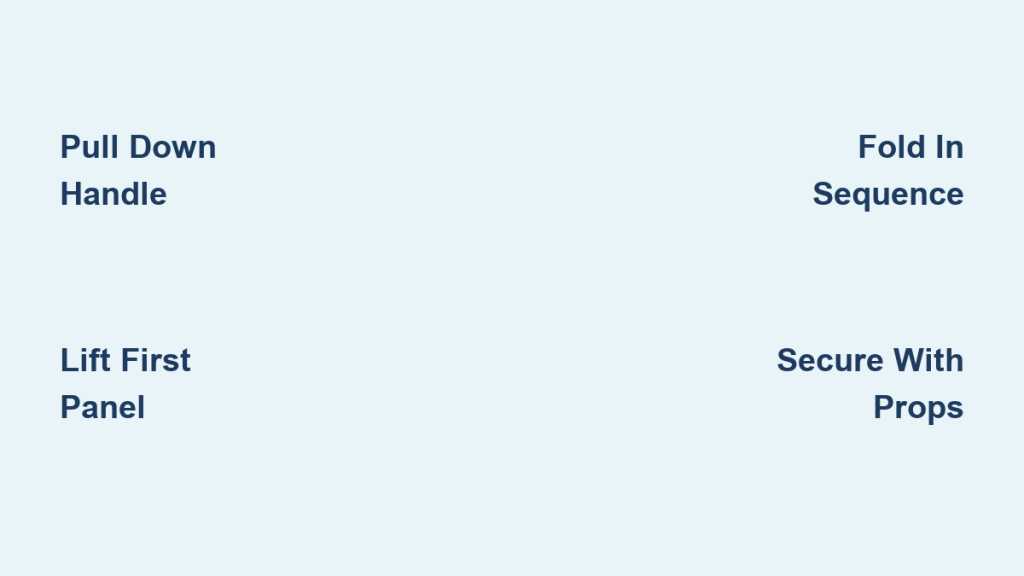
Locate the central or dual-side handle at the front of your cover. Do not pull up, as this can strain the mechanism. Instead, grab the bottom of the handle and pull straight down. This action disengages the front latch from the rail system.
User Insight (GreenLady): “If you grab the bottom of it and pull down, you should be able to release the cover.”
No Extra Tools Required
The release is completely mechanical and manual. No keys, buttons, or special tools are needed for standard operation. If you encounter high resistance, check for ice, debris, or misalignment before forcing the handle.
Lift the First Panel
Once the front latch releases, begin unfolding your cover by lifting the first panel.
Start with the Front Section
Grasp the handle and lift the first (front) panel upward. It should rise smoothly to approximately a 90-degree angle. Many models include built-in prop rods that automatically extend, or you may need to deploy them manually.
Check for Prop Rods
These support arms keep the panel upright and prevent accidental collapse. If your model has removable prop rods, unfold and attach them now. Never leave a panel unsupported, as wind or vibration can cause damage during driving.
Fold All Panels in Sequence
Folding must follow a strict order to avoid stressing hinges, seals, or tracks.
Follow the Z Pattern
Fold the first panel forward over the cab. Next, lift the second panel and fold it into the gap behind the first. Finally, lift the third (rear) panel and stack it forward. This sequential folding creates a compact stack pressed against the truck cab.
Avoid Skipping Steps
Do not attempt to lift all panels at once. Skipping folds can misalign tracks or damage locking arms. On soft folding models like the Ford Maverick, panels slide into side rails as they fold, so sequence matters.
Secure the Open Position
An unsecured open cover can flap in wind or shift during transit, creating a hazard.
Deploy Prop Rods Fully
Extend both prop rods and lock them into place. Ensure they are seated firmly in their sockets. Listen for a click or feel resistance to confirm stability.
Attach Side Tie-Downs
Use the included side straps to anchor the folded cover to bed tie-down points. This prevents lateral movement while driving with the bed partially exposed.
Best Practice: Always secure the cover before driving, even for short distances.
Remove a Tri-Fold Tonneau Cover (2016 Tacoma Example)

For full removal for cleaning, replacement, or storage, follow these steps.
Release Front Mounting Straps
Unsnap both front straps on the driver and passenger sides. These connect the cover to the front rail above the bed. Leave them unhooked for easier reinstallation alignment.
Remove the Rear Bolt
Locate the 12mm bolt at the rear edge of the cover. Use a socket wrench to remove it completely. This bolt anchors the cover to the tailgate or bed rail.
Disengage Side Locks
Release any side handles or locking arms. Gently fold the cover forward to free the rear tab from the rail.
Lift the Cover Off
The tri-fold unit weighs approximately 80 pounds. Use proper lifting form or get help. Once clear, store it flat on a clean surface or vertically in a sheltered area.
Reinstall Your Tonneau Cover
Putting the cover back requires precise alignment and secure fastening.
Align Rear Hole First
Position the cover over the bed so the rear hole lines up with the mounting point. Insert the 12mm bolt but do not tighten yet.
Seat Side Rails Properly
Ensure both side rails are fully seated in the truck bed channels. Misalignment causes binding and poor sealing.
Tighten and Reconnect
Fully tighten the rear bolt with a socket wrench. Fold the cover forward and reconnect side locking arms. Snap front straps back into place.
Test the Seal
Close the cover completely. Press along the edges to ensure weather-stripping makes full contact. Verify the front latch engages smoothly.
Open Soft Folding Covers (Ford Maverick)
Some modern trucks use lightweight soft folding designs with rigid frames.
Simple Lift-and-Fold Method
Grasp the center handle and pull down to release the front latch. Fold each panel forward in sequence. Panels rest in tracks or lie flat against the cab.
Full Removal in Minutes
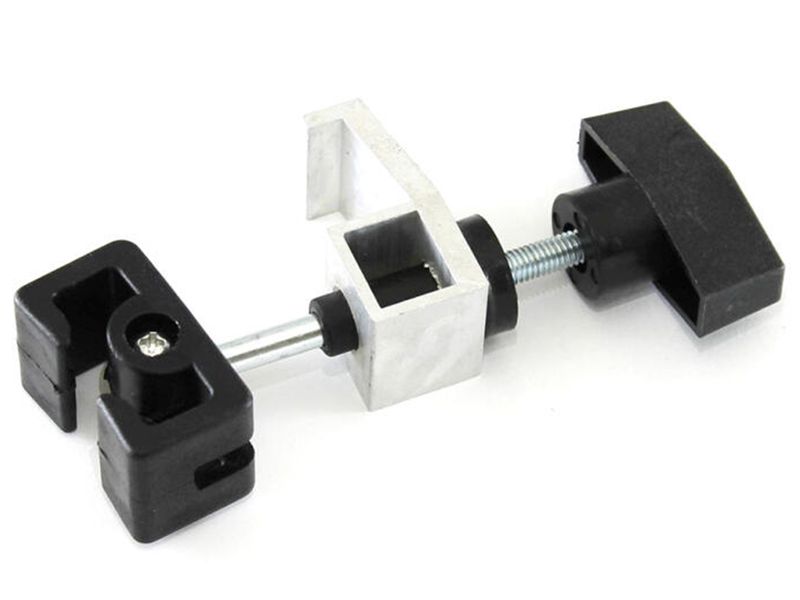
As reported by user BootXL76: “You just undo/unscrew the clamps and it lifts right off… super easy.” Clamps are located at front and rear mounting points. Use a screwdriver or Allen key to loosen them. No rail disassembly is required.
Troubleshoot Stiff or Stuck Handles
Difficulty releasing the latch is common, especially after cold weather or long drives.
Use Downward Pull Technique
Many users mistakenly try to lift the handle. The correct method is to pull down on the bottom edge of the handle. This leverages mechanical advantage and reduces shoulder strain.
User Insight (GreenLady): “One side is harder for me to pull down with a bad shoulder.”
Lubricate Moving Parts
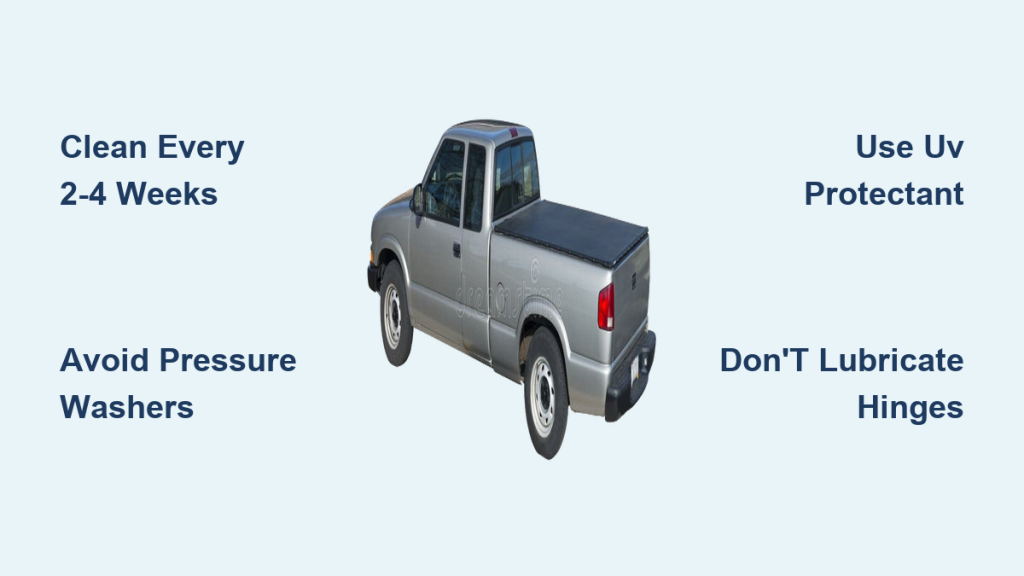
Apply silicone-based lubricant to latches and hinges every 3 to 6 months. Avoid oil-based sprays, as they attract dust and degrade rubber seals. Wipe clean before applying to prevent grit buildup.
Drive Safely with Cover Partially Open
You can drive with the cover partially open, but only if done safely.
Requirements for Safe Partial Use
Prop rods must be fully extended. Side tie-down straps must be secured to bed anchors. Never drive with loose or flapping panels.
Risks of Improper Use
Wind can rip hinges or damage seals. Unsecured covers may detach at highway speeds. Partial exposure still protects cargo from overhead rain.
Maintain Your Tonneau Cover Long-Term
A well-maintained tonneau cover lasts years and performs reliably.
Inspect Monthly
Check latches, hinges, and prop rods for wear or corrosion. Look for cracks in weather-stripping or vinyl surfaces. Ensure side rails move freely in tracks.
Clean and Condition Seals
Wipe seals with mild soap and water. Apply rubber conditioner twice a year to prevent drying and cracking. Never use petroleum-based products.
Lubrication Schedule
Apply silicone spray to latches every 3 months. Use dry Teflon lubricant on hinges every 6 months. Apply non-stick dry lube to tracks as needed.
Final Tips for Smooth Operation
Never force the handle. Inspect for obstructions first. Always reverse the steps when closing: fold from front to back, lower panels one at a time. Fully open before placing the final panel down to avoid crushing the seal edge. Store removed covers indoors to extend their lifespan.
Frequently Asked Questions About Opening Tonneau Covers
Do I need any tools to open my tonneau cover?
No. Standard opening and closing requires no tools. The release is completely manual. You only need tools for full removal or reinstallation, such as a 12mm socket wrench for the rear bolt.
Why is my tonneau handle so stiff to pull?
Stiffness usually occurs after prolonged use, exposure to temperature extremes, or lack of lubrication. Use the downward pull technique on the bottom of the handle rather than lifting. Apply silicone lubricant to the latch mechanism every 3 to 6 months.
Can I drive with my tonneau cover open?
Yes, but only if you secure it properly. Extend prop rods fully and attach side tie-down straps to bed anchors. Never drive with loose panels that can flap in wind or detach.
How do I remove a tri-fold tonneau cover completely?
Release the front straps, remove the rear 12mm bolt with a socket wrench, disengage side locks, and lift the cover away. The cover weighs approximately 80 pounds, so use proper lifting form or get help.
How do I close my tonneau cover properly?
Reverse the opening sequence. Unfold panels from back to front, lowering each one carefully. Ensure the front latch clicks into place and weather-stripping makes full contact along all edges.
Key Takeaways for Opening Your Tonneau Cover
Opening a tonneau cover is straightforward once you know your model type. Hard folding and tri-fold covers require releasing the front latch by pulling down on the handle, then folding panels in sequence while deploying prop rods for security. Soft folding models like the Ford Maverick follow a similar process but use clamps instead of bolts for removal. Always secure an open cover before driving to prevent wind damage, and maintain your cover regularly with silicone lubricant to keep latches and hinges working smoothly. With these techniques, you can open, close, and maintain your tonneau cover with confidence, protecting your truck bed cargo in any weather condition.