Hauling a motorcycle in a truck bed is one of the easiest ways to transport your bike to the track, trail, or a weekend ride. But without the right technique, your motorcycle can shift, tip over, or even slide off the truck entirely. Knowing how to secure a motorcycle in a truck bed correctly protects your bike, your truck, and everyone else on the road. Thousands of riders damage their motorcycles every year by skipping steps, using weak straps, or anchoring to the wrong points.
This guide walks you through the safest, most effective way to load and strap down your motorcycle. You’ll learn which gear to use, how to position your bike, where to anchor your straps, and what mistakes to avoid. Whether you ride a sport bike, cruiser, or dirt bike, these methods work for nearly any motorcycle and truck setup.
Essential Equipment for Securing a Motorcycle
Before you load anything, gather the right tools. Cheap or improper gear is one of the top reasons bikes shift during transport.
Choose the Right Tie-Down Straps
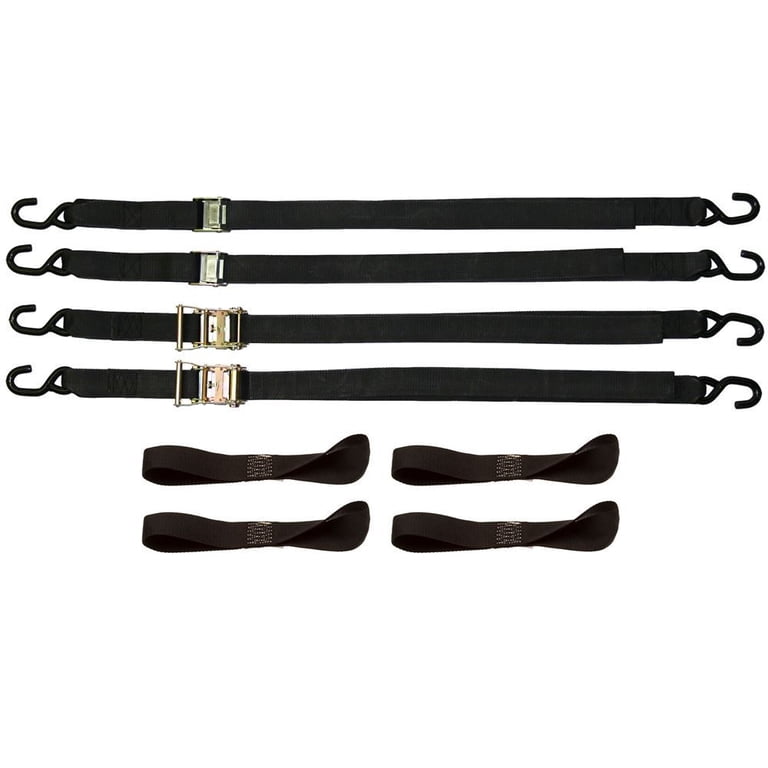
Always use ratchet or cam buckle straps rated for at least 800 lbs working load. That equals roughly 50% of most motorcycles’ total weight.
- Ratchet straps give the tightest, most secure hold
- Cam buckle straps are faster but loosen more on bumpy roads
- Avoid bungee cords or ropes because they stretch and snap under pressure
Pick straps between 6 and 10 feet long. S-hooks or J-hooks work best for locking into truck bed rails and stake pockets. Add rubber or foam sleeves to protect handlebars, frames, and swingarms from scratches.
Identify Strong Anchor Points in the Truck Bed
Your bike is only as secure as the points you strap it to. Focus on structural metal, not plastic or trim.
- Bed rail tie-downs: Built-in D-rings or clamps along the side rails
- Stake pockets: Vertical slots in the corners, ideal with drop-in anchors
- Underbed frame rails: The strongest option, accessed through removable panels or weld-on kits
- Tailgate anchors: Usable only when reinforced and paired with front straps
Never anchor to tail light housings, bed liner edges, or plastic D-rings. These can rip off under tension.
Loading the Motorcycle Safely
A controlled, steady load sets the stage for proper tie-down placement.
Use a Loading Ramp the Right Way
Always load with a wide ramp rated for at least 1,000 lbs.
- Ramp angle: Keep it under 15 degrees to avoid scraping the undercarriage
- Ramp length: Extend at least 2 feet past the truck bed edge for stability
- Footing: Chock the ramp base or have a helper hold it steady
Walk the bike up in neutral. Riding it up adds risk because engines can surge and balance is harder on ramps.
Position the Motorcycle Centrally
Center the bike side to side and front to back inside the bed.
- Place the front wheel 12 to 18 inches from the front wall
- Keep handlebars straight and wheels pointed forward
- Leave the kickstand fully up during transport
Lay a moving blanket or rubber mat under the tires. This prevents sliding and protects the truck bed from tire marks or dents.
Front Tie-Down Techniques

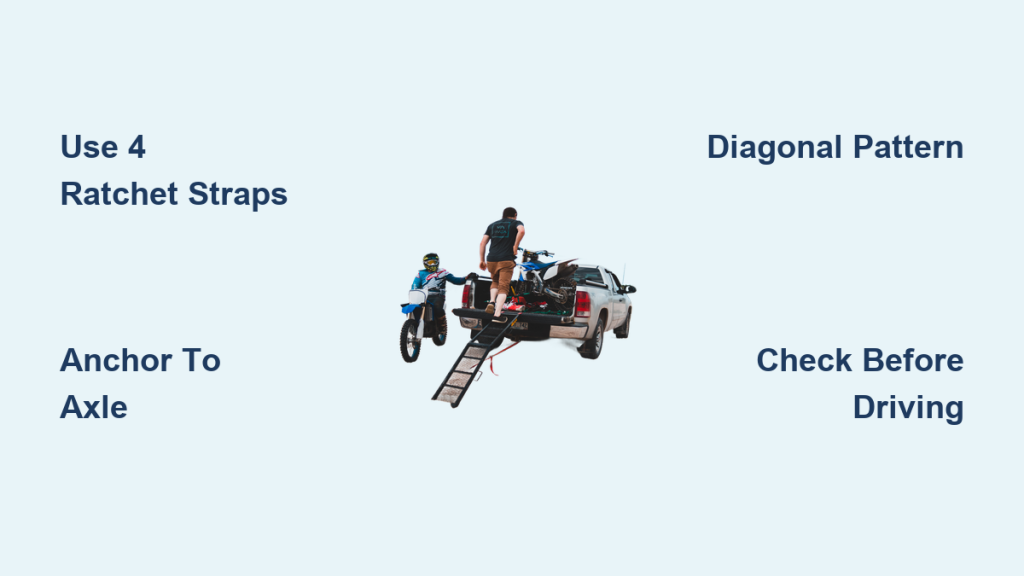
The front of the bike needs two diagonal straps to stop side-to-side sway and forward movement.
Anchor to the Front Axle or Triple Tree
The best anchor points are the front axle and triple clamp, not the handlebars. Handlebars can bend or snap under heavy tension.
- Axle method: Loosen one axle nut slightly, loop the strap around it, then retighten
- Triple clamp method: Wrap the strap around the lower fork tube or clamp bracket
Attach one strap from the left side of the bike to the right front bed anchor, and one from the right side to the left front anchor. This creates a V-pattern that resists lateral movement. Ratchet both straps evenly until taut, but don’t over-tighten or you’ll damage the suspension.
Lock the Steering in Place
A steering damper or simple fix keeps the front end from swinging.
- Steering damper: Adds stability over bumps
- Zip-tie method: Tie the handlebars to the fairing on sport bikes
- Towel trick: Wedge a rolled towel between the front wheel and the bed wall to limit turning
Rear Tie-Down Techniques

The rear takes on most of the bike’s weight and prevents backward movement and tipping.
Anchor to the Swingarm or Rear Axle
Skip the rear fender, chain, or muffler because these can break under load.
- Swingarm: Strong and easy to access
- Rear axle: Loop the strap through the axle nut, just like the front
- Frame lift points: Some bikes have built-in tie-down lugs under the engine or seat
Run two straps diagonally from the rear of the bike to the rear corners of the truck bed. Connect the left rear point to the right rear anchor, and the right rear point to the left rear anchor. This X-pattern stabilizes the back end during transit.
Avoid Over-Compressing the Suspension
Too much tension can bottom out your rear shock.
- Leave a little upward movement in the rear wheel
- Keep straps at a 45-degree downward angle from bike to anchor
- Drive over a bump, then recheck and tighten as needed
Double-Check Before Driving
A quick safety walkthrough catches problems before they become disasters.
Perform the Push Test
Push the motorcycle side to side and front to back after tightening all straps.
- The bike should not shift, rock, or wobble
- Tighten any straps that loosened during the test
- Confirm hooks are still locked into anchor points
Inspect Strap Placement and Tension
Walk around the truck and look over everything.
- All four straps should be diagonal and taut
- No straps should rub against exhaust pipes, brake lines, or wiring
- Hooks must stay locked under vibration
Pro Tip: Take a photo of your finished setup. It makes future loads faster and more consistent.
Common Mistakes to Avoid
Even experienced riders make these errors. Don’t let them cost you a damaged bike.
Using Only Two Straps
One front and one rear strap leave the bike free to tip sideways.
- Always use a four-point system with diagonal straps
- This is the minimum safe setup for any motorcycle
Anchoring to Weak Points
Tailgate hinges and bed liner anchors can tear off under sudden force.
- Use only reinforced or structural anchor points
- When in doubt, weld on D-rings or install underbed kits
Ignoring Road and Weather Conditions
Highway speeds, potholes, and rain increase stress on your straps.
- Recheck tension after the first 10 miles
- Inspect every 2 hours on long trips
- Slow down in wind, rain, or rough pavement
Forgetting the Tailgate
Rear anchors fail instantly if the tailgate drops open.
- Always latch the tailgate before tightening straps
- Add a tailgate lock or cable for extra security
Transporting Different Motorcycle Types

Adjust your method to match your bike’s weight, shape, and style.
Cruisers and Touring Bikes
Heavy and low-slung, so watch for footpeg clearance on ramps.
- Use longer ramps to reduce the angle
- Anchor to the frame, not saddlebag supports
Sport Bikes
Lightweight and narrow, which makes them easier to tip.
- Use frame sliders or lower fairing bolts as backup anchor points
- Keep straps clear of plastic bodywork
Dirt Bikes and Dual-Sports
Usually lighter with knobby tires that grip well.
- Slightly looser tie-downs are fine, but still use four straps
- Clean mud off tires and fenders before loading to prevent slipping
Final Safety Tips for a Damage-Free Trip
A few extra steps add peace of mind and prevent costly repairs.
Add Wheel Chocks for Extra Security
A portable wheel chock blocks forward and backward roll.
- Place it in front of the front tire
- Bolt or strap the chock to the truck bed
Cover the Motorcycle
A fitted truck bed cover or tarp protects against road debris and weather.
- Avoid loose tarps that flap and loosen straps
- Use bungee nets only over a fully secured bike
Drive Cautiously
Even a perfectly strapped bike can shift under aggressive driving.
- Avoid sudden stops, sharp turns, and high speeds
- Stay 5 to 10 mph below the highway limit in wind or rain
Frequently Asked Questions About Securing a Motorcycle in a Truck Bed
How many tie-down straps do I need to secure a motorcycle?
You need at least four straps: two at the front and two at the rear, arranged diagonally. Two straps leave the bike free to tip sideways, which is a leading cause of transport damage.
Can I use bungee cords instead of ratchet straps?
No. Bungee cords stretch and lose tension quickly. Use ratchet or cam buckle straps rated for at least 800 lbs working load to keep your bike stable.
Where is the safest place to anchor tie-down straps on a motorcycle?
The front axle and triple clamp are safest for the front. The swingarm and rear axle are safest for the rear. Avoid handlebars, fenders, chains, and mufflers, which can bend or break.
Should I use a wheel chock in the truck bed?
Yes. A wheel chock adds another layer of security by preventing forward and backward roll, especially on steep grades or during sudden stops.
How tight should motorcycle tie-down straps be?
Tight enough to remove slack, but not so tight that the suspension bottoms out. The wheels should have slight upward play after strapping, and straps should be checked again after the first few miles.
Key Takeaways for Securing Your Motorcycle in a Truck Bed
Securing a motorcycle in a truck bed comes down to three essentials: the right gear, the right anchor points, and a four-point diagonal strap pattern. Always use ratchet straps rated for your bike’s weight, anchor to structural metal on both the bike and truck, and double-check your setup with a push test before driving. Take 10 minutes to strap your bike correctly, and you’ll save thousands in potential repair costs. Load smart, strap tight, and ride with confidence at your destination.