You’ve got a truck. You’ve got an itch for the outdoors. But pitching a tent on rocky ground or wrestling with an RV doesn’t sound appealing. That’s where truck bed camping comes in—turning your pickup into a cozy, mobile basecamp without the hassle of traditional camping gear.
Truck bed camping ideas range from ultra-simple (toss a mattress in the back) to fully customized overland rigs with built-in kitchens and solar power. The beauty? You can start small and upgrade as you go, matching your setup to your budget and adventure style. No RV, no problem.
Below, you’ll find practical truck bed camping ideas covering setup types, comfort upgrades, essential gear, and smart modifications. Whether you’re planning a quick weekend escape or a month-long overlanding expedition, these ideas will help you build a system that works.
Popular Truck Bed Camping Setups Worth Considering
Basic Truck Bed Tent: Fast, Weatherproof, and Portable
A truck bed tent fits directly over your cargo area, creating a sealed sleeping space with full weather protection. Brands like Tepui and Overland Systems design tents specifically for different truck bed sizes, making installation quick and secure.
- Setup time: Under 10 minutes
- Best for: Weekend trips and casual campers
- Pros: Weatherproof, no permanent mods, portable
- Cons: Limited headroom, needs level ground
Pro Tip: Add a foam mattress cut to fit your bed. This prevents sliding and adds insulation from the cold metal floor.
Pop-Up Canopy: Versatile Shelter for Cooking and Lounging
A pop-up canopy doesn’t sleep in the bed—it shelters it. Set one up beside or over your truck to create a covered outdoor living area. Many models include side walls for privacy and weather defense.
- Setup time: 5–10 minutes
- Best for: Daytime protection and multi-use camp zones
- Pros: Reusable for picnics, fishing, or gear prep
- Cons: Requires anchoring in wind, eats cargo space
Use Case: Perfect when you want to keep the bed open for gear but need a dry spot to cook or relax.
Roof Tent with Bed Storage: Sleep Above, Store Below
Mount a roof tent over the cab or bed, then use the truck bed for storage or even a second sleeping level. This setup maximizes vertical space and keeps you off the ground.
- Requires: Roof rack or crossbars
- Best for: Overlanders and those with roof racks
- Pros: Elevated sleeping, better airflow, secure storage below
- Cons: Higher center of gravity, more expensive
Safety Note: Always check clearance before driving—garages, tree branches, and parking structures can be hazards.
Custom Sleep Platform: Built-In Comfort and Storage
A custom platform raises your sleeping surface above the wheel wells, creating a flat, stable base. The space underneath becomes hidden storage for coolers, tools, or camping gear.
- Materials: Wood (budget-friendly) or aluminum (light, durable)
- Design Tip: Add hinged lids for easy access to under-bed storage
- Best for: Frequent campers who want a permanent solution
DIY Hack: Use non-slip rubber matting on top to prevent bedding from shifting.
Sleep Directly in the Bed: Minimalist and Ultra-Fast
Just lay down a foam or air mattress and cover it with a tarp or tonneau cover. This is the simplest, cheapest way to start truck bed camping.
- Best for: Solo adventurers and fair-weather trips
- Gear Needed: Insulated mattress, tarp, bed liner
- Pros: No assembly, fully reversible
- Cons: Minimal weather protection unless covered
Cold-Weather Fix: Place Reflectix insulation between the mattress and bed floor to block heat loss.
Truck Topper Camping: All-Weather, Secure, and Cozy
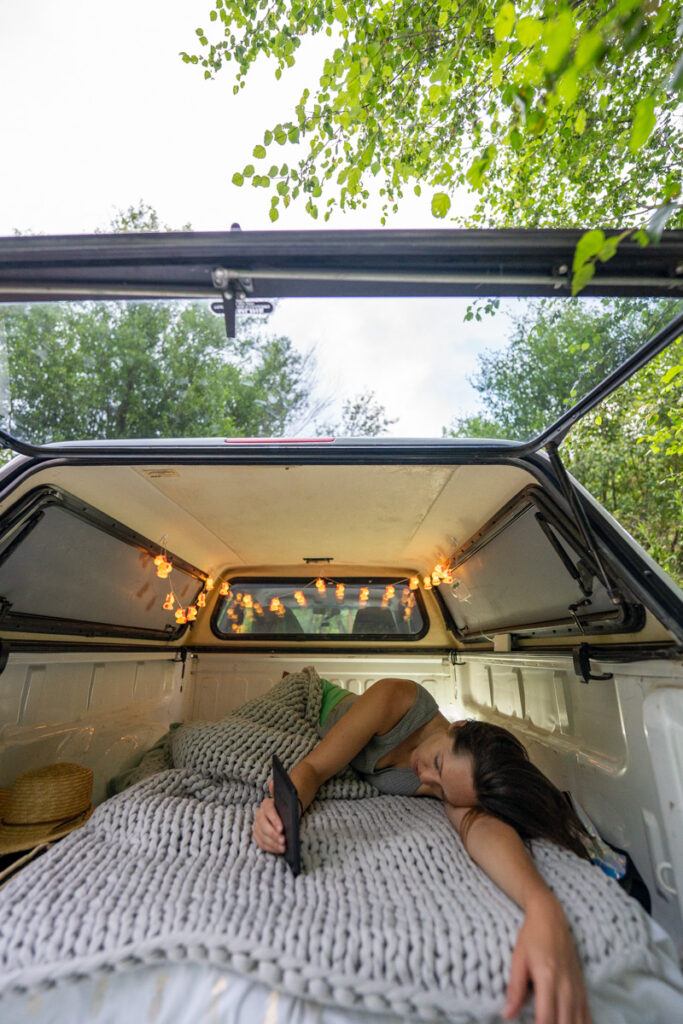
A topper (or cap) turns your bed into a dry, lockable shelter. Add a mattress, lighting, and ventilation, and you’ve got a tiny mobile cabin.
- Must-Haves: Roof vents, window screens, LED lights
- Storage Boost: Add overhead bins or side organizers
- Best for: Year-round camping and gear security
Community Favorite: Many topper campers use waterproof bins and silica gel packets to fight moisture and keep gear dry.
Upgrade Your Sleep System for Real Comfort
Pick the Right Mattress
The surface you sleep on makes all the difference between a restful night and a sore back.
- Air Mattress: Lightweight and packable. Choose one with a built-in pump
- Foam Pad: Durable and cold-resistant. Cut it to fit your bed
- Hybrid: Foam base + memory topper combines support and softness
Trick: Use a fitted sheet or waterproof cover to protect your mattress from dirt and condensation.
Control Temperature and Moisture
Managing heat, cold, and humidity keeps your truck bed camping setup comfortable year-round.
- Cold Nights: Use a sleeping bag rated 10°F below expected temps
- Hot Days: Install a battery-powered fan (12V USB models work great)
- Condensation: Crack a window, use a roof vent, and avoid storing wet gear inside
Pro Move: Hang a small dehumidifier bag (like DampRid) from the ceiling to absorb moisture overnight.
Add Lighting and Power
Turn your bed into a livable space with simple electrical upgrades.
- LED Strips: Stick-on lights along the bed rails or topper walls
- Red Light Mode: Preserves night vision and doesn’t attract bugs
- Power Source: A portable station (Jackery, EcoFlow) runs lights, phones, and fans
Wiring Tip: Run a 12V cable from the cab to the bed for permanent power access.
Essential Gear to Pack for Every Trip

Storage That Stays Put
Keeping gear organized and secure prevents frustration on the road.
- Waterproof Bins: For clothes, food, and electronics
- Dry Bags: Ideal for sleeping bags and spare layers
- Under-Platform Drawers: Slide out like kitchen cabinets
- Ceiling Nets: Hold lightweight items like hats or headlamps
Avoid This Mistake: Never leave loose items in the bed while driving—they become projectiles.
Cooking Setup for the Bed Zone
Efficient meals are possible without a full kitchen.
- Compact Stove: A single-burner propane unit fits on a folding table
- Wind Shield: Prevents flameouts on breezy nights
- Collapsible Sink: For quick cleanup
- Bear-Proof Bin: Required in many wilderness areas
Hack: Mount a small spice rack to the tailgate for instant seasoning access.
Security and Peace of Mind
Lock down your gear before settling in for the night.
- Locking Tonneau Cover: Keeps gear hidden and safe
- Cable Locks: Secure coolers or bins to tie-down points
- Remove Valuables: Don’t tempt thieves with visible electronics
Bonus: A motion-activated LED light inside the topper deters intruders and helps nighttime navigation.
Smart Truck Modifications for Better Camping

Protect the Bed Floor
A protected bed lasts longer and feels better to sleep on.
- Spray-On Liner: Permanent, grippy surface
- Rubber Mat: Removable, insulating, and quiet
- Drop-In Liner: Easy to clean, protects against scratches
Why It Matters: A protected bed resists rust, dents, and gear slippage.
Install a Tonneau Cover
A cover adds security, weather protection, and sleeping space.
- Hard Folding: Lockable, sturdy, sleek
- Soft Roll-Up: Lightweight, affordable
- Retractable: Smooth operation, full bed access
Camping Bonus: Some campers sleep on top of hard covers—just add a mattress and rainfly.
Add Tie-Down Points
Secure everything so nothing shifts on rough roads.
- Track System: Lets you slide D-rings into place
- Bed Rails with Cleats: Perfect for bungee cords or nets
- Ratchet Straps: For heavy items like coolers or toolboxes
Rule of Thumb: Double-check all straps before hitting the road.
Boost Ventilation
Stop condensation before it starts ruining your gear and sleep.
- Roof Vent: Passive airflow, fits most toppers
- Battery Fan: USB-powered, hangs from ceiling
- Window Screens: Let air in, keep bugs out
DIY Fix: Cut a hole in the topper and install a MaxxFan-style vent with a remote control.
Plan and Prepare Like a Pro
Test Your Setup at Home
Avoid surprises by testing everything before heading into the wild.
- Assemble your tent, platform, or topper in the driveway
- Sleep in it overnight to check comfort and stability
- Test all lights, power, and storage access
Red Flag: If it’s awkward at home, it’ll be worse on uneven ground.
Research Campsite Conditions
Know what you’re driving into before you arrive.
- Use Gaia GPS or OnX Offroad for trail and camp access
- Check weather forecasts, especially for wind and rain
- Confirm if reservations are needed
Pro Tip: Look for dispersed camping on BLM land—often free and remote.
Pack a Pre-Trip Checklist
Never forget the essentials with a simple printed list.
- Sleeping system (mattress, bag, pillow)
- Power station (charged)
- Cooking gear and food
- Water (1 gallon per person per day)
- First aid kit and emergency supplies
Print It: Keep a laminated copy in your glovebox.
Practice Leave No Trace
Respect the wild so it stays wild for everyone.
- Pack out all trash, even food scraps
- Use established fire rings or a camp stove
- Camp at least 200 feet from water sources
Golden Rule: Leave the site better than you found it.
Match Your Setup to Your Trip Type

Weekend Getaway: Simple and Quick
Keep it fast and light for short trips.
- Use a truck bed tent or tarp setup
- Bring only essentials: sleeping bag, stove, water
- No need for solar or extra storage
Ideal For: Couples or solo campers wanting a fast escape.
Extended Overlanding: Durable and Self-Sufficient
Go further with a setup that handles long hauls.
- Custom platform with under-bed storage
- Solar panel + power station
- Roof rack for spare tire and fuel
Must-Have: Water filter or extra jugs for remote zones.
Hunting or Fishing Trip: Gear-First, Comfort-Second
Secure your equipment and stay organized.
- Truck topper for lockable storage
- Sleep on a platform above gear
- Keep rifles, rods, and coolers secure
Bonus: A quiet battery fan helps mask human scent.
Family Camping: Space and Convenience Matter
Camping with kids requires extra room and comfort.
- Roof tent for kids, bed platform for parents
- Folding table and chairs inside or beside the bed
- Extra power for tablets, lights, and charging
Pro Tip: Add a privacy curtain between sleeping zones.
Solo Adventure: Light, Fast, Flexible
Travel light and change plans on a whim.
- Air mattress + tonneau cover
- Minimal cooking gear
- Compact backpack for day hikes
Freedom Factor: You can change plans instantly with no one to consult.
Frequently Asked Questions About Truck Bed Camping
What is the cheapest way to start truck bed camping?
The most affordable option is sleeping directly in the bed with a foam or air mattress, a tarp for weather protection, and a bed liner for insulation. A complete budget setup can cost between $300 and $800.
Do I need a topper or tent for truck bed camping?
No, you don’t strictly need either. A tarp or rainfly with a sleeping pad works for fair-weather trips. However, a topper or truck bed tent offers better weather protection, privacy, and security for year-round use.
How do I keep my truck bed warm while camping in winter?
Use an insulated mattress or sleeping pad, a sleeping bag rated 10°F below expected temperatures, and Reflectix insulation between the mattress and bed floor. A truck topper with sealed windows also helps trap heat.
Can I install a solar panel on my truck for camping?
Yes. Small solar panels can mount on the bed or roof to power lights, phones, and small appliances. Pair them with a portable power station like Jackery or EcoFlow for nighttime energy storage.
How do I prevent condensation inside a truck topper?
Ventilation is key. Crack windows, install a roof vent, and run a battery-powered fan. Avoid storing wet gear inside and use moisture-absorbing products like silica gel packets or DampRid.
What gear do experienced truck bed campers say is most important?
Community members consistently recommend battery-powered fans for ventilation, LED lighting, portable power stations, and comfortable sleeping surfaces as the most impactful gear for a good experience.
Key Takeaways for Your Truck Bed Camping Setup
Truck bed camping ideas aren’t one-size-fits-all, and that’s the point. Your ideal setup depends on how you travel, where you go, and how much comfort you want. Start with a basic configuration, test it at home, and upgrade as your needs evolve.
The most important investments are a quality sleeping surface, proper ventilation, and secure gear storage. These three upgrades alone transform truck bed camping from a novelty into a reliable way to explore. Add a power station and lighting, and you’ve got a livable space that rivals any tent setup.
Your truck is more than a vehicle. With the right truck bed camping ideas, it’s your ticket to freedom, flexibility, and the kind of adventures that traditional camping can’t offer. Start simple, learn from each trip, and build a system that matches your style. The open road is waiting.