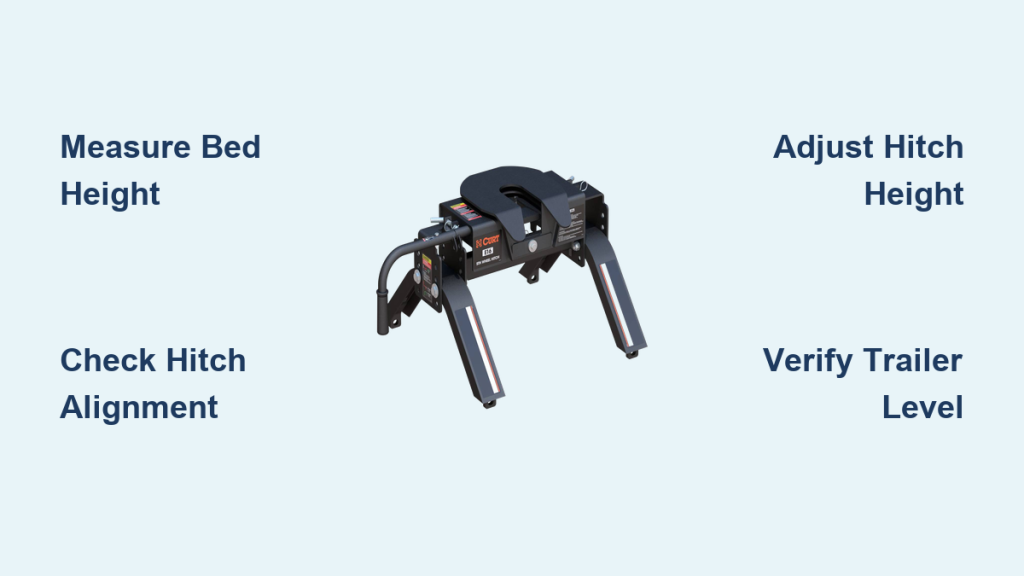
You’re about to pick up a new GMC 2500HD short box and plan to install a 5th wheel hitch, a solid choice for heavy-duty towing. But one critical factor determines whether your trailer will ride level, stay stable, and avoid damaging your truck or camper: truck bed height. If the bed is too high or too low, your 5th wheel trailer won’t sit at the correct angle, leading to poor weight distribution, sway, and even clearance issues between the trailer and the truck bed rails. Getting this measurement right before hitch installation ensures a smooth, safe towing experience.
Most experts agree that the ideal bed rail height for 5th wheel towing ranges between 55 and 57 inches from the ground to the top of the bed side rails. This range allows for proper hitch alignment and a level trailer stance. However, newer truck models, especially updated body styles, often sit higher than their predecessors, sometimes by a full inch or more. That small difference can throw off your entire towing geometry. Fortunately, adjustments can be made at the hitch, suspension, or mounting stage to correct it. Below, we break down exact measurements, real-world data, and practical fixes to get your setup right.
Measure Bed Rail Height Accurately
Before installing any hitch, verify your truck’s actual bed height. Even within the same model, variations occur due to suspension type, tire size, payload, and drivetrain (2WD vs 4WD).
Use a Level Surface and Tape Measure
Park your truck on a flat, level surface. Ensure the fuel tank is full and the truck is unloaded unless you typically tow with gear in the bed. Measure from the ground to the top of the bed rail near the center of the side rail. Avoid the rear corner, which may slope.
- Target range: 55″ to 57″
- Measurement points: Driver and passenger sides (check for discrepancies)
- Tools needed: Steel tape measure, helper (optional)
If your reading exceeds 57″, you risk creating a nose-high trailer angle, which can cause instability and stress on the hitch. If under 55″, the trailer may sit too low, risking tail drag on inclines.
Account for Suspension Type
4×4 models and trucks with heavy-duty suspensions often ride higher than 2WD versions. For example, a 2006 F-350 Crew Cab 4×4 Dually measured 56.5″ at the bed rail. Newer body styles (post-2007) sit about 1 inch higher than previous generations due to revised frame geometry, larger tires, and lifted suspensions, even in stock form.
Ideal Height for Level Trailer Tow

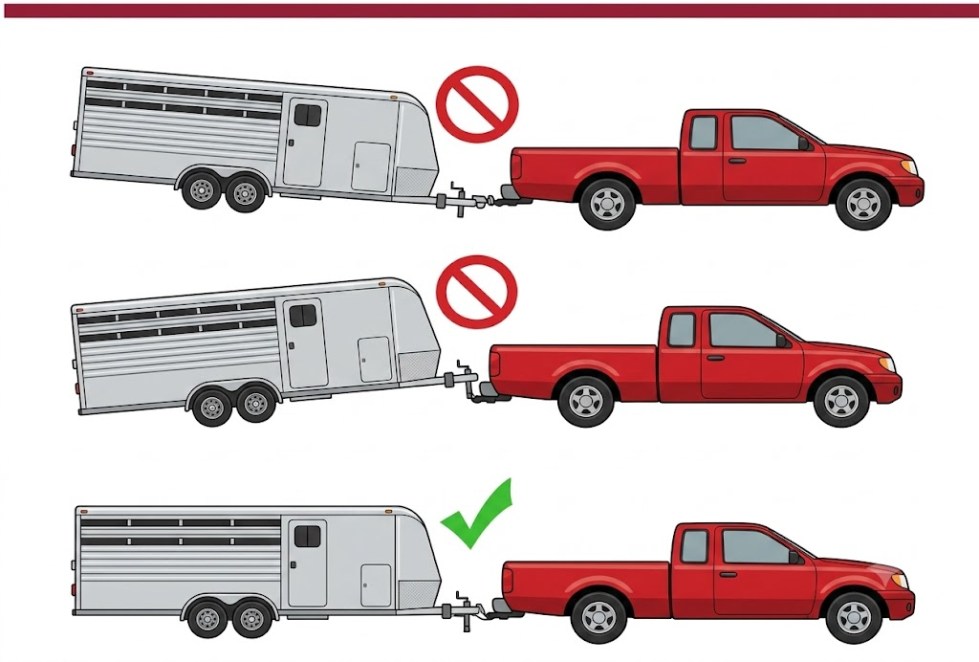
A level towing position is essential for even tire wear, stable handling, and safe braking. The trailer should sit parallel to the ground when connected.
Target Hitch-to-Trailer Alignment
The kingpin of the 5th wheel trailer should align with the hitch jaws so the trailer rides level. Most manufacturers design trailers with this assumption based on a 56-inch bed height standard.
- If your truck bed is above 57″, the front of the trailer will tilt upward.
- If below 55″, the rear of the trailer sags, increasing drag and reducing ground clearance.
Even a 1.5-inch variance can affect aerodynamics and hitch wear over time.
Visual Check After Hook-Up
Once hitched, take a moment to verify the setup:
- Use a bubble level on the trailer frame near the front.
- Check clearance between the trailer and bed rails (minimum 6 inches recommended).
- Look for tire scrub or uneven suspension compression.
Any needed adjustments should be made before hitting the road.
Adjust Hitch Height to Compensate
If your truck bed height falls outside the ideal range, don’t worry. Most 5th wheel hitches offer vertical adjustment to bring everything into alignment.
Raise or Lower the Hitch Head
Many modern hitches (e.g., B&W, Curt, PullRite) allow incremental height changes via adjustment slots or riser plates.
- Raised hitch setting: Compensates for higher bed rails (common in newer trucks).
- Lowered setting: Used on lowered or older trucks.
For example, one user upgraded from an older Chevy 2500 to a newer GMC 3500 and simply raised the hitch one notch to maintain a level tow. No additional modifications were needed.
Use Aftermarket Risers or Drop Plates
When factory adjustment isn’t enough, consider these options:
- Riser kits add 2–4 inches of height (for low trucks).
- Drop-in adapters lower the hitch by 3–6 inches (for high beds).
Always confirm weight capacity and secure mounting before use.
Address Newer Truck Body Styles
Starting around 2007, many manufacturers redesigned full-size pickups with taller frames and revised suspensions.
New GMC and Chevy Models Sit Higher
As noted in real-world reports, the new body style GMC 2500HD has bed rails approximately 1 inch taller than previous versions. This change affects hitch geometry, especially when towing older trailers calibrated for lower trucks.
Even though the increase seems minor, it can shift the trailer’s pitch enough to require correction.
Compare Model Year Specifications
| Truck Model | Bed Rail Height | Notes |
|---|---|---|
| 2006 F-350 4×4 Dually | 56.5″ | Stock suspension |
| 2008 GMC 2500HD SRW | ~57″ | Short box, new body style |
| 2004 Dodge (stock) | ~56.5″ | Level stance |
These numbers show that staying within the 55–57″ window is possible, but requires verification.
Avoid Common Setup Mistakes
Even experienced users make errors that compromise towing safety. Here are the pitfalls to watch for.
Assuming All Trucks Are Equal
Never assume your truck matches factory specs or your neighbor’s model. Always measure your own vehicle to confirm actual height.
Ignoring Loaded vs. Unloaded Height
Suspension squat under payload changes bed height. If you carry tools, generators, or cargo in the bed, re-measure with weight applied for an accurate reading.
Forcing Hitch Compatibility
Using a hitch not rated for your truck’s height or GVWR risks failure. Match the hitch to your setup, not the other way around.
Troubleshoot Height-Related Towing Issues
If your trailer doesn’t tow smoothly, bed height may be the culprit. Here are common symptoms and their fixes.
Trailer Nose Points Upward
Symptoms: Front-heavy feel, reduced rear traction, wind sensitivity.
Cause: Truck bed too tall (over 57″).
Fix: Lower hitch via drop adapter or adjust trailer landing gear.
Trailer Sags at the Rear
Symptoms: Dragging tail, excessive rear axle load, poor braking.
Cause: Truck bed too low (under 55″).
Fix: Install riser kit or raise hitch head to maximum setting.
Insufficient Bed Clearance
Minimum recommended clearance between trailer and bed rails is 6 inches. If you have less, try these solutions:
- Check for lifted suspensions or oversized tires.
- Consider a slider hitch with vertical adjustment.
- Modify hitch placement or use offset kingpin.
Finalize Your 5th Wheel Setup
Once you’ve confirmed your truck’s bed height and made necessary adjustments, finalize your installation with these steps.
Recheck All Measurements
- Re-measure bed height after any suspension or tire changes.
- Verify hitch jaw height relative to kingpin.
- Confirm trailer levelness both empty and loaded.
Test Tow Safely
Take a short test drive on a quiet road:
- Monitor for sway or vibration.
- Check brake engagement.
- Inspect hitch pins and safety locks after 10–15 miles.
Document Your Settings
Keep a record of the following details:
- Bed rail height
- Hitch model and adjustment setting
- Trailer nose angle (in degrees or bubble level position)
This helps if you switch trucks or trailers later.
Frequently Asked Questions About Truck Bed Height
What is the maximum truck bed height for a 5th wheel hitch?
The maximum bed side height recommended for 5th wheel towing is 57 inches. Exceeding this can create a nose-high trailer angle, leading to instability and hitch stress.
How do I measure my truck bed height correctly?
Park on level ground with a full fuel tank and no payload. Measure from the ground to the top of the bed side rail near the center of the rail on both driver and passenger sides. Compare against the 55–57 inch ideal range.
Are newer trucks taller than older models?
Yes. New body style pickups (post-2007) typically sit about 1 inch taller than previous generations due to revised frames, larger tires, and updated suspensions.
Can I adjust my hitch to fix height problems?
Most 5th wheel hitches offer vertical adjustment via slots or riser plates. Raising the hitch one notch can often correct a 1-inch height difference between an older and newer truck.
What happens if my truck bed is too low?
A bed height under 55 inches causes the trailer rear to sag, increasing drag, reducing ground clearance, and putting excessive load on the rear axle.
Do I need to re-measure bed height when loaded?
Yes. Adding payload, tools, or cargo lowers the suspension and changes effective bed height. Always measure under your typical towing conditions for accurate results.
Key Takeaways for Setting Up Your 5th Wheel Hitch
Truck bed height is a small measurement with big consequences. Staying within the 55–57 inch range ensures a level, stable tow. Newer trucks, especially post-2007 models, often exceed this due to taller designs, so always measure first. With simple hitch adjustments, you can correct height differences and tow safely. Whether you drive a GMC 2500HD, F-350, or Dodge Ram, getting the height right protects your investment and keeps the journey smooth.