You’re headed out for a weekend camping trip with your grill in tow, and your propane tank is riding in the truck bed. It seems harmless—until a sharp turn or sudden stop sends it rolling. An unsecured propane tank is more than a safety hazard. It can put you, your cargo, and other drivers at serious risk. Propane is flammable and pressurized, so a punctured or poorly stored tank may leak, ignite, or even explode. Knowing how to secure a propane tank in a truck bed is about preventing accidents before they happen.
Whether you’re transporting a 20-pound grill tank or a larger 30- or 40-pound unit, securing it correctly is essential. The U.S. Department of Transportation (DOT) requires that compressed gas cylinders, including propane tanks, be transported upright and firmly secured to prevent movement. This guide walks you through the best practices, tools, and step-by-step methods to safely secure your propane tank in a truck bed. You will learn what gear to use, how to position the tank, and what mistakes to avoid.
Choose the Right Transport Position
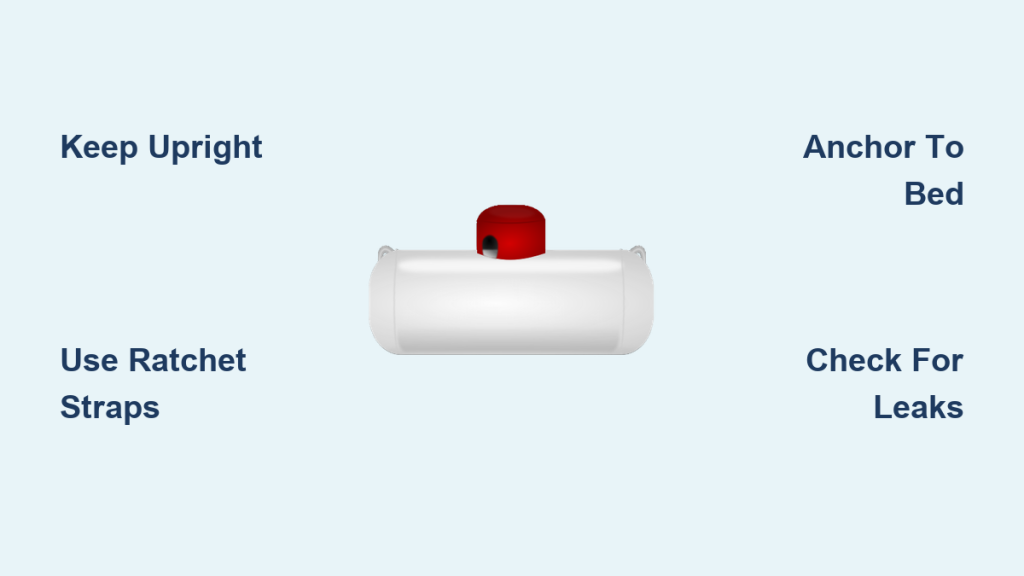
Keep the Propane Tank Upright
Always transport propane tanks in an upright position. This orientation keeps the pressure relief valve functioning correctly. If the tank lies on its side, the valve could become submerged in liquid propane, causing it to release flammable vapor instead of gas and raising the risk of fire during transport.
Never lay a propane tank horizontally in your truck bed unless it sits inside a certified transport cage designed for horizontal positioning. The upright position also prevents internal damage and maintains proper pressure regulation.
Avoid Enclosed Spaces
Never store or transport a propane tank inside the cab, a camper shell, or a covered bed with no ventilation. Even a small leak can accumulate flammable gas and create an explosion hazard. Always keep the truck bed open or use a cover with adequate airflow.
If you’re using a tonneau cover or hard lid, ensure it stays at least partially open to allow ventilation. Never transport a propane tank in the passenger compartment of any vehicle.
Use Proper Securing Equipment

Invest in a Propane Tank Holder
The safest way to secure a propane tank is with a dedicated holder or mount. These devices clamp or bolt into your truck bed and feature a cradle that holds the tank upright while preventing side-to-side movement.
Common types include:
– Angle bracket mounts that hold the tank at the base
– Tube-style holders that surround the tank in a vertical metal cage
– Magnetic mounts useful for temporary transport on metal surfaces
Look for DOT-compliant holders made from rust-resistant materials like powder-coated steel or aluminum.
Use Heavy-Duty Tie-Down Straps
If you don’t have a dedicated holder, use at least two heavy-duty ratchet or cam buckle straps rated for 500 pounds or more. Wrap one strap around the upper third of the tank and anchor it to a bed tie-down point. Place a second strap around the lower third to prevent tipping.
Ensure straps are:
– Made of UV-resistant nylon or polyester
– Equipped with rubber protectors to prevent fraying
– Free of cracks, frays, or weakened stitching
Never use bungee cords, rope, or elastic straps because they stretch and fail under stress.
Anchor to Truck Bed Tie-Downs
Locate Secure Anchor Points
Your truck bed should have built-in anchor points near the wheel wells or along the bed rails. These are designed to support tiedowns during transport.
Before securing the tank:
– Inspect anchors for rust, cracks, or looseness
– Confirm they are bolted securely to the frame
– Avoid using stake pockets unless they are reinforced
If your truck lacks anchors, install aftermarket bed rails with integrated tie-downs.
Apply the Cross-Tie Method
For maximum stability, use a cross-tie configuration:
1. Attach one strap from the front-left anchor to the rear-right side of the tank.
2. Attach a second strap from the front-right to the rear-left.
3. Tighten both straps evenly using ratchet mechanisms.
This crisscross pattern prevents forward, backward, and lateral movement. Always double-check strap tension before driving.
Inspect Tank and Valve Before Transport

Check for Leaks and Damage
Before loading, inspect the propane tank for:
– Dents, rust, or deep scratches
– Cracks in the valve or collar
– Signs of previous fire exposure such as blistered paint
If the tank shows any damage, do not transport it. Return it to your propane supplier for inspection or disposal.
Close the Valve and Cover the Outlet
Turn the handwheel clockwise until fully closed. Then snap on the protective dust cap over the valve outlet to keep debris out and reduce leak risk.
Never transport a tank with a regulator or hose attached. These components can be damaged during transit and increase the chance of a gas leak.
Avoid Common Transport Mistakes
Do Not Overload the Truck Bed
Avoid stacking heavy items around or on top of the propane tank. Shifting cargo can damage the valve or tank body. Keep the area around the tank clear and reserve it as a dedicated transport zone.
If you must carry other gear, place it in front of or beside the secured tank, never behind or above it.
Never Leave the Tank in Hot Sun Unattended
High temperatures increase pressure inside the tank, which may trigger the relief valve to vent propane gas. While this is a built-in safety feature, it still creates a fire hazard.
When possible:
– Park in shaded areas during stops
– Avoid leaving the tank in the truck bed for long periods in hot weather
– Transport during cooler parts of the day
Follow State and Federal Safety Rules
Know DOT Transport Regulations
The U.S. Department of Transportation regulates propane transport under 49 CFR Part 173. For consumer-sized tanks between 15 and 40 pounds, you can transport up to five tanks without a hazardous materials endorsement, provided:
– Total propane weight does not exceed 90 pounds
– Tanks are secured upright
– Valves are closed and protected
Exceeding these limits may require special permits or commercial labeling.
Check Local Fire Codes
Some municipalities restrict propane storage and transport in residential areas or require specific containers. Always verify local rules, especially when transporting multiple tanks.
Secure Tanks for Long-Distance Travel
Recheck Straps During Stops
On trips over 50 miles, stop every 2 to 3 hours to:
– Inspect strap tightness
– Verify the tank remains upright
– Smell for propane, which has a rotten egg odor due to added mercaptan
If you detect a gas smell, pull over in a safe open area, turn off the engine, and move people and ignition sources away from the truck.
Carry a Leak Detector or Soap Solution
Bring a small spray bottle with soapy water to test for leaks. Spray around the valve and connections. If bubbles form, there is a leak. Do not drive until the issue is resolved.
A portable propane gas detector can also provide early warnings during transport.
Frequently Asked Questions About Securing a Propane Tank in a Truck Bed
What is the safest way to secure a propane tank in a truck bed?
The safest method is using a DOT-compliant propane tank holder or mount bolted to the bed, combined with heavy-duty ratchet straps anchored to built-in tie-down points in a cross-tie pattern.
Can I lay a propane tank on its side in my truck bed?
No. Propane tanks must remain upright during transport so the pressure relief valve works correctly. Laying it sideways can cause liquid propane to cover the valve, increasing the risk of fire or explosion.
How many propane tanks can I transport at one time?
Under DOT rules, you can transport up to five consumer-sized tanks (15 to 40 lbs each) without a hazardous materials endorsement, as long as the total propane weight does not exceed 90 pounds and all tanks are upright and secured.
What strap rating should I use to tie down a propane tank?
Use heavy-duty ratchet or cam buckle straps rated for at least 500 pounds. Never use bungee cords, rope, or elastic straps because they can stretch and fail under sudden movements.
Is it safe to transport a propane tank in a covered truck bed?
Only if the cover allows adequate ventilation. A sealed camper shell or tonneau cover can trap leaking gas and create an explosion hazard. Always keep some airflow around the tank.
Should I leave the valve open or closed during transport?
Always close the valve fully and install the dust cap before transport. An open valve can release propane vapor and increase the risk of fire during sudden movements or impacts.
Key Takeaways for Safely Securing Your Propane Tank
Securing a propane tank in your truck bed takes only minutes, but skipping the proper steps can lead to serious consequences. Always keep the tank upright, use a DOT-compliant holder or heavy-duty ratchet straps, and anchor everything to your truck’s built-in tie-down points in a cross-tie pattern. Inspect the tank and valve before every trip, avoid enclosed transport spaces, and recheck strap tension on long drives.
Make safe propane transport a habit every time you load up. Your next step is to check your truck bed for proper tie-down points and invest in a quality strap set or propane tank holder before your next trip.