
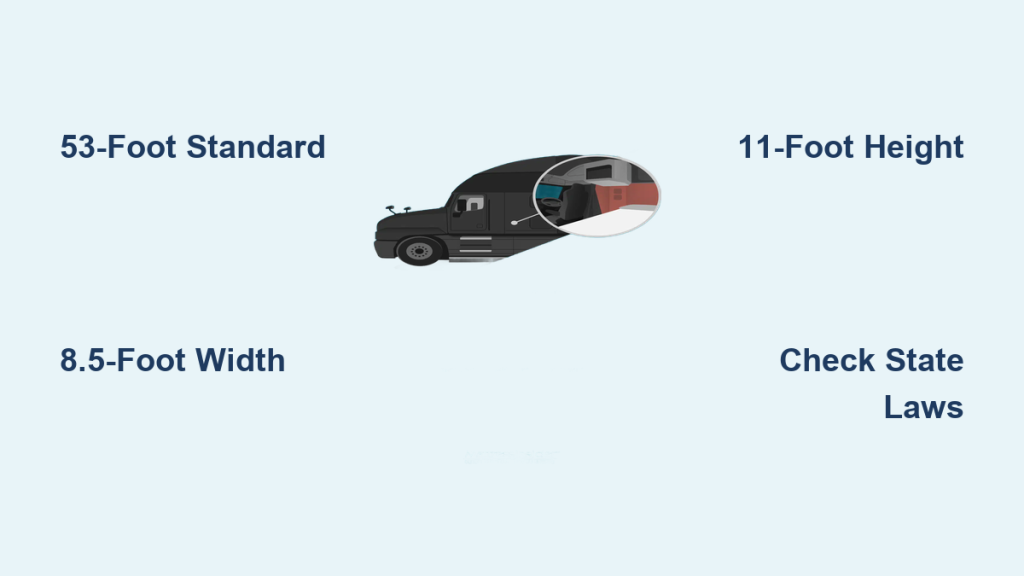
Choosing the right semi truck bed size directly affects how much freight you can haul, how efficiently you operate, and whether you stay compliant with road laws. Whether you’re shipping palletized goods, oversized machinery, or temperature-controlled cargo, knowing the standard dimensions saves time, money, and hassle. Below, you’ll learn typical lengths, widths, and heights, how bed sizes vary by trailer type, and what to consider when selecting the right fit for your needs.
Standard Semi Truck Bed Dimensions

Most semi-truck beds are part of a trailer rather than a standalone bed like on a pickup truck. These trailers come in standardized sizes designed to maximize highway efficiency and cargo capacity.
Common Trailer Lengths
The length of a semi-truck bed, which typically refers to the trailer, varies depending on freight type and regional laws.
- 48 feet: Most common for dry van trailers
- 53 feet: Standard for long-haul freight and intermodal containers
- 28 feet: Often used for regional or specialized deliveries
- 57–60 feet: Allowed in certain states like Florida and California
Longer trailers increase payload capacity but may face restrictions on maneuverability and access to smaller facilities.
Standard Width and Height
Trailer width and height are more uniform across the U.S. due to federal regulations.
- Width: 8.5 feet (102 inches) is standard
- Height: Ranges from 9 to 13.5 feet, depending on trailer type
Refrigerated trailers may be slightly taller due to insulation, while flatbeds allow variable stacking above the deck.
Types of Trailers and Their Bed Sizes
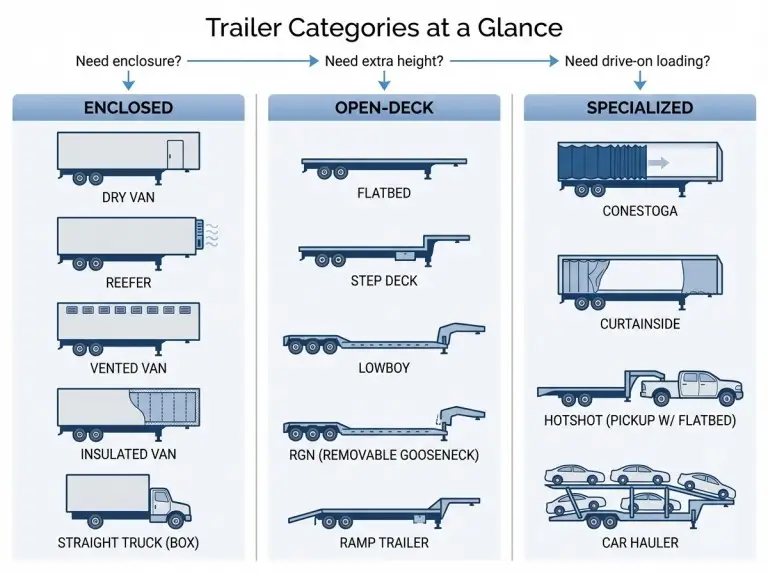
Different hauling needs require different trailer types, each with unique size characteristics.
Dry Van Trailers
Enclosed trailers used for protecting goods from weather and theft.
- Length: 48 to 53 feet
- Interior height: Up to 11 feet
- Capacity: Holds 26 standard pallets (48″ x 40″)
Ideal for retail goods, electronics, and non-perishable items.
Flatbed Trailers
Open-deck trailers that allow top loading and oversized cargo transport.
- Length: Typically 48 or 53 feet
- Deck width: 8.5 feet, with extendable sides on some models
- Load height: No roof, so freight can be stacked high with proper securing
Commonly used for construction materials, steel, and machinery.
Refrigerated Trailers
Temperature-controlled units for perishable goods.
- Length: Usually 53 feet
- Interior height: Around 10.5 to 11 feet
- Width: Slightly less than dry vans due to wall insulation
Requires generator power (reefer unit) and careful pre-cooling before loading.
Step Deck and Drop Deck Trailers
Designed for taller loads that exceed standard height limits.
- Lower deck height: Drops down to allow up to 10 feet of vertical clearance
- Length: 48 to 53 feet
- Use cases: Machinery, large equipment, industrial parts
These trailers bypass height restrictions without requiring special permits.
How Cargo Capacity Is Measured
Understanding volume and weight limits is crucial when evaluating effective semi truck bed size.
Cubic Feet Capacity
Total space determines how much product fits inside.
- 53′ dry van: Approximately 3,486 cubic feet
- 48′ dry van: About 3,000 cubic feet
- Reefer trailer: Slightly less due to insulation thickness
Use cubic footage to plan pallet layouts and avoid underutilization.
Weight Limits and Legal Restrictions
Even with ample space, federal law caps weight for road safety.
- Gross vehicle weight limit: 80,000 lbs maximum on interstate highways
- Axle weight limits: 12,000 lbs (steer), 34,000 lbs (drive/trailer tandem)
- Bridge formula applies: Prevents excessive weight concentration
Overloading leads to fines, delays, and safety risks, so always verify before dispatch.
Pro Tip: Always weigh your loaded trailer at a certified scale before hitting the road. A single axle overload can trigger fines even if total weight is under the limit.
Factors That Affect Usable Bed Size
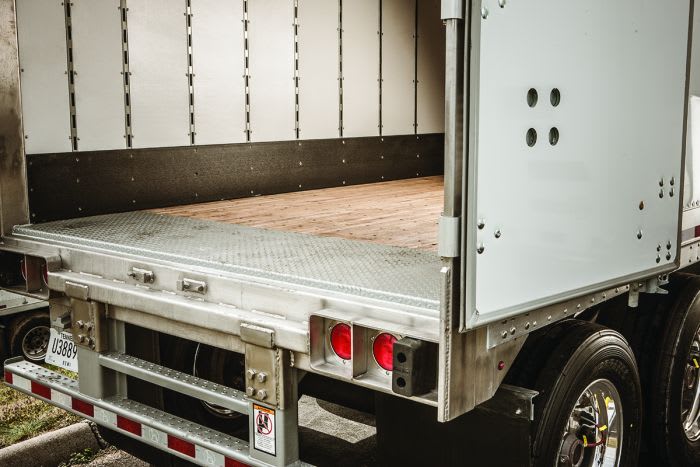
Not all listed dimensions translate to usable space. Several real-world factors reduce effective capacity.
Door Clearance and Loading Constraints
Trailer doors are smaller than interior dimensions.
- Door width: Usually 98–99 inches (narrower than 102″ interior)
- Door height: Around 108–111 inches
- Roll-up doors: May block lower corners during loading
Pallets must fit through the opening, so measure twice before loading.
Internal Obstructions
Some trailers have features that take up space.
- Reefer units: Reduce depth by 3–6 inches
- Load bars, tie-down tracks, bulkheads: Limit flat floor space
- Floor thickness and cross members: Affect stacking stability
Account for these when planning high-density loads.
Regional Variations in Trailer Sizes
State laws influence which trailer sizes are legal and practical.
Interstate vs. Intrastate Rules
- Interstate commerce: Follows federal FMCSA standards (max 53′ trailers)
- Intrastate only: Some states allow longer combinations (e.g., 65′ doubles in Michigan)
Drivers operating across state lines must comply with the strictest applicable rules.
State-Specific Length Exceptions
A few states permit longer trailers under specific conditions.
- California: Allows 57′ and 65′ doubles with permits
- Florida: Permits 57′ van trailers
- Hawaii: Restricts to shorter trailers due to road layout
Always check local regulations before routing.
Choosing the Right Semi Truck Bed Size
Selecting the correct size is not just about maximizing cargo. It also involves matching efficiency, cost, and compliance.
Match Trailer to Freight Type
Different goods require different setups.
- Palletized goods: Best in 53′ dry vans
- Oversized equipment: Use flatbeds or step decks
- Perishables: Require reefers with precise temperature control
Using the wrong trailer leads to damage, spoilage, or rework.
Optimize for Fuel and Labor Efficiency
Larger trailers are not always better.
- 53′ trailers: Higher fuel consumption but fewer trips
- 48′ trailers: Easier to back into tight docks, lower maintenance
Balance payload needs with operational costs.
Consider Loading and Unloading Infrastructure
Your destination’s setup matters.
- Dock height: Should match trailer deck height (~48–52″)
- Clearance under overhangs: Critical for step decks and tall loads
- Maneuvering space: Longer trailers need wider turnarounds
Avoid delays by confirming site compatibility in advance.
Custom and Specialty Trailer Options
When standard sizes do not fit, custom solutions exist.
Extendable Flatbeds (Stretch Trailers)
Adjustable length for variable cargo.
- Max extension: Up to 75 feet
- Use: Long beams, pipes, wind turbine blades
Requires special handling and permits.
Double and Triple Trailers (Road Trains)
Multiple units pulled together for high-volume transport.
- Total length: Can exceed 100 feet
- States allowed: Nevada, Texas, New Mexico, and others (with restrictions)
Increases efficiency but demands experienced drivers.
High Cube and Mega Trailers
Taller than standard enclosures.
- Height: Up to 13.5 feet inside
- Capacity boost: Up to 20% more volume
Used in bulk goods and e-commerce fulfillment.
Frequently Asked Questions About Semi Truck Bed Size
What is the most common semi truck bed size?
The 53-foot dry van trailer is the most widely used semi truck bed size for long-haul freight across the United States.
How wide is a standard semi truck bed?
A standard semi truck bed measures 8.5 feet (102 inches) wide, which is the federally regulated maximum width for highway travel.
What is the height of a typical semi truck trailer?
Interior height varies by trailer type, but most dry vans offer about 11 feet of clearance, while flatbeds have no fixed roof height.
Can semi truck beds be longer than 53 feet?
Yes, some states allow trailers up to 57 feet, and specialized multi-trailer combinations can exceed 100 feet with proper permits.
How much weight can a semi truck bed carry?
The federal gross vehicle weight limit is 80,000 lbs on interstate highways, distributed across specific axle limits.
What is the difference between a dry van and a reefer trailer in size?
Reefer (refrigerated) trailers are similar in length to dry vans but have slightly less interior width and height due to wall insulation and cooling units.
Key Takeaways for Selecting the Right Semi Truck Bed Size
Understanding semi truck bed size starts with knowing the standard dimensions: 48 to 53 feet long, 8.5 feet wide, and up to 11 feet tall for enclosed trailers. Different trailer types, including dry vans, flatbeds, reefers, and step decks, serve distinct cargo needs and affect usable space. Weight regulations, door clearances, and internal obstructions all influence what you can actually load.
Your next step is to match your freight type to the right trailer, verify local length restrictions for your route, and confirm that loading docks at pickup and delivery points can accommodate your chosen configuration.