You’ve decided to protect your truck bed cargo, improve fuel efficiency, and enhance your vehicle’s look with a tonneau cover, but the first critical step is getting the right fit. A poorly measured bed leads to gaps, improper installation, or a cover that won’t latch at all. Knowing how to measure truck bed for tonneau cover correctly ensures a seamless fit, full functionality, and long-term durability. Whether you shop online or in-store, manufacturers require precise dimensions to match your truck’s make, model, and bed size.
Most tonneau covers are vehicle-specific, but even slight variations in bed length or shape between model years can affect compatibility. Instead of relying solely on your truck’s advertised bed size (like “6.5-foot bed”), actual physical measurement is essential. This guide walks you through each step, from tools needed to exact measurement points, so you can confidently select a soft roll-up, hard folding, or retractable tonneau cover without guesswork.
Gather Required Tools
Before stepping outside, collect the tools that ensure accurate results. Guessing or using improper instruments leads to costly mistakes.
Essential Measuring Tools
- Tape measure (25 feet preferred): Use a rigid or semi-rigid steel tape for straight-line accuracy.
- Notepad and pen: Record each measurement immediately to avoid confusion.
- Helper (optional but recommended): Holding the tape straight across the bed improves precision.
- Level surface: Park your truck on flat ground to prevent skewed readings.
Avoid using cloth tapes or estimating with objects like floor mats, as these introduce significant error. A laser measure can work if calibrated, but a standard tape is more reliable for this task.
Identify Your Truck Bed Type

Not all truck beds are shaped the same. The design affects which tonneau cover styles will fit.
Standard Bed Styles
- Utiline or Flared Fenders: Common on older trucks; fenders extend outward over the bed rails.
- Step-Side Beds: Have recessed areas above the wheels; rare today but found on classic models.
- Fleetside (Straight-Side): Most modern trucks use this design with straight, parallel bed walls.
Tonneau covers are typically made for fleetside beds. If your truck has flared fenders or step-sides, verify compatibility with the manufacturer before purchasing. Aftermarket universal covers may claim flexibility, but proper fitment starts with correct bed identification.
Measure Bed Length Accurately
Length is the most critical dimension when selecting a tonneau cover. Never assume it matches the advertised size.
Start from Tailgate to Bulkhead
- Close the tailgate securely.
- Place the tape measure’s hook against the inner face of the tailgate, where it seals.
- Extend the tape straight forward along the centerline of the bed floor.
- Stop at the bottom of the bulkhead, which is the metal wall separating the bed from the cab.
- Record the measurement in inches, then convert to feet.
Pro Tip: Measure twice, once on the driver’s side and once on the passenger side. Some beds taper slightly.
Compare to Common Bed Sizes
- Short Bed: 5 feet 5 inches to 5 feet 8 inches (65 to 68 inches)
- Standard or Midsize Bed: 6 feet 5 inches (77 inches)
- Long Bed: 7 feet 11 inches to 8 feet (95 to 96 inches)
Even if your truck is advertised as a “6.5-foot bed,” the actual measurement might be 77.5 inches. Use real numbers, not marketing terms.
Measure Bed Width at Key Points
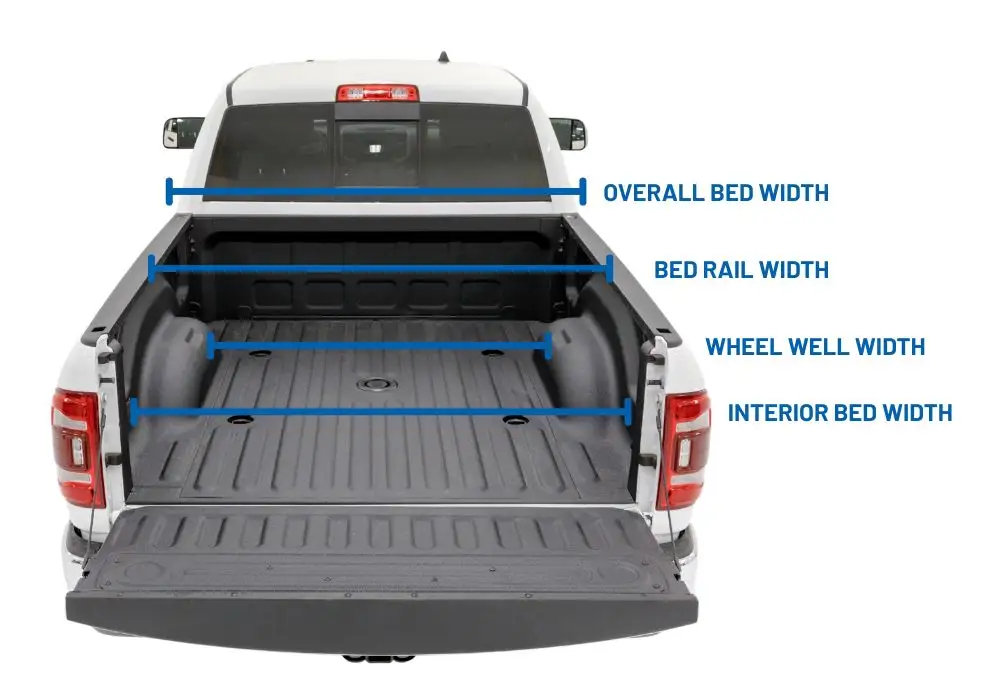
Width varies from front to back, especially near wheel wells. Tonneau covers must accommodate the narrowest and widest sections.
Three Critical Width Measurements
Top Inner Rail Width (Front)
- At the front of the bed, just behind the bulkhead:
- Measure from the inside top edge of one rail to the other.
- This determines front clamping or rail attachment clearance.
Middle Width (Above Wheel Wells)
- At the widest point, usually above the wheel housings:
- Measure the inside distance between the bed rails at their broadest.
- Some covers need extra space here for hinges or support bars.
Tailgate Width (Narrowest Point)
- Near the top of the tailgate opening:
- Measure the inner width of the bed rails.
- Many folding or retractable covers hinge here and require precise clearance.
Common Mistake: Measuring only the floor width. Covers attach to rails, not the bed floor, so always measure the interior rail-to-rail distance.
Check Rail Height and Shape

Tonneau covers clamp or bolt onto bed rails. Rail height and profile affect installation and seal tightness.
How to Measure Rail Height
- Use the tape measure vertically from the top of the bed rail down to the bed floor.
- Take readings on both sides and in the middle.
- Record the lowest measurement to ensure the cover will sit flush.
Identify Rail Style
- Flat Top Rails: Provide stable mounting surface; common on newer models.
- Curved or Contoured Rails: May require adapter brackets.
- Integrated Tie-Downs or Caps: Can interfere with clamps, so check for obstructions.
Contact the tonneau cover manufacturer if your rails have factory-installed accessories or non-standard shapes.
Note Special Features and Obstructions
Modern truck beds come with features that impact tonneau compatibility.
Common Bed Add-Ons to Check
- Bedliner (spray-in or drop-in): Adds thickness and may affect clamp pressure or rail fit.
- Factory Tie-Downs or Cleats: Protrude into rail space; confirm cover design accommodates them.
- LED Bed Lights or Power Outlets: Located on bulkhead or rails; ensure no interference.
- Tailgate Seals or Assist Systems: Some retractable covers interact with tailgate movement.
Expert Note: If you have a spray-in bedliner, inform the seller. Some covers require a “lined bed” version for proper fit.
Confirm Truck Details Beyond Measurements
Physical dimensions are vital, but vehicle-specific data ensures total compatibility.
Record These Before Buying
- Make, Model, and Year: For example, 2022 Ford F-150 or Chevrolet Silverado 1500.
- Bed Style Name: Some manufacturers name beds such as “RamBox” or “MultiFlex.”
- Trim Level or Package: High Country or TRX may affect rail design.
- Single vs. Dual Rear Wheels: DRW trucks sometimes have wider beds or fender flares.
Use your VIN to double-check specifications on manufacturer websites or parts lookup tools.
Choose the Right Cover Type

Your measurements guide which style of tonneau cover works best.
Soft Roll-Up Covers
- Best for: Light-duty use and easy access.
- Fit Tip: Require precise length and rail width; flexible but sensitive to rail height.
Hard Folding Covers
- Best for: Security and insulation.
- Fit Tip: Need consistent rail width and height; less forgiving on curved rails.
Retractable Covers
- Best for: Full bed access and sleek look.
- Fit Tip: Require unobstructed rail path; sensitive to bed width taper.
One-Piece vs. Two-Piece Designs
- Some long-bed trucks use two-piece covers; confirm length thresholds with the brand.
Always cross-reference your measurements with the manufacturer’s fit guide, not just the model year.
Avoid Common Measuring Mistakes
Even small errors lead to returns or poor performance.
Top Errors to Prevent
- Measuring from the outside of the tailgate instead of the inside.
- Using floor length instead of rail-to-rail inner dimension.
- Ignoring taper, since some beds are narrower at the front than the rear.
- Assuming all 6.5-foot beds are identical across brands (F-150 vs. Silverado differ slightly).
Quick Fix: Watch installation videos for your truck model to see how covers attach. This reveals hidden fit issues.
Final Verification Steps
Before purchasing, confirm everything aligns.
Triple-Check Your Data
- Re-measure length and width.
- Compare your numbers to the product’s installation PDF.
- Call customer support with your specs for confirmation.
Many brands offer fitment guarantees, but only if you provide accurate details.
Test Fit Upon Delivery
- Inspect the cover before installation.
- Dry-fit it without tools to check alignment.
- Ensure clamps reach across the narrowest rail width.
If it doesn’t fit perfectly, contact the seller immediately.
Frequently Asked Questions About Measuring a Truck Bed for a Tonneau Cover
What is the most accurate way to measure truck bed length for a tonneau cover?
Close the tailgate, then measure from the inner face of the tailgate to the bottom of the bulkhead along the centerline of the bed floor. Record the result in inches for the most precise match.
Do I need to measure bed width at more than one point?
Yes. Measure at the front, middle (above wheel wells), and tailgate. The narrowest point matters most for retractable and folding covers that hinge at the rear.
How do bedliners affect tonneau cover measurements?
Spray-in and drop-in bedliners add thickness to the bed floor and rails. Some manufacturers offer a “lined bed” version of their cover, so always tell the seller if your truck has a liner.
Can I rely on my truck’s advertised bed size?
No. A “6.5-foot bed” may actually measure 77.5 inches. Always take physical measurements and compare them to the manufacturer’s fit guide.
What should I do if my measurements fall between two cover sizes?
Choose the smaller size or contact the manufacturer with your exact specs. Some brands offer custom solutions for non-standard beds.
Where can I find my truck’s exact bed specifications?
Your VIN, owner’s manual, or the manufacturer’s website provides detailed bed dimensions. You can also use online parts lookup tools for verification.
Key Takeaways for Measuring Your Truck Bed Correctly
Accurate measurements are the foundation of a successful tonneau cover purchase. Always use a steel tape measure, measure length from the inner tailgate to the bulkhead, and record width at three critical points. Pay attention to rail height, special features like bedliners, and your truck’s specific make, model, and year. Cross-reference every number with the manufacturer’s fit guide before buying, and don’t hesitate to call customer support for confirmation. With these steps complete, you’re ready to select a cover that fits perfectly and protects your cargo for years to come.