

Stellantis has filed a patent for an angled truck bed cap that automatically tilts a tonneau cover at highway speeds to reduce drag. This aerodynamic system targets one of the biggest inefficiencies in modern pickups: the blunt, boxy rear end that creates turbulent airflow and steals fuel economy. By dynamically adjusting the cover’s angle based on driving conditions, the Stellantis truck bed patent aims to deliver real-world efficiency gains without sacrificing cargo space or utility.
In this guide, you’ll learn exactly how the angled truck bed patent works, where the design inspiration comes from, and what it could mean for future Ram models and the broader pickup market. We’ll also examine the technical challenges, user reactions, and whether this innovation is likely to reach production.
What the Stellantis Truck Bed Patent Actually Does
The Auto-Tilting Tonneau Mechanism
At the heart of the Stellantis truck bed patent is a slanted rear panel that connects to an automated tonneau cover. When the truck is parked or moving at low speeds, the cover stays flat, giving you full access to the bed. Once you hit highway speeds (typically above 45–50 mph), sensors trigger electric actuators or hydraulic systems to pivot the tonneau along a hinge line near the cab. This motion lifts the rear edge, creating a wedge shape that channels airflow smoothly over the bed.
The entire deployment takes just a few seconds. If you slow down or open the tailgate, the system retracts automatically. Sensors monitor vehicle speed, throttle input, and drive mode to determine when the angled position makes sense.
Weather Sealing and Material Construction
A critical detail in the patent is how the system maintains a weather-tight seal while moving. Flexible gaskets and overlapping panels block water, dust, and debris from entering the bed during operation. These seals use UV-resistant materials designed for repeated flex cycles and temperature extremes. Drainage channels route any trapped water away from the cargo area.
The tonneau itself appears to be made from lightweight composites, likely polycarbonate reinforced with polymer, to keep weight low while staying rigid. This matters because adding heavy panels would cancel out the aerodynamic benefits.
How the Angled Bed Cap Improves Aerodynamics

Reducing Drag at Highway Speeds
Traditional pickup beds create massive aerodynamic drag. When air flows over the cab, it separates at the bed’s leading edge and forms a low-pressure wake behind the truck. This wake pulls the vehicle backward, forcing the engine or battery to work harder.
The Stellantis angled truck bed patent addresses this by creating a tapered rear profile similar to a boat-tail or Kammback design. By smoothing the airflow separation point, the system can reduce the coefficient of drag by an estimated 8–15%. For electric trucks like the upcoming Ram 1500 REV, even small Cd improvements translate directly into more range per charge.
Projected Efficiency Gains
Based on similar aero modifications tested on production vehicles, highway fuel economy could improve by 2–4 mpg. For a gasoline truck, that means 50–100 extra miles per tank. For an EV, it could add meaningful real-world range on long trips. Since many truck owners spend hours on interstates, these gains compound over time.
Design Roots: Cybertruck, Envoy XUV, and Beyond

The 2004 GMC Envoy XUV Comparison
Commenters on the original Autoblog post were quick to point out that this isn’t a new idea. The 2004 GMC Envoy XUV featured a sloped rear gate designed to improve airflow, along with a retractable roof and midgate system. That patent has long since expired.
The key difference is automation. The Envoy XUV required manual operation and was built on an SUV platform. The Stellantis truck bed patent is fully sensor-driven, designed specifically for full-size pickup beds, and benefits from modern materials and electronic controls that didn’t exist 20 years ago.
Tesla Cybertruck Similarities
Some viewers, such as Autoblog commenters Eric Smith and David Maio Williams, noted visual similarities to the Tesla Cybertruck’s angular profile. But the design intent differs. The Cybertruck’s shape comes from its exoskeleton construction and minimalist styling, while the Stellantis patent is purely function-driven. It’s not copying; it’s responding to competitive pressure in the electric truck market.
Where This Technology Could Appear First
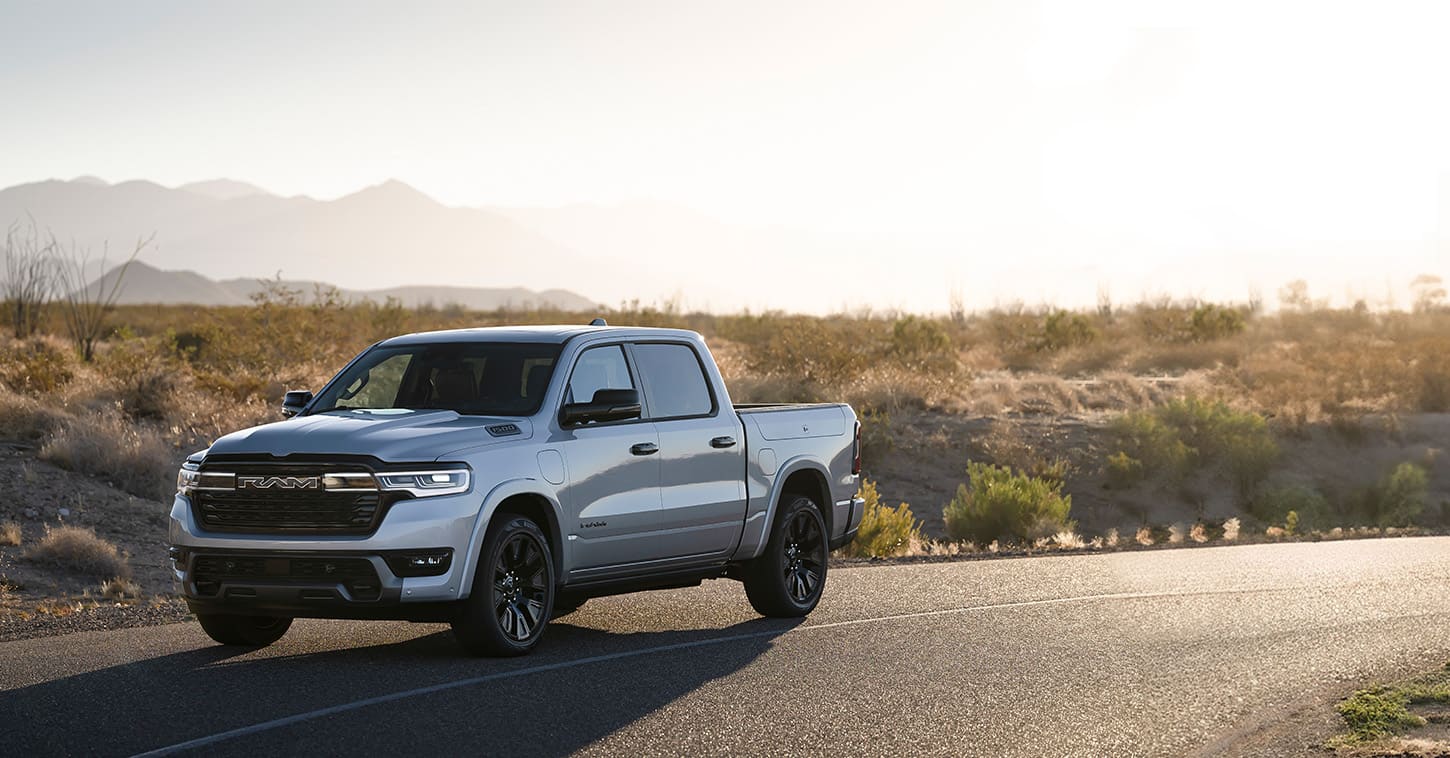
Ram 1500 and Ram 1500 REV Integration
The most likely home for this system is the Ram 1500 lineup, especially the battery-electric Ram 1500 REV. Aerodynamics directly impact EV range, an area where electric pickups still trail sedans and crossovers. An auto-tilting tonneau could help Ram compete more effectively against the Ford F-150 Lightning and Rivian R1T.
Stellantis could position it as a premium option on high-end trims like Limited or the REV Launch Edition. It would pair naturally with existing features like air suspension and adaptive damping. Drive mode integration makes sense too: “Eco” or “Highway” modes could trigger early deployment, while “Off-Road” or “Towing” modes disable it to preserve ground clearance and bed access.
Compatibility With Truck Bed Accessories
One practical concern is how the moving tonneau interacts with bed rails, lighting bars, toolboxes, and other accessories. The patent suggests the design accommodates add-ons mounted forward of the hinge line. Aftermarket manufacturers may need to adjust their products to avoid interference. The tailgate remains fully functional; the tonneau disengages before the tailgate lowers.
Technical Challenges and Real-World Limitations
Durability Concerns
Truck beds take abuse from extreme temperatures, heavy loads, debris, and impacts. An automated system adds moving parts that must survive this environment. Actuators, hinges, and seals will face constant stress, especially in snowy, salty, or off-road conditions.
Stellantis will need robust fail-safes. If a sensor fails or ice blocks movement, the cover should default to a safe position without stranding the driver. Corrosion protection and maintenance intervals will be critical for long-term reliability.
Cost and Repair Complexity
Motorized components raise both purchase price and repair bills. A damaged actuator or cracked tonneau panel could cost over $1,000 per side to replace. Unlike simple roll-up covers, this system requires software calibration, meaning repairs may only be possible at dealerships. That could limit appeal among budget buyers and commercial fleet operators who prioritize simplicity and uptime.
How Truck Buyers Are Reacting
Mixed Online Feedback
Reactions to the Stellantis truck bed patent reveal a split audience. Commenters like Ted Hou summed up the skepticism well: “I don’t buy a truck for aero nor a fractional mpg gains at highway speed.” Others, such as Russell Bade, noted they never considered gas mileage when buying a truck.
A few commenters, including Paul Lamond, made light of the idea, referencing “Super pursuit mode KITT” from Knight Rider. The general tone suggests many traditional truck buyers don’t see clear value in aerodynamic optimization.
Finding the Real Value Proposition
For the Stellantis truck bed patent to succeed, it needs to deliver tangible benefits beyond fuel economy. Possible selling points include:
• Quieter cabin at highway speeds
• Enhanced cargo protection from weather
• Integrated lighting or security features
• Solar charging panel integration on the tonneau surface
Framing it as part of a “smart bed” ecosystem for tech-forward buyers might resonate more than pure efficiency claims.
What’s Next for Adaptive Truck Design
Smarter, Responsive Vehicle Bodies
The Stellantis truck bed patent fits a larger trend toward vehicles with adaptive bodywork. Active grille shutters, deployable spoilers, and adjustable suspensions are already common. Now, truck beds may join the list of components that respond dynamically to driving conditions.
Future versions could use AI to learn driver habits, deploying the cover based on route prediction rather than just speed. Integration with navigation systems could allow pre-deployment when entering highway stretches.
Expansion Across Stellantis Brands
Ram is the obvious first adopter, but the technology could spread. A ruggedized version might appear on the Ram Rebel, while Dodge could explore performance applications for an electric muscle truck. Commercial variants under Ram ProMaster could benefit from efficiency gains in delivery fleets.
Given Stellantis’ focus on electrification, prototypes or concept versions could appear at major auto shows within 12–18 months.
Frequently Asked Questions About the Stellantis Truck Bed Patent
What is the Stellantis angled truck bed patent?
The Stellantis truck bed patent describes an automated tonneau cover that tilts upward at highway speeds to reduce aerodynamic drag. The cover stays flat at low speeds for full bed access and rises into a wedge shape above 45–50 mph to smooth airflow over the rear of the pickup.
How much could it improve fuel economy?
Based on similar aerodynamic modifications, the system could improve highway fuel economy by 2–4 mpg. For an electric truck, this translates to additional range per charge. The patent estimates a drag coefficient reduction of 8–15%.
Is this just a copy of the Tesla Cybertruck design?
No. While both designs feature angular rear profiles, the Cybertruck’s shape comes from its exoskeleton construction and styling choices. The Stellantis truck bed patent is function-focused, using an adaptive mechanism rather than a fixed body shape. It also draws comparisons to the 2004 GMC Envoy XUV, which had a similar sloped rear gate.
Which Stellantis models will get this feature?
The most likely candidate is the Ram 1500, including the upcoming Ram 1500 REV electric truck. It may debut as a premium option on high-end trims like Limited or the REV Launch Edition before potentially expanding to other models.
Will it work with existing truck bed accessories?
The patent suggests compatibility with accessories mounted forward of the hinge line, including bed rails and some lighting setups. Aftermarket manufacturers may need to adapt products that sit near the tilting mechanism. The tailgate remains fully operational.
How likely is it to reach production?
Filing a patent doesn’t guarantee production, but the timing aligns with Stellantis’ electrification strategy and the Ram 1500 REV launch. If approved, it could appear as a 2026 or 2027 model year option, likely starting on premium trims.
Key Takeaways on the Stellantis Truck Bed Patent

The Stellantis truck bed patent represents a meaningful step toward smarter, more efficient pickup design. By automating aerodynamic optimization, Stellantis addresses a real efficiency gap without forcing drivers to manually adjust covers or sacrifice bed utility. The system builds on ideas from the 2004 GMC Envoy XUV but adds modern automation, sensors, and lightweight materials.
The biggest hurdles aren’t technical; they’re perceptual. Many truck buyers don’t prioritize fuel economy, and the added cost and complexity could limit adoption. For the patent to become a production feature, Stellantis will need to market it as more than an mpg booster. Whether framed as a “smart bed,” a tech showcase, or an EV range extender, the angled truck bed patent has real potential.
Next step: Watch for Stellantis announcements at upcoming auto shows and monitor Ram 1500 REV configurator updates for optional bed systems. If you’re in the market for an electric truck, this feature could tip the balance when comparing the Ram 1500 REV against the Ford F-150 Lightning and Rivian R1T.