You’re standing in a dealership lot, tape measure in hand, trying to figure out if your new truck can haul that ATV or sheet of plywood. The answer lies in one critical detail: truck bed dimensions. Whether you’re hauling landscaping materials, construction tools, or camping gear, knowing the exact length, width, and depth of a truck bed makes all the difference. But here’s the catch: there is no standard size. Truck bed dimensions vary widely by model, trim, cab configuration, and manufacturer.
In this guide, you’ll learn the typical bed sizes for full-size, midsize, and compact trucks from major brands like Ford, Chevrolet, Ram, Toyota, and GMC. You’ll discover how to measure a truck bed correctly, understand the impact of wheel wells on usable space, and choose the right bed length for your needs. With clear breakdowns and real-world comparisons, this resource helps you make an informed decision before you buy.
Full-Size Truck Bed Sizes
Most full-size pickups offer multiple bed lengths depending on cab style and model trim. Longer beds provide greater cargo capacity but reduce parking convenience and may affect towing clearance.
Ford F-150 Bed Dimensions
The Ford F-150 offers three bed lengths across its configurations. The 5.5-foot (67-inch) bed is available on SuperCrew with short box and suits urban drivers needing compact storage. The 6.5-foot (78.9-inch) bed fits SuperCab and some SuperCrew models, balancing cargo room and maneuverability. The 8-foot (98.4-inch) bed comes only on Regular Cab and SuperCab long-bed versions and works best for contractors.
Width between wheel wells sits at roughly 50 inches, and depth measures about 21.4 inches. Note that the 5.5-foot bed supports four-foot-wide materials when the tailgate is down.
Chevrolet Silverado 1500 Bed Sizes
Chevrolet pairs bed options with cab styles. The 6.2-foot (74.4-inch) bed is standard on Double Cab and represents the most common configuration. The 5.3-foot (63.8-inch) short bed fits Crew Cab but gives a tight squeeze for full sheets. The 8-foot (98.2-inch) bed appears on Regular Cab and Extended Cab for maximum payload utility.
Width inside the wheel wells measures about 51 inches, and cargo volume reaches up to 81.8 cubic feet in the 8-foot bed. A pro tip: the Multi-Flex tailgate offers six different loading positions for awkward loads.
Ram 1500 Bed Measurements
Ram 1500 offers two primary bed lengths. The 5.7-foot (68.4-inch) bed pairs with Quad Cab or Crew Cab and includes RamBox cargo management. The 6.4-foot (76.3-inch) bed comes with Crew Cab only and fits 4×8 sheets with the tailgate down.
RamBox adds 192 liters of lockable storage along the bed sides. Width between wheel wells measures about 50.7 inches, and depth reaches roughly 21.8 inches. A unique feature is Ram’s available power-sliding rear window, which aids in securing long items inside the cab.
Toyota Tundra Bed Space
The redesigned Tundra provides two bed options. The 5.5-foot (66.7-inch) bed is standard on most CrewMax models. The 6.5-foot (78.7-inch) bed is optional on CrewMax and replaces the older 8-foot option.
Both beds feature LED lighting, tie-downs, and a spray-on liner. Width measures about 51.8 inches overall, narrowing to roughly 49.8 inches at the wheel wells. Depth comes in at about 21.6 inches. Note that the i-Force Max hybrid version only comes with the 5.5-foot bed.
GMC Sierra 1500 Cargo Dimensions
The Sierra 1500 is nearly identical to the Silverado 1500 but offers unique features. The 5.3-foot (63.9-inch) bed fits Crew Cab short box applications. The 6.2-foot (74.4-inch) bed is the most popular choice and fits Double Cab and Crew Cab. The 8-foot (98.2-inch) bed comes with Regular Cab or Extended Cab only.
Features include a CarbonPro composite bed for dent resistance, an available MultiPro tailgate with six functions, and LED lighting. Width between wheel wells measures about 51 inches, and depth reaches roughly 21.4 inches.
Midsize Truck Bed Dimensions
Midsize trucks sacrifice some cargo space for better fuel economy and city driving. Still, many can carry full 4×8 sheets with the tailgate down.
Toyota Tacoma Bed Size
The Tacoma offers two bed lengths. The 5-foot (60.5-inch) bed comes with Access Cab models. The 6.1-foot (73.5-inch) bed is standard on most Double Cab trims.
Width between wheel wells measures about 45.2 inches, and depth reaches roughly 18.9 inches. Cargo volume tops out at 69.5 cubic feet. Importantly, neither bed fits a full 4×8 sheet flat, but both allow diagonal placement or tailgate-down hauling.
Chevrolet Colorado Bed Measurements
Colorado provides flexibility with three options. The 5-foot (62.3-inch) bed fits Extended Cab models. The 6-foot (73.7-inch) bed is standard on Crew Cab. The 6.2-foot (74.3-inch) bed is available on Crew Cab with the standard box.
Width inside the wheel wells measures about 49.5 inches, and depth reaches roughly 20.8 inches. A unique trait is the rear CornerStep bumper that aids in bed access.
Nissan Frontier Bed Dimensions
Frontier stands out with a longer standard bed. The 6-foot (72.9-inch) bed is standard on King Cab and Crew Cab. The 6.5-foot (78.3-inch) bed is optional on Crew Cab.
Width between wheel wells measures about 50 inches, and depth reaches roughly 20.5 inches. Note that the Utili-Track bed system includes adjustable cleats for securing cargo.
Compact Truck Bed Sizes
Compact pickups are rising in popularity for their agility and efficiency, though bed space is limited.
Ford Ranger Bed Dimensions
The Ranger offers one bed size across trims. The 6-foot (73.4-inch) bed is standard on SuperCab and SuperCrew.
Width between wheel wells measures about 47.6 inches, and depth reaches roughly 21.2 inches. Features include seven factory-installed tie-downs, an available spray-on liner, and box rail caps. A pro tip: despite being labeled a midsize, the Ranger’s bed competes well with larger models.
Honda Ridgeline Bed Measurements
The Ridgeline has a unique unibody design with a single bed size. The 6-foot (77.9-inch) bed is standard across all trims.
The real advantage is a flat, wide floor without wheel well obstructions. Interior width measures about 62.8 inches, the widest in class, with usable width reaching about 53.5 inches at floor level. Depth comes in at roughly 20.8 inches. As a bonus, the in-bed trunk provides 8.5 cubic feet of secure, dry storage.
How to Measure a Truck Bed
Knowing how to measure a truck bed ensures you get accurate dimensions for hauling or accessory fitting.
Measure Length Correctly
Start at the inside front wall of the bed, not the bulkhead behind the cab, and extend the tape to the closed tailgate’s interior edge. Do not include tailgate thickness. For 4×8 sheet hauling, confirm the measurement is at least 96 inches when the tailgate is down.
Determine Usable Width
Measure from inside rail to inside rail at the top, which is the widest point. Then measure again at the wheel well humps, which represent the narrowest usable space. Most loads rest above the wheel wells, so this dimension is critical for wide items like lumber or drywall.
Check Bed Depth
Measure from the bed floor to the top of the side rail. This affects stacking height and side access. Typical depth ranges from 18 to 22 inches.
What Fits in a Truck Bed

Understanding cargo compatibility helps avoid delivery day surprises.
Will a 4×8 Sheet of Plywood Fit
An 8-foot bed fits a full sheet perfectly with the tailgate up. A 6.5-foot bed fits the sheet only when the tailgate is down. A 6-foot bed may fit the sheet diagonally or with the tailgate down. A 5.5-foot bed or shorter will not fit full 4×8 sheets at all.
Always secure long loads with ratchet straps and use tailgate protectors to prevent damage.
Wheel Well Impact on Storage
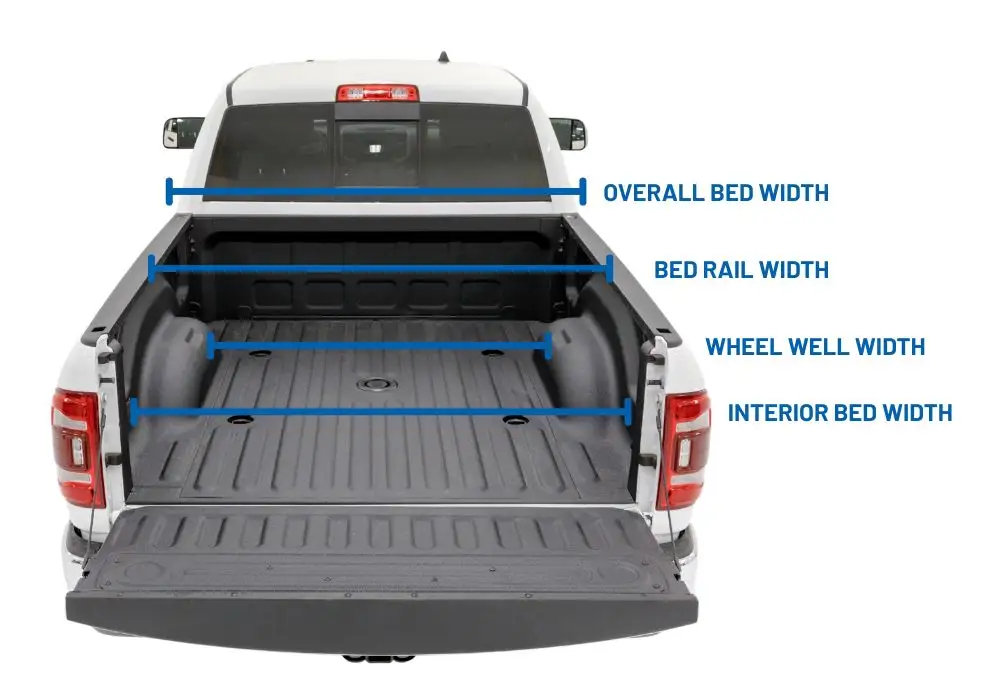
Wheel wells reduce usable width by 4 to 7 inches. Full-size trucks offer about 50 inches between wheel wells. Midsize trucks provide about 45 to 49 inches. The Honda Ridgeline has no obstruction, giving you full 53+ inches of usable width.
For moving furniture or large bins, measure your items against the narrowed width to avoid surprises.
Typical Cargo Volume by Bed Size
| Bed Length | Approx. Volume (cu ft) |
|---|---|
| 5.5 ft | 45–50 |
| 6 ft | 50–58 |
| 6.5 ft | 60–68 |
| 8 ft | 75–82 |
Volume helps compare capacity across models, especially when hauling loose materials like mulch or gravel.
Choosing the Right Bed Length
Your work, lifestyle, and storage needs should guide your choice.
Short Bed (5 to 5.5 Feet)
A short bed works best for urban drivers, light hauling, and accessory mounting such as tonneau covers or toolboxes. Pros include easier parking and better maneuverability. The main con is that you cannot carry 4×8 sheets without an extended tailgate. This option is ideal for daily commuting with occasional DIY projects.
Standard Bed (6 to 6.5 Feet)
A standard bed works best for contractors, weekend warriors, and campers. Pros include fitting 4×8 sheets with the tailgate down and a good balance of space and control. The con is a slightly longer turning radius. This option is ideal for hauling ladders, furniture, and landscaping stone.
Long Bed (8 Feet)
A long bed works best for heavy-duty hauling, contractors, and RV towing. Pros include full sheet capacity, high volume, and compatibility with sliding toolboxes. Cons include harder parking and the possibility of exceeding garage depth. This option is ideal for landscapers, builders, and overlanding with gear trailers.
Accessories That Maximize Bed Use

Even small beds can become highly functional with the right add-ons.
Tonneau Covers
Types include roll-up, tri-fold, hard folding, and retractable. Benefits include weather protection, security, and improved fuel economy. A fit note: measure bed length precisely because covers are model-specific.
Bed Extenders
Bed extenders add about 2 feet of usable length when the tailgate is down. Use cases include transporting long pipes, ladders, or kayaks. Installation options include clamp-on or integrated models.
Truck Bed Toolboxes
Mount styles include cross-bed, side-rail, and under-rail configurations. Materials range from lightweight aluminum to durable steel. A tip: measure inside bed width to ensure fit, especially on midsize trucks.
Dividers and Storage Systems
Modular options like the DEWALT Mobile Toolbox or TruXedo Sport System help organize small parts, power tools, and safety gear. These work great for service trucks, DIYers, and job site efficiency.
Common Mistakes When Using Truck Beds
Avoid these errors to protect your truck and cargo.
Overloading Beyond Payload Rating
Every truck has a maximum payload capacity, which you can find on the door jamb sticker. Exceeding it risks suspension damage, poor braking, and tire failure. For example, a half-ton truck may only carry 1,800 to 2,200 pounds total, including passengers and bed load.
Ignoring Weight Distribution
Place heavy items over the axle, not at the bed’s front or rear. Improper balance causes sway, reduced steering control, and uneven tire wear.
Forgetting Tailgate Weight Limits
Tailgates are not designed to support heavy loads leaning on them. Use bed extenders or supports when carrying long, heavy items.
Frequently Asked Questions About Truck Bed Dimensions
What is the most common truck bed size?
The 6.5-foot bed is the most common configuration across full-size and midsize trucks. It balances cargo space with daily usability, fitting most consumer and contractor needs without sacrificing too much maneuverability.
Can a 4×8 sheet of plywood fit in a short bed?
A standard 4×8 sheet will not fit flat in a 5.5-foot or shorter bed, even with the tailgate down. You can sometimes angle it diagonally, but this is risky and not recommended for transport. An 8-foot bed is the safest choice for full sheets.
Do wheel wells really affect usable space?
Yes, significantly. Wheel wells reduce usable width by 4 to 7 inches depending on the model. This matters most when hauling wide items like drywall, furniture, or appliances. The Honda Ridgeline is a notable exception with no wheel well obstruction.
How do I find my truck’s exact bed dimensions?
Check the owner’s manual or measure manually from the inside front wall to the closed tailgate for length, inside rail to inside rail at the top for width, and floor to top of side rail for depth. Manufacturer websites also list specs by trim.
Is a longer bed always better for hauling?
Not necessarily. Long beds offer more volume and fit full sheets, but they reduce parking ease and may exceed garage depth. A 6.5-foot bed is the practical sweet spot for most buyers who want versatility without major trade-offs.
What truck bed offers the most usable width?
The Honda Ridgeline leads with about 53.5 inches of flat usable width at floor level thanks to its unibody design. Most traditional body-on-frame trucks offer only 45 to 51 inches between wheel wells.
Key Takeaways for Choosing the Right Truck Bed Dimensions
Truck bed dimensions directly shape what your vehicle can haul, from plywood sheets to weekend camping gear. Full-size trucks like the Ford F-150 and Ram 1500 offer the widest range of lengths, while midsize options like the Tacoma and Frontier strike a balance between size and efficiency. Compact pickups such as the Ranger and Ridgeline prove that smaller beds can still deliver surprising utility, especially when you account for wheel wells and add the right accessories.
Before you buy or upgrade, measure your typical cargo, check the payload rating on your door jamb, and choose a bed length that fits both your garage and your lifestyle. Use the tables and tips above to compare models side by side, and invest in accessories like tonneau covers or bed extenders to get the most from every inch. A well-matched truck bed turns your vehicle into a true mobile workspace, ready for work, play, or anything in between.