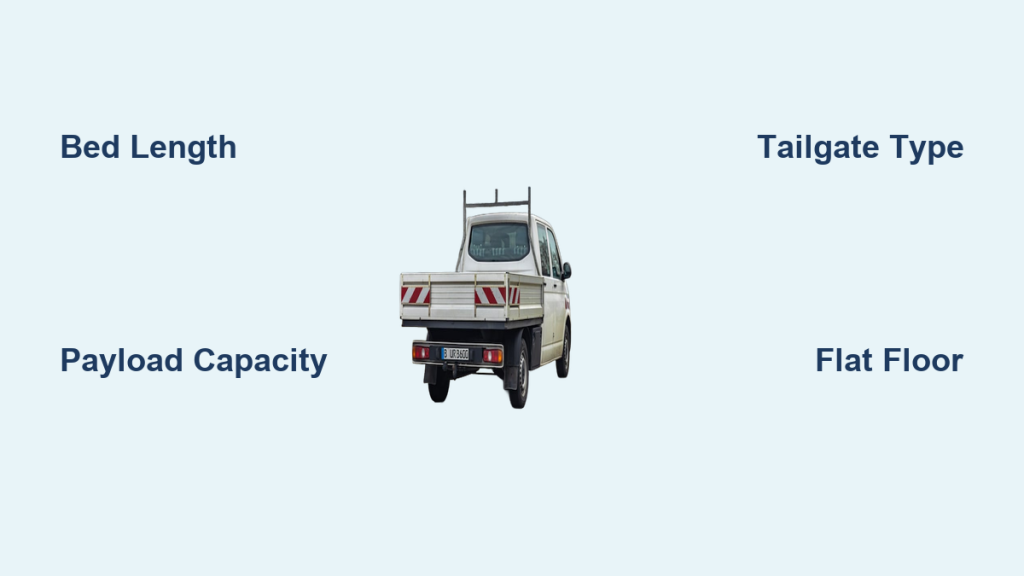
Kei trucks are popular for their compact size, fuel efficiency, and easy maneuverability, but haulers often ask one key question: how much can the bed actually carry? Understanding the kei truck bed size is essential if you plan to use one for landscaping, farming, delivery work, or small business operations. These mini trucks follow Japanese kei class regulations, which limit engine displacement and overall dimensions, directly shaping bed capacity.
Most kei trucks offer a bed length of 6.5 to 7.5 feet (2 to 2.3 meters), a width of 4.1 to 4.6 feet (1.25 to 1.4 meters), and a height of roughly 1.3 to 1.6 feet (0.4 to 0.5 meters). Payload capacity generally falls between 770 and 880 pounds (350 to 400 kg). This guide breaks down exact dimensions by model, payload limits, bed configurations, and tips for choosing the right kei truck for your needs.
Bed Dimensions by Kei Truck Model

Each manufacturer designs its kei truck bed slightly differently, even though all must comply with kei class size rules. These design choices affect usable space and loading flexibility.
Suzuki Carry Truck Bed Size
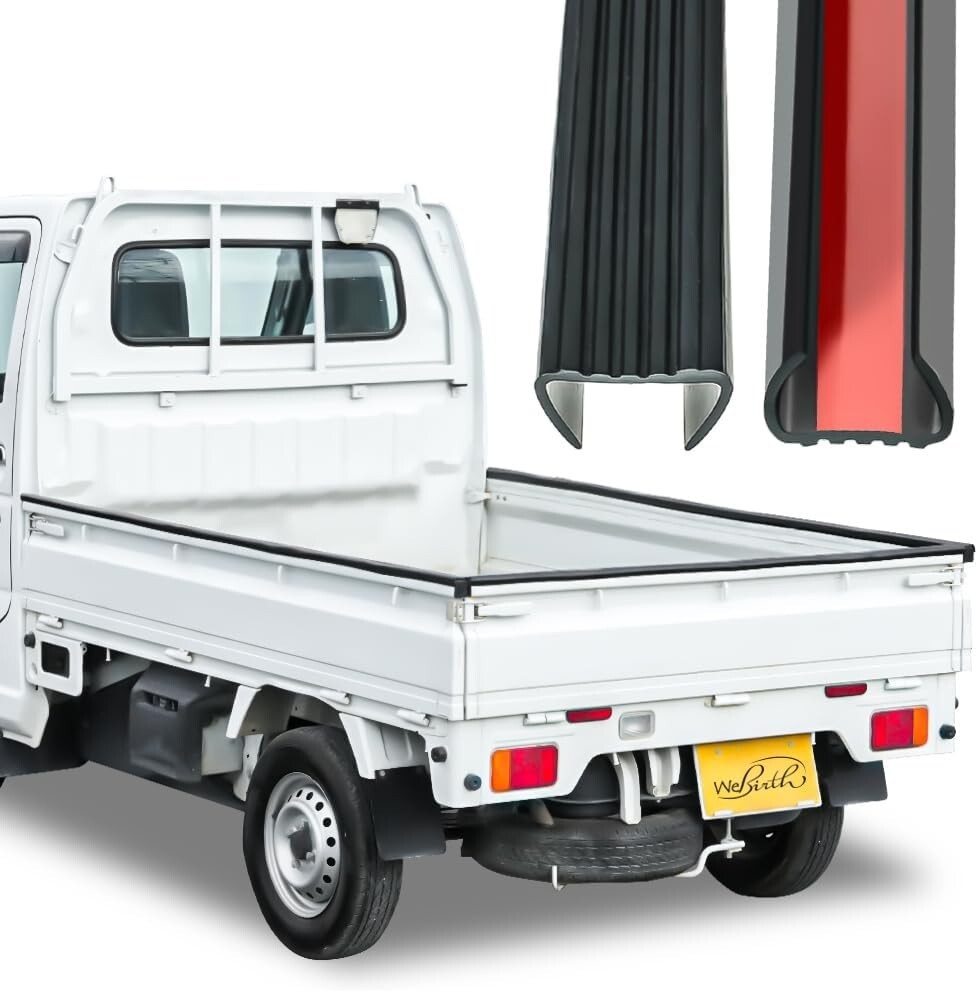
The Suzuki Carry is one of the most widely exported kei trucks. Its bed measures roughly 7.2 feet (2.2 meters) long, 4.3 feet (1.3 meters) wide, and 1.4 feet (0.43 meters) high. The flat floor and low load height simplify loading and unloading. With a 770 pound (350 kg) payload rating, it works well for landscaping crews or light delivery routes.
Stake holes line the bed sides for adding rails or tarps. The tailgate is removable or hinges down for ramp access, and some versions feature a split tailgate for added loading flexibility.
Daihatsu Hijet Truck Bed Size
The Daihatsu Hijet has a slightly shorter bed at about 6.9 feet (2.1 meters) long, 4.1 feet (1.25 meters) wide, and 1.3 feet (0.4 meters) high. Its payload matches the Suzuki Carry at 770 pounds (350 kg). The bed includes a durable steel liner and built-in tie-down points for securing cargo.
Newer Hijet models use a flat load floor and improved suspension to maintain stability when loaded. The compact bed works well for urban deliveries or small farm tasks where tight turning and frequent short trips are common.
Honda Acty Truck Bed Size
The Honda Acty, especially third and fourth generation models built between 1999 and 2018, offers a bed length of 7.5 feet (2.3 meters), one of the longest in the kei class. Its width is 4.6 feet (1.4 meters), the widest standard bed among kei trucks, and height reaches about 1.6 feet (0.5 meters).
Payload capacity tops out at 880 pounds (400 kg), making the Acty the leader in load capability. With the tailgate down, the bed can carry full 4×8 sheets of plywood, a rare feature for this class. Multiple tie-down anchors and optional side rails add versatility.
Standard vs. Extended Bed Options

Identifying Extended Bed Models
Some kei trucks, especially the Honda Acty and custom Suzuki Carry variants, offer extended beds. These add 4 to 8 inches (10 to 20 cm) of length, pushing total bed size toward 7.5 feet.
Extensions are usually factory-built and keep the vehicle within the 13.1 foot (4.0 meter) overall length limit required by kei regulations. Look for labels like “Long Bed” or “XL” in export listings. Extended beds suit contractors or landscapers who regularly haul long materials such as PVC pipes, lumber, or ladders.
Trade-Offs of Larger Beds
A longer bed increases utility but can reduce maneuverability in narrow spaces. Turning radius grows slightly, and parking on tight streets becomes harder. Extended beds also sit closer to legal length limits, which may affect registration rules in some U.S. states or Canadian provinces.
Weight distribution shifts rearward when the bed is fully loaded. This affects traction in rear-wheel-drive models, so avoid overloading and keep cargo balanced over the axle when possible.
Payload Capacity Limits

Why Kei Trucks Cap at 350–400 kg
Japan’s keijidōsha (“light automobile”) regulations cap payload at 350 kg (770 lbs) for most kei trucks. Some newer or reinforced models, like the Honda Acty, reach 400 kg (880 lbs) thanks to stronger frames and suspension.
These limits keep the trucks lightweight and safe on narrow rural roads. Exceeding the payload rating can damage suspension components, reduce braking efficiency, and void insurance. Always check the gross vehicle weight rating (GVWR) and subtract curb weight to find your true payload capacity.
Warning Signs of Overloading
Overloading a kei truck bed causes handling problems. Watch for these signs:
– Sagging rear suspension or bottomed-out shocks
– Reduced steering responsiveness
– Longer braking distances
– Tire sidewall bulging under load
– Difficulty climbing hills or holding speed
If you spot any of these issues, reduce your load immediately. Repeated overloading wears out leaf springs, axles, and wheel bearings prematurely.
Bed Configurations and Features
Flat-Floor vs. Drop-Side Beds
Most modern kei trucks use a flat-floor bed, giving you a smooth, uninterrupted surface for sliding in pallets or sheets. This setup is ideal for contractors who use hand trucks or small ramps.
Older utility models may offer drop-side beds, where one or both sides fold down for easier side loading. Drop-sides work well for loading wide but light materials like insulation or drywall.
Some aftermarket conversions add hydraulic tilting beds for dump-truck functionality, popular in farming and snow removal.
Tailgate Types and Loading Ease
Tailgate design varies by model and directly affects usability:
– Hinged drop-down: Most common, folds down like a standard pickup
– Removable: Comes off completely for ramp use
– Side-hinged: Swings sideways, useful in tight spaces
– Split tailgate: Combines drop-down and side opening (found on the Honda Acty)
For frequent loading, consider adding a lightweight aluminum ramp. Bed height typically sits 18 to 22 inches from the ground, making manual loading practical.
Maximizing Hauling Efficiency
Smart Loading Techniques
Even with a small bed, you can get more done with smart packing:
– Load heavy items first, close to the cab, to maintain balance
– Distribute weight evenly side to side
– Use stackable bins or modular containers
– Secure cargo with ratchet straps rather than ropes
– Fold down or remove the tailgate for long items
Avoid placing heavy loads directly against the cab wall, as this can damage the bulkhead or block rear visibility.
Bed Accessories and Upgrades
Simple upgrades expand your kei truck’s usefulness:
– Bed liners: Protect against scratches and rust
– Tie-down rails: Add adjustable anchor points
– Roof racks: Carry lightweight, bulky items overhead
– Canopies or toppers: Secure tools and shield from weather
– Toolbox mounts: Attach under bed rails to save space
Aftermarket suppliers offer slide-out trays, winch mounts, and even mini-crane attachments for specialized work.
Measuring Your Own Kei Truck Bed
How to Get Accurate Dimensions
To measure your bed correctly:
1. Length: Measure from the inside of the cab wall to the top of the closed tailgate
2. Width: Measure between the inner bed rails at the narrowest point
3. Height: Measure from the bed floor to the top of the side rails
For payload, check the door jamb sticker for GVWR and subtract curb weight (found in the owner’s manual or online specs). Never rely on visual estimates, as overloading is a common mistake among new owners.
Comparing Bed Size to Your Cargo Needs
Before buying, match the bed to your workload:
– Hauling 4×8 sheets? → Choose the Honda Acty
– Need maximum width? → Look for 4.6 foot beds
– Working in tight urban areas? → Pick a shorter bed model
– Hauling frequent heavy loads? → Confirm the 400 kg rating
Use a tape measure and mock up your typical load with cardboard or boxes to confirm fit.
Choosing the Right Kei Truck for the Job
Match Bed Size to Your Use Case
- Landscaping: Honda Acty for its longest bed and highest payload
- Urban delivery: Daihatsu Hijet for compact size and maneuverability
- Farm and utility: Suzuki Carry for durability and wide aftermarket support
- DIY or camping: Any model paired with a canopy and bed rack
Decide whether you need a dump bed conversion or a flatbed version for your specific work.
Import Tips for Overseas Buyers
Kei trucks are commonly imported into the U.S., Canada, and Australia. When evaluating bed size:
– Confirm if post-import modifications like bed extenders were added
– Inspect for rust or frame damage, common in older models
– Verify bed dimensions match factory specs, since rebuilt beds may differ
For U.S. buyers, the truck must be 25 years or older to meet federal import rules. Always confirm state-level regulations on modifications.
Frequently Asked Questions About Kei Truck Bed Size
What is the average kei truck bed size?
Most kei truck beds measure 6.5 to 7.5 feet long, 4.1 to 4.6 feet wide, and 1.3 to 1.6 feet high. The Honda Acty offers the longest and widest standard bed in the class.
How much weight can a kei truck bed carry?
Kei truck payload capacity typically ranges from 770 to 880 pounds (350 to 400 kg). Most models cap at 350 kg, while the Honda Acty reaches 400 kg due to a stronger frame and suspension.
Which kei truck has the biggest bed?
The Honda Acty has the largest standard bed at 7.5 feet long and 4.6 feet wide, with a payload of 880 pounds (400 kg). It can also fit 4×8 plywood sheets with the tailgate down.
Can a kei truck fit a 4×8 sheet of plywood?
Only certain models, like the Honda Acty, can fit a standard 4×8 sheet with the tailgate lowered. Most other kei trucks have shorter beds that cannot accommodate full sheets.
Are kei truck beds flat or do they have wheel wells?
Most modern kei trucks feature a flat-floor bed without intruding wheel wells, which maximizes usable space. Older utility models may have wheel wells that reduce floor area.
Key Takeaways for Choosing the Right Kei Truck Bed Size
Understanding kei truck bed size helps you pick the right model and avoid overloading. The Honda Acty leads with a 7.5 foot bed and 880 pound capacity, the Suzuki Carry balances durability and length at 7.2 feet, and the Daihatsu Hijet offers compact dimensions ideal for tight urban routes. Always respect payload limits, measure your bed before buying, and use smart loading techniques to get the most from your mini truck.